
Double Seal Hands
It may not happen often, but when it does, it's good to have an answer for it. We're in the flank position, and our opponent is holding our wrists to shut down strikes. We're not in a good position for knees, elbows, or kicks. Many of the throws (Shuāi 摔) in our arsenal are shut down. What do we do?
It may not happen often, but when it does, it's good to have an answer for it. We're in the flank position, and our opponent is holding our wrists to shut down strikes. We're not in a good position for knees, elbows, or kicks. Many of the throws (Shuāi 摔) in our arsenal are shut down. What do we do?
Double Seal Hands! This armbar/joint lock setup (Chin Na or Qín Ná 擒拿) can be highly destructive to our opponent, and get us out of a bind and put them into one. There's a nice throw component I'll show that you can add on to the arm bar as well.
--
Leave your comments and questions below. Want more videos like this? SUBSCRIBE and GET HOOKED!
►Listen to PODCAST: https://randybrownmantisboxing.com/swamp-talks-podcast/
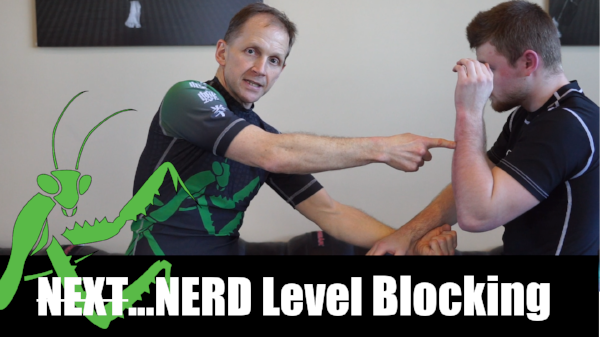
Going Nerd Level on Blocking
Today I'm going NERD LEVEL on blocking. This is an interesting detail I found that can make or break your blocking. I can't explain the why, so I'm calling on all…
Today I'm going NERD LEVEL on blocking. This is an interesting detail I found that can make or break your blocking. I can't explain the why, so I'm calling on all anatomy/physiology experts out there to come up with an answer, and leave it in the comments section.
When using Guard Principle (one-in-one-out), we know that we have to bring one hand back when the other goes out. This is relevant to both striking, and blocking. What I find fascinating, is that the lead arm actually goes dead when the rear arm fires. After years of doing this, and countless number of punches coming at my head, I noticed this 'lag', and dull response time, and paid close attention to it.
If you have expertise in this field, and can provide a thoughtful, educated reason for it, I'd love to hear it. Please leave it in the comments section below so we can all benefit from it.
Now, on to the important part - not getting hit! Follow the principle shown when you're firing punches, or blocks, and this problem goes away. We do not need a partner to fix this. Practice the Guard Principle while performing shadow boxing, bag work, and 3-level blocking and you can train your hand to respond as needed.

The Straight Punch - Throwing the Forward and Reverse Punch
The Straight Punch - devastating and destructive! Forward and Reverse punch are a good place to start when learning to punch in Mantis Boxing, or other striking arts. They are destructive, and can easily be modified to open hand strikes if necessary.
The following video shows the in's and out's of...
The Straight Punch - devastating and destructive! Forward and Reverse punch are a good place to start when learning to punch in Mantis Boxing, or other striking arts. They are destructive, and can easily be modified to open hand strikes if necessary.
The following video shows the in's and out's of starting to punch with these two strikes and some of the pitfalls to watch out for.
Using footwork with punches, increases the power, improves range, and helps keep us mobile instead of fixed. Check out pad drills, and blocking drills, or use these on a heavy bag to train on your own.

Defending the Worst Position Ever!!
The High Mount combined with striking is a deadly combination. This is by far, one of the worst positions you can get stuck in on the ground. The traditional BJJ escape for mount - bridge, trap, and roll doesn't work quite yet, and meanwhile our opponent is raining punches on us, and bringing the thunder like Poseidon.
All too often, we panic in this situation and end up flailing, or trying to grab arms. Here we show a technique we call - 'Shield Up / Shimmy Up' to help you deal with this problematic position. We have to work from where we are, not where we want to be.
The High Mount combined with striking is a deadly combination. This is by far, one of the worst positions you can get stuck in on the ground. The traditional BJJ escape for mount - bridge, trap, and roll doesn't work quite yet, and meanwhile our opponent is raining punches on us, and bringing the thunder like Poseidon.
All too often, we panic in this situation and end up flailing, or trying to grab arms. Here we show a technique we call - 'Shield Up / Shimmy Up' to help you deal with this problematic position. We have to work from where we are, not where we want to be.
Like the video? Don't forget to hit subscribe.