
Failing to Learn: Encouraging Failure in Brazilian Jiu-Jitsu, MMA & other Combat Martial Arts to Fuel Success
Since it burst onto the public scene in the early 1990s, Brazilian Jiu-Jitsu has garnered immense respect worldwide for its efficacy. BJJ later gave rise to the entertainment industry known as MMA. However, adult practitioners of BJJ and other combat sports have an exceptionally high attrition rate.
Why does BJJ succeed at producing high levels of skill, but only for the select few who survive the gauntlet? Why is the retention rate so low, and what causes students of this esteemed art to fall by the wayside without achieving empowerment, fulfillment, and skill?
Randy Brown 2024
ABSTRACT FOR THE 9th Annual MARTIAL ARTS STUDIES CONFERENCE - CARDIFF, ENGLAND, UK
Since it burst onto the public scene in the early 1990s, Brazilian Jiu-Jitsu has garnered immense respect worldwide for its efficacy. BJJ later gave rise to the entertainment industry known as MMA. However, adult practitioners of BJJ and other combat sports have an exceptionally high attrition rate.
Why does BJJ succeed at producing high levels of skill, but only for the select few who survive the gauntlet? Why is the retention rate so low, and what causes students of this esteemed art to fall by the wayside without achieving empowerment, fulfillment, and skill?
A structural flaw in the training approach is frequently the primary cause alongside the many other reasons they may have. In contrast, an analysis of modern Eastern Martial Arts training methods that employ non-contact exercises, or cooperative/semi-cooperative drills such as push hands or sticky hands found in Chinese martial arts, frequently hold a higher retention level primarily mitigated by reducing the "cost of failure," but are not heralded for their efficacy in today's combat arenas.
The teaching concepts presented will demonstrate efficient ways to support students' failures during the learning process, coach them to view failure as a learning opportunity, and, indirectly, positively impact the atmosphere, culture, and degree of success that each student experiences when learning a martial art. Additionally, the concepts will highlight and/or eliminate elements that are highly detrimental to the teaching of practical self-defense techniques, student retention, and the empowerment of those who seek out martial arts instruction.
DISCLAIMER: The following paper was written for publication in 2024 based on personal experience in training and teaching kung fu, tai chi, tae kwon do, and Brazilian jiu-jitsu, 1991 to 2024. Attendees who were present for the 9th Annual Martial Arts Studies Conference in Cardiff, England, UK requested that I share this as a written paper. Although this was originally intended solely as a presentation, I was convinced by their strong voices that this information, and my reflection upon years of coaching and teaching would serve the broader Brazilian Jiu-Jitsu, MMA, and martial arts community at large. The following version is written for warriors and coaches. Those on the mats everyday who need this the most. A second scholarly version co-authored with David Glover, PhD., is in the final review stage. It will hopefully be coming out later this year (2026).
INTRODUCTION
Failure is a necessary component to human learning, we require it in order to find the optimal solutions and paths to navigate subjects we commit to learning. However, when we pull back the veil of excitement of said practice, and take a closer look at the martial art Brazilian Jiu-Jitsu (BJJ), and the intense training regimen commonplace in many gyms, it raises the question: 1) is there far too much failure baked into the learning process?, and 2) Is the training too costly physically, or emotionally to those who undertake it?
When examining the high attrition rates found within the style, especially when compared to traditional martial arts such as kung fu, karate, and taekwondo it exposes legitimate evidence indicating such. If this IS true, how can we still benefit from the use of failure in the learning process, but lower the physical and emotional cost, thereby helping more people reach their goals and enjoy the art?
BRAZILIAN JIU-JITSU RANKING STANDARDS
The following data is from my own gym. It is comprised of a relatively small sample size. I began tracking this data 8 to 10 years ago for the purposes of belt promotions. The data is incomplete. At times people joined my gym and left before I had updated my roster. The real numbers, are significantly worse than what I will show, yet these liberal numbers still lay bare a distinct problem that reaches well beyond my gym, and across the wider martial art world.
What caused me to examine this data, was a video with Rener Gracie discussing how only 10% of white belts achieve their first rank in BJJ - the Blue Belt. This encouraged me to look at my own data in comparison. It is important to recognize that this problem is not unique to BJJ but rather, any style of combat martial arts that introduces students to sparring at an early stage.
The ‘time in rank’ for Brazilian jiu-jitsu is based strictly on ‘minimum time in rank’ standards established by the IBJJF for their competitions, combined with arbitrary averages within my own gym and those I trained in on my way to black belt. ‘Time to promotion’ however, is completely subjective from coach to coach, gym to gym, and student to student.
The average time to achieve each rank:
Blue Belt - 2 to 4 years
Purple Belt - 3 to 6 years
Brown Belt - 7 to 8 years
Black Belt - 8 to 10 years
BJJ ATTRITION RATES
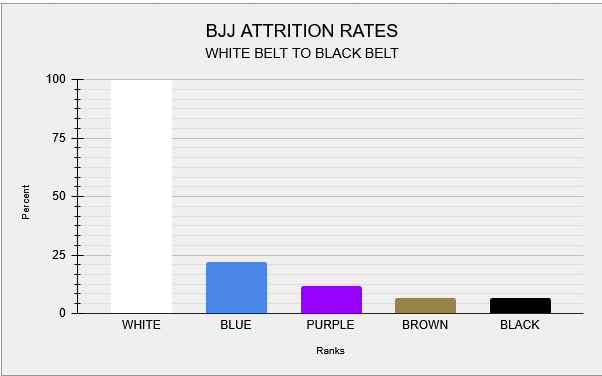
Attrition from rank to rank is seen in the chart below using the data from my own gym. These are the rates of attrition for each rank from white to black:
22% of white belts made it to their first rank of blue belt.
11.7% of white belts made it to purple belt, or 53% of blue belts.
6.5% of white belts made it to brown belt, or 56% of purple belts.
There was zero attrition from brown to black.
COMPARATIVE ANALYSIS FOR PERSPECTIVE - US ARMY SPECIAL FORCES
The US Army has a branch of special forces known colloquially as the Green Berets, named for the color and style of cap they wear with their uniforms. During the green beret selection process there is a phase of training designed to weed out and eliminate those who are unsuitable for the job. The success rate of people who pass this phase of training is, 40% on average (Pavelko, Jeff Lieutenant Colonel, 2017).
These are frontline war-fighters who use their combat skills day to day, often fighting when the rest of us are unaware battles are even underway. Juxtapose that with the average martial artist, who is undertaking their training as a hobby more than for immediate survival. Although survival and self-defense are still at the forefront of goals established by many practitioners, the necessity of using these skills in day to day life is often less imperative.
When we compare and contrast, Special Forces and Brazilian jiu-jitsu, it certainly raises a legitimate question – why are those who are using combat as a job, and going through a training phase designed to eliminate inadequate candidates, encountering a higher success rate than those engaging in the ‘sport/hobby’ of Brazilian jiu-jitsu? And by a magnitude of two to four times the success rate.
This observation, while idealistic, is based on the assumption that each professional Brazilian jiu-jitsu coach, those performing their duties for monetary gain, 1) by and large wishes to retain as many students as possible so as to make a living, and 2) help as many people as possible achieve their goals.
WHY DO PEOPLE START BRAZILIAN JIU-JITSU?
When interviewing new students, there are several reasons for individuals starting BJJ: self-defense, confidence, fitness, cool factor, friend, or family member showed them an inspiring technique, or ‘Joe Rogan told them they should’ on his highly successful podcast. Based on personal Interviews conducted with new prospects and students from 2011 to 2024 who came to my gym, the primary reason is for ‘self-defense’.
THE PURPLE BELT

At the rank of blue belt the average practitioner can do things in singular form in various instances in the fight – 1 submission, 1 escape, 1 guard pass, etc. However, when faced with adversity, strength, resistance, or an opponent who outweighs them or is much larger and/or stronger, the singular technique often fails to work and a backup is necessary.
The rank of purple belt is where we see the ability to adapt and overcome begin to really take hold. The ability to do things in series – a submission is countered, they have a back-up. The first escape attempt fails, they try another. They lose the dominant position, and immediately switch to a new position without hesitation, maintaining control over their foe. Boiled down, upon hitting a wall they are able to find another solution or, the capability to exhibit a level of control over an adversary and purchase ‘time’. Time to observe the problem, orient to a new position, decide, and attack. In my opinion these are necessary skills to adapt to the chaos of a violent attack.
Using the purple belt as the measure of success for helping students reach their goal of self-defense from BJJ training, we see that less than 12% met this goal.
WHY DO PEOPLE QUIT BJJ?
In exploring Brazilian jiu-jitsu we can separate the reasons practitioners quit into two larger categories: generic, and those specific to combat sports. The ‘generic’ category is comprised of attrition factors seen in any martial art or hobby. Especially ones that require such a lengthy commitment to achieve a high level of skill. These include:
Employment factors such as job relocation, promotions with larger time commitments, demotions, or job loss.
Family factors such as marriage, divorce, having children, or a family member who becomes ill and requires more care.
Financial factors like buying a home, or losing a home.
Declining health of the participant due to illness, or injury sustained outside of training.
Experimented with something new and decided it was not for them.
The reasons above are not of interest to us at this time for the purposes of this paper. The next category is of serious importance and central to the use of failure in the learning process of martial arts.
INJURIES - THE HIGH COSTS OF FAILURE IN BJJ
jensen-et-al-2017-table-1
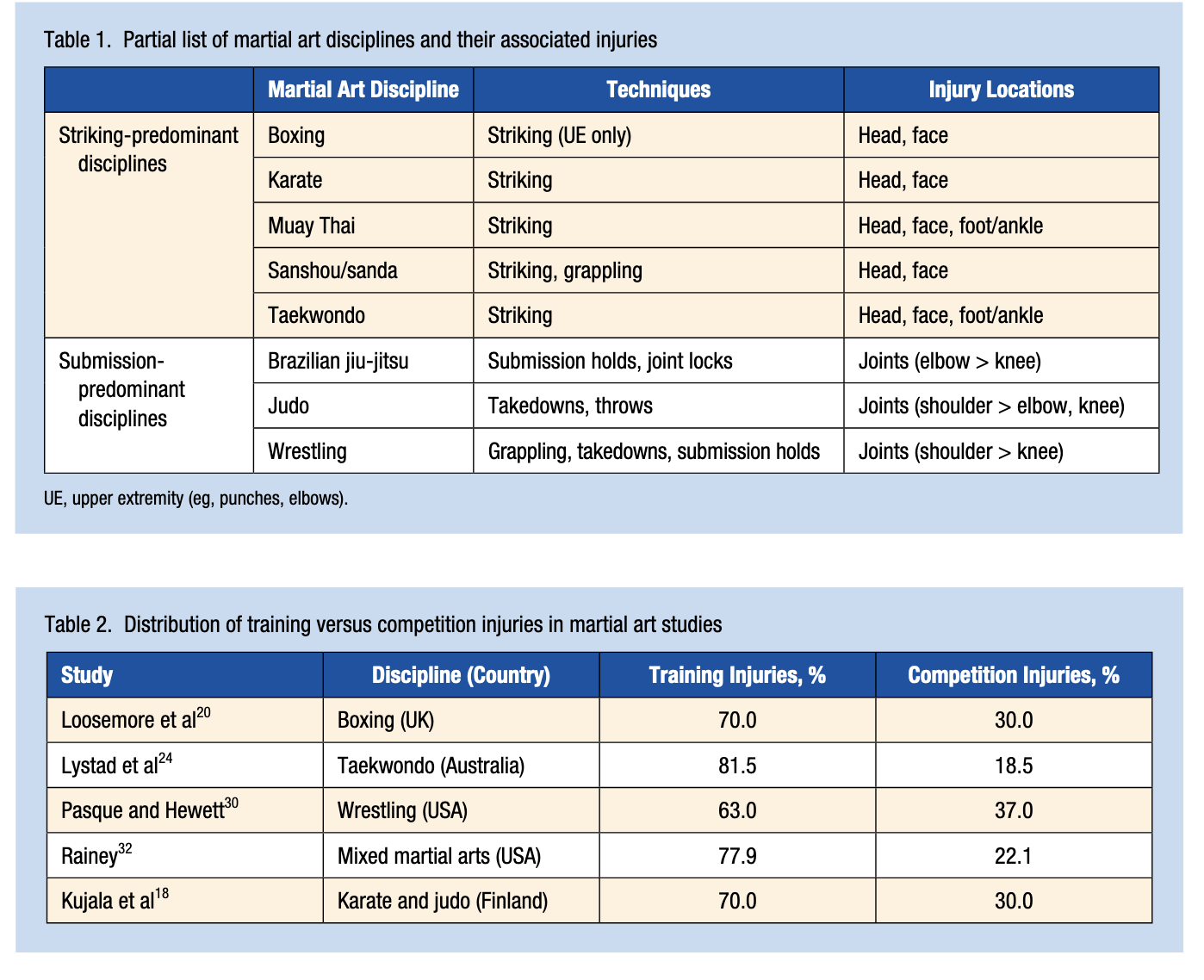
Injuries or, the fear of being injured, are primary culprits for people quitting and leaving BJJ. Even if they enjoy it. When we look around BJJ gyms, we see a bevy of taped fingers, braces for knees and elbows, and the odor of sports medicine sprays as ample evidence in support of this argument.
If a direct or severe injury is not sustained, it is the intensity in which some individuals train that causes the fear some individuals experience — a fear of getting injured. This will drive people to quit, or sit on the sidelines. Due to a majority of gyms taking a — ‘sport’ focus (no striking), it is commonplace to see aggression and intensity increased due to a false sense of security that is born of an environment free of strike-based attacks.
In other words, people take more risks (Risk Homeostasis), and execute the art with more strength and speed than they should. Falsely believing it is ok to execute sparring hard and fast because they’re not hitting one another. No one had a parent or driving instructor tell them when learning to drive, “Put the car in gear, now push that pedal on the right all the way to the floor.” This would quickly and magnificently end in a catastrophe. Going fast and hard on the mats creates a similar risk, albeit one that often takes longer to manifest into serious injury than doing so in a car.
BEHIND THE CURTAIN
My own injuries (of the more serious type), include — torn supraspinatus tendon, torn shoulder labrum, dislodged bone fragments (shoulder), advanced arthritis (shoulder), broken toes, ripped ear, crushed trachea — all before I ‘officially’ began BJJ training. These were my first three attempts at finding a Brazilian jiu-jitsu teacher/gym. Once I found a gym that was of a higher caliber, the injuries lessened but still occurred, as is par for the course.
Over the course of the next seven years while working toward my BJJ black belt, the following injuries were accumulated — torn left Lateral Collateral Ligament (down to fishing line), several broken toes, HPV contamination, broken teeth, numerous neck injuries. I later ended up with a torn right LCL after this period.
It is noteworthy to mention that all of the above happened during routine training regimens/sparring in the competition gym I trained in. I sustained no long term or significant injuries while: attending team trainings around New England, visiting gyms in other areas of the USA, BJJ training camps, or BJJ competitions. This does not indicate a problem in the gym I trained in, but rather the amount of time spent there versus the other venues.
In comparison, decades of mantis boxing/MMA landed me some scrapes, bruises, and a few concussions. Hundreds of hours of flight time in Hang-gliding/Para-Gliding since 2001 (arguably far more dangerous), has resulted in only a few minor injuries more akin to scrapes and bruises than anything severe.
WHY I SHOULD HAVE QUIT BJJ
The following essay details my initial, and catastrophic attempts at starting Brazilian Jiu-Jitsu. This is why I strongly advocate that you choose your martial arts based on 1) the coach, 2) the students/community, 3) the style. In that order. The essay provides insight into my motivations to being a better coach, and trying to share the art of BJJ with others, while reducing injuries and the fear of injuries.
A CURE, OR A POISON?
According to the Bureau of Justice Statistics which tracks victimization statistics in the USA annually, the likelihood of being the victim of stranger violence in 2026, is .0108%, or roughly 1 in 93.
With commonly accepted training practices found in BJJ gyms that include routine sparring, we can refer to studies done on ‘injuries in Brazilian Jiu-Jitsu’. These show that we have a 68% of being injured within a three year period (31% chance annually). Injuries that keep you from training for 2 weeks or more. This is further broken down — 79% of all BJJ injuries happen while sparring.
If the goal is self-defense, and the training has a 30x greater chance of hurting someone than they have of being the victim of a violent attack, it would indicate that the cure is worse than the disease, and that you are safer not training BJJ for self-defense purposes. It is my firm belief there are other highly important reasons to train BJJ and other combat sport martial arts aside from self-defense, which is beyond the scope of this paper. Comparing this data however is a reality-check when it comes to how we train, and should serve as the impetus for all of us who are coaches to do better at increasing retention and reducing injuries on the mats.
*This is a recent addition to the paper and links to the studies will be added shortly.
“BOYS DON’T CRY”
Humiliation is an often unspoken and more emotional reason practitioners have for quitting the art of BJJ. Tapping out, an action we perform when caught in a submission hold, is an admission to another person that they defeated us. While this is a necessary part of the learning process, so we may ‘learn from failure’, when an individual is first introduced to any combat art, but specifically Brazilian jiu-jitsu, “this can be an extremely humiliating process for those not accustomed to ‘failure as a learning tool’ modality.” (Eskreis-Winkler, L., & Fishbach, A. 2022). It offers further damage to the psyche if an individual is using everything they have, and it conjures nothing but defeat.
The following behaviors were witnessed when observing classmates in several BJJ gyms over the years — indicators such as – people repeatedly sitting out from rolling/sparring rounds any chance they can get, some leaving the mats rushing to the bathroom holding back tears, or at the outset of sparring rounds; asking another person — “Can we go really slow?” Expressing hesitation to spar/roll with certain individuals.
Another meme source in the BJJ online world — those who begin a round by listing several injuries they have, the purpose of which being — to secretly express a desire to not get hurt or humiliated, or a passive request for the other person to treat them with more care; especially when facing someone they perceive to have superior size, strength, skill, or aggression.
These factors are more emotional than physical, but become extremely important when presenting the argument that there is ‘too much failure’ in the process of learning BJJ. What is even more evident, is these last two examples often result in the person requesting to “go slow”, or listing their litany of injuries, goes into full attack mode as soon as the bell goes off. This is a clear sign of a lack of emotional control, and fear taking over, rather than some Machiavellian plan to defeat all teammates they encounter.
“Constant persistent failure is counter-productive to the learning process. If failure is persistent, especially when undertaking an activity with a high cost of failure like combat sports, then the probability a person will quit is exponentially higher.” (Lee, S., & Park, J. 2024) Pain, whether it is physical, mental, or emotional, is a natural enforcer to ‘stop’ the thing which is causing the pain.
Persistent failure falls in the mental and emotional categories, and therefore it is often overlooked by coaches, mentors, and even the individuals themselves who do not want to appear weak in the eyes of their peers, or mentors. This makes it extremely difficult for coaches to know the true reason a person has for quitting, as the individual is often reluctant to admit this, or they may not have processed exactly why in their own mind.
DEFENSIVE REACTION
A coach or mentor can easily dismiss a student as weaker, or too weak to handle the training, due to one or more of the factors above. Even becoming defensive when faced with this criticism or behavior rather than empathetic. Perceived more as a threat to their status, teaching method, and livelihood rather than a cry for help.
Appearing indifferent to the plight of the majority, one can see coaches and senior practitioners, myself included, entrench themselves in ideas such as: “It works for me.”, or “This is the way I was trained.”, or “This is the way we’ve always done it.”. Without realizing how many injuries we ourselves have sustained over time. Or recognizing that we are one bad injury away from being in a similar situation, or unable to do what we love. If a gym is successful financially, and their roster is full, there is little to no incentive to peel back the layers and look for a problem, or address these issues.
HIGHER RETENTION WITHIN TRADITIONAL CHINESE MARTIAL ARTS
If we contrast BJJ with traditional Chinese martial arts training, which typically includes the use of forms training (tao lu), shadow boxing, sticky hands (qi shou), and push hands (tui shou), we see much higher retention rates in the classes. The focus on solo skills training, movement patterns, or partner exercises produces an environment with a very low cost of failure. By and large when people quit in these gyms, it is due to one of the generic reasons above in my experience. Providing it is not an issue with the instructor or teammates. However, despite having a better retention rate there is an inherent problem with the transmission methods of Traditional Chinese Martial Arts. For that we first need to define what martial arts is.
WHAT IS MARTIAL ARTS?
The definition of martial arts itself is arbitrary, and subject to the viewpoints of the practitioner, training group, and coach. (Bowman, MAS 2024) Before delving into the deficiencies and failures of the modern-traditional Chinese martial arts curricula, I’ll establish a measurement criteria by defining what martial arts means (to me), and why the aforementioned goals individual students establish for beginning their martial arts training, are not being met according to these standards.
As a coach and practitioner I define martial arts using the following three criteria:
SEEKING WEAKNESS - the constant and never ending quest to find our own weaknesses in — skill, technique, timing, etc., and the overarching goal of shoring up these weaknesses once found. The mats/dojo/wuguan/training hall/garage/backyard, or wherever we train, this environment informs us of where we are deficient not only in hand-to-hand combat, or weapon combat, but likely it reflects and translates directly to psychological and emotional weaknesses we have off the mats in our day to day life. This constant struggle and exploration allows us a vehicle to continue to improve and strengthen who we are as human beings.
ORGANIZING CHAOS - the idea of a martial art itself as the ‘organization of chaos’. Fighting another human being can be defined as — ‘chaotic’. This word describes succinctly the randomness, challenges, and disarray that happens within combat with another human being. During the engagement we cannot possibly know what the other person will do, or how they will go about attacking us. Through training martial arts skills and techniques, controlling ourselves, our actions, tactics, positions, and emotions, we can limit the options available to an opponent. Thereby reducing the number of possibilities they have to attack us and organizing the chaos into a more manageable state.
INOCULATION TO METHODS OF VIOLENCE - the third definition of martial arts is the ‘inoculation to methods of violence’. Through trust in our partners and teammates we engage in the act of inoculating ourselves, and one another, to the wide range of possible attacks that could happen to us in a real world situation. This exposure allows us to learn and adapt appropriate responses to these acts of violence through repetition, and control failure. Training effective means of mitigating and possibly dominating these risky scenarios. Martial arts training halls ‘should be’ a safe environment where we can engage in such practices so as to build skills to deal with circumstances that could otherwise kill us outside of the training hall where ‘TAP!!!’ is no longer an option.
A martial art that fails to meet any or all of these criteria leaves the practitioner feeling insecure in their abilities, or provides a false confidence in one’s capabilities. Creating a ‘skills fantasy’ versus ‘skills actual’. When practitioners engage strictly in solo and restricted partner training routines found in Traditional Chinese Martial Arts (and others), they fail to achieve the goal of learning ‘self-defense’, as is evident by the lack of participation and/or success of Traditional Martial Arts in modern combat sport arenas, challenge matches by amateur fighters, and sparring.(See early UFC/MMA fights, challenge matches versus traditional ‘masters’ in China, et al Personal Experience sparring with taekwondo and kung fu from 1999 to 2006, and versus practitioners of these arts from 2006 to 2024)
These failures are not exclusive to specific styles, or schools of Asian martial arts. The same outcome can be reproduced when sparring with practitioners of combat sports such as: boxing, kickboxing, etc. from gyms that focus strictly on bag and mitt work, kickboxing workout classes with ‘no partner work or sparring’, and any other martial art style focused on technique and void of sparring.
To be fair, combat sports suffer their own inherent weaknesses due to overly specialized training. Training modalities that lock practitioners into sport rule-sets, reducing their exposure to the chaos they will likely face in a real world self-defense scenario.
“When faced with a situation outside of their specialty, an attack the martial artist has not been inoculated to, the fighter often hesitates, or pauses to question what is currently happening, or why they are not effective at their skills, etc.” (Buonomano 2012) This can place the combatant ‘behind in the fight’ versus an aggressor, who shows no such reluctance or hesitation in the battle.
Examples:
A boxer facing a kicker. Each time the boxer approaches, they get blasted in the leg. Unfamiliar with this attack due to sport rules, they hesitate, and question what just happened.
A Muay Thai fighter with a light fighting stance for mobility and kicking facing a Greco-Roman wrestler only interested in shooting the takedown. The muay thai fighter suddenly finds themselves on their back while getting smothered with pressure. With no tools to deal with this, delay, and likely panic sets in.
A BJJ Purple Belt with a focus on sport rules fighting a striker. They pull guard on the striker ready to go to work. The strike begins to ground and pound and the BJJ practitioner is now in uncharted territory with no map.
All of these scenarios reproduce similar outcomes. The mind of the fighter facing an unfamiliar, unscripted condition they have not been inoculated to. The fighter/grappler/wrestlre now falls back on whatever tools or attributes they had prior to gaining skills — speed and power. It is observed that quite often after being indoctrinated into sport fighting, the practitioner even forgets basic fighting and survival tools they may have used before taking up martial arts training e.g., hair pulling, groin strikes, eye pokes, etc.
WHY DO PEOPLE GET INJURED IN BJJ?
When people start Brazilian jiu-jitsu or any martial art, especially individuals with no prior training, there are two phenotypes, or innate attributes that have dramatic effects on sparring — 1) power, and 2) temperament, which manifests as speed. When a student is faced with stress, fatigue, fear, a lack of skill to deal with a situation, or the aggression or speed of a partner, or the perception of such even if it is not happening, then they will inherently fall back on using one or both of the aforementioned attributes as a survival mechanism. Therefore, the introduction of speed and power into the act of sparring in a gym is the primary culprit that leads to injuries and such a high cost of failure in Brazilian jiu-jitsu, and other combat sports such as MMA.
WHEN SUCCESS IS NOT SUCCESS
The use of ‘strength’ and/or ‘speed’ to bring success to prevent a ‘TAP!’, a hit, or a takedown, only reinforces to our brain that we are using the correct behavior/response to help us not just succeed, but more importantly — survive.
Example: A practitioner taps out a teammate four times in a rolling session. The following week the victim decides they are not going to get caught again by this person. They approach their next sparring session with all the resistance they can muster. If they are successful they reinforce the use of speed and power as behaviors, rather than skill. This delays the learning of skills. Additionally, they are vastly increasing the likelihood of injury as the person who was tapping them out is receiving that speed and power, and adds speed and power of their own. Couple that with some amount of skill and this leads to catastrophic injuries in a ‘learning’ environment.
THE FALLACY OF — ‘ALL OUT’ WAR
An all too common misconception with BJJ training that ripples throughout the community is as follows:
“What’s great about BJJ is that we can go 100%!”
This is categorically false and one of the primary culprits that leads to torn ligaments, shoulder injuries, blown knees, back hips/backs, and accidental collisions, e.g., when a knee is suddenly smashing in one’s face in an unintended transition. We only need to look at sports science for the first indication that this is the wrong way to approach training Brazilian Jiu-Jitsu. Good training is pushing an athlete into a 60 or 70% range, rather than trying to ‘max’ every workout.
This brings us to how to train in healthier ways not only for the body, but for the mind and spirit.
SOLUTIONS
How can we encourage failure in learning to fight while lowering the cost of failure, allowing students the freedom and enjoyment of training and gaining new skills? The following methods have been found in my own gym, to increase retention, drastically lessen injury and the fear of injury, as well as build improve teamwork and camaraderie on the mats for everyone in the class.
Although new numbers will take years for an accurate comparison, the following guidelines are the principles I use in my gym which have been successful at affecting positive change that was evident within months, and continues to show promise after now 4 years of using these methods:
PROBLEM SOLVE APPROACH - Present students with problems not solutions. Avoid over-coaching. Let people work together to solve problems and embrace the struggle together. This has shown increased ownership over the learning process and increases enjoyment of successes when they achieve them. We can accomplish this with a variety of methods: 1) show a move, let others figure it out, 2) set up a situation and ask them to try and solve it before revealing answers. Provide hints where needed, or to prevent massive detours down non-productive paths. Use a light touch.
CURRICULUM - Build a curriculum to teach by. An outline is sufficient, and does not need to be specific down to the lesson plan which can often put the teacher into a cruise control mode. Preventing innovative thought or organic evolution to the process that may spawn from a looser structure each time the same subject matter is taught. If I teach the same curriculum I developed 15 years ago, then I am failing to share 15 year of further growth, knowledge, development that I can bring to bear to help people avoid pitfalls and mistakes.
Brazilian jiu-jitsu is quite easy to build a curriculum for, especially for white belts. We use the 4 Dominant positions template - mount, side mount, back mount, guard (closed/open) as a platform. We add how to control someone, or positional control, a handful of submissions from each position, and then how to escape said position.
STAY ON TASK - Once we have a curriculum stay focused on each ground position for months before moving on. Start with solo drills to give students a way to practice off the mats, then introduce ‘one’ submission. Add from there week by week, all the while the student is getting reps on the moves they have already learned establishing pattern recognition (what to use where), gaining coordination, strength in the right places, learning to relax in the moves, and becoming adept at the technique while being exposed to other submissions they may never otherwise see. Repetition is the mother of all skill.
STRESS TEST - Prior to leaving a position behind, spend 1 to 2 weeks stress testing the position — ‘positional sparring’. Each student starts in the position and tries to pull off the submissions when the person under them, or in their guard, is non-compliant. Escapes work the same way. Using resistance to test the escape to see if they can still get out, or at least apply the correct principles under duress. While success here is welcome, it is not the point of the test. The goal here is to give the person exposure to what a resistant adversary feels like. Helping them understand that things are not always as easy as they appear without the risk of full on sparring.
NO STRINGS! - Avoid showing off some fancy move, or a high level sequence to set the person up to pull off a submission. After introducing a technique in this way, most students cannot execute the submission when the time comes in live rolling. All of the time and repetition was spent on the chain, or sequence that lead up to the submission or sweep, rather than on the submission itself. By showing chains of movements to arrive at the point of the lesson, we are only distracting them and inhibiting learning rather than instilling how to finish the move in the first place.
Example: We start our lesson off with something like — “Today we are going to work on the keylock (americana) from side control. Start in your opponent’s guard then grab the belt —> walk the knees back —> round the back to break the guard. Now knee slice pass to the side mount —> execute the keylock.”
This can be drilled for the usual 10 to 20 minutes before rolling begins. As soon as it is time to roll the outcome is more like this:
The student starts in guard, grabs the belt as they were shown, and the person under them punches them in the face. Now they are asking themselves what the hell just happened, and why the coach didn’t talk about that.
We can use sport rules only for the example:
The student starts in guard, grabs the belt to start their break, and the person on the bottom reaches into their collar and starts choking them. The same questions arise: “What do I do now?”, “Why didn’t the coach talk about this?”
Did the student go home that day remembering the keylock and how to execute it from side control? No. They instead went home thinking about all the times they were tapped out in the subsequent X number of rounds of sparring, and wondering what they can do to stop that from happening the next time. Are they learning through failure, and coming up with questions? Yes, but we’re not providing a new skill, but rather constantly putting out fires, and reinforcing the use of primitive skills, or attributes.DELAY SPARRING/ROLLING - Remove sparring for white belts until they have gone through the entire curriculum one time. For my gym this takes roughly 2 years for both the Mantis Boxing, and BJJ cycles. There is still periodic and strategic pressure testing with resistance drills, and positional sparring as I mentioned. This is by far the most important piece, and was the hardest for me to institute. I was not taught this way and refused for years to institute it in my own gym even though deep down I knew it was the right call. Once I took this step, change began almost immediately. This action allows for:
Ample time for students to replace ‘power’, and ‘speed’, with skill so when it comes time to spar, they do not fall back on the fight, flight, freeze response and rather, institute the new responses with the skills they’ve invested two years into learning.
Builds trust and camaraderie amongst teammates. Martial arts is an individual sport/activity vs a team sport like soccer, or football. However, we need a team, or partner(s) in order to progress and evolve. Without such we have very limited chance of successfully understanding these arts we practice. By removing sparring, and thereby developing skills and trust, the next step is possible. The introduction of sparring will require ultimate trust and strong bonds within teammates, or we risk backsliding into raw emotion and out of control bouts within the gym.
MENTOR SPARRING - Once a student has gone through the curriculum one complete cycle institute mentor sparring to help them achieve pattern recognition and acclimate to all the moving parts working together. Mentor sparring is established with the following parameters:
One-Offense / One-Defense: Before the round starts establish ‘one person on offense’, and ‘one person on defense’ parameter. This can be determined by the participants or coach, and allows each person to know what their primary role is. This prevents accidental clashing where both sides are competing for position and are failing to help one another, increasing the likelihood of injury with those new to sparring.
Setups: The mentor sets up opportunities for the newer individual to apply skills they have learned. Examples of this are: they are in the mount and they leave their arm out so the person sees the arm bar. Another would be rolling to the turtle to give the person an opportunity to take the back, and then execute the lion killer choke after rolling them. Dropping a hand to leave the head open for a strike. This is done in a variety of situations on an as needed basis.
Pauses: The mentor pauses in positions their partner fails to recognize, or when a mistake is made, giving the student time to recognize the pattern and take action. The lower the skill level the longer the gaps. A purple belt may still need a pause to assimilate a new skill learned, but likely the gap will be much smaller than that same move for a white belt. No matter what rank or skill level, if the fighter is not recognizing the pattern, and definitely does not know what to do in that situation, the mentor can then give them a nudge, or a hint as to what they are missing so they can recognize the next time. Good practice is for the mentor to set up that same situation a couple more times (if time allows in the round), so the person can repeat the correct solution.
No Gear!: If striking and kicking are part of your training, remove all pads and gloves from the sparring rounds. Gloves, helmets, pads result in people taking more risks in sparring. This is known as ‘Risk Homeostasis’ and is well studied in football and driving. Additionally, within combat sports, it is my experience that helmets, pads, and gloves cause people to hit harder and go faster. Each time they hit someone, they do not get the expected response (pain and disruption), so they naturally add more intensity in order to compensate. Not only do helmets specifically, encourage injuries (concussions & CTE), the use of them retards the learning rather than encouraging it. People take more risks and eat more punches, mistakenly thinking they are ‘protected’.
Speed: In BJJ I recommend 40 to 50% as the upper limit of intensity and speed for high level practitioners to avoid injuries and keep the stress level low for optimal learning. This is what is often referred to as ‘flow rolling’. With newer practitioners lowering that to 20 to 30% is better for their experience and progression. When people begin sparring, it may be necessary to keep it to 5 to 10% in order for their minds to catch up.
White Belts — 5 to 10%
Blue Belts — 20 to 30%
Purple Belts — 30 to 40%
Brown/Black Belts — 40 to 50%
Stress Test: Slow to learn, fast to test. When do we go 100%? In competition or real-world altercations ONLY. In the gym? Never. When striking, kicking, and throwing — Full power/speed can be viewed as the equivalent of training with live bullets. When ground grappling — during positional sparring stress testing, with caveats. When the practitioners are isolated and there is less movement involved it is possible with good teamwork to push the edge and maximize resistance. If executing escapes from an inferior position for example, upon successful escape the position is ‘reset’, the test is started anew. There is no opportunity for continuation and therefore it reduces the likelihood of accidental injury.
De-escalation Method: Even under the best circumstances humans have bad days, or there is something in our past that is revealed on the mats and causes us to overreact, or unintentionally speed up or use more force. While slowing ourselves down can sometimes be enough, there is a safety risk in doing so and we must be careful when attempting that. The preferred method is:
When faced with a teammate showing clear signs of duress, the following ‘unorthodox’ technique is used to bring them back to center. Start talking to them while sparring, or say you need a break for a minute. Begin small talk such as — “What did you do this weekend?”, “Seen any good movies as of late?”, or “Is this a busy time of year for you?” There are many such questions, the key is to take their mind off of the current fixation and allow them to relax and use skills.
We have used this heavily in our gym over the years. This tool is used more frequently when trying to get people sparring earlier, before they have had time to replace instinct with skill.
RESULTS AND CLOSING STATEMENTS
In closing, I challenge that we must ask ourselves who is setting these standards of what Brazilian jiu-jitsu training looks like? Who is running classes and coaching others? Whose job is it to help the students reach their goals? Who continues to perpetuate this ineffective cycle? It is not the 94% who quit along the way. It is not even the 6.5% that made it to black belt as not all of them go on to teach. It is the even smaller percentage that go on to coach. Change must start with us.
A majority of practitioners are not trying to be the best competition jiu-jitsu grappler in the world, and yet our training practices and sparring formats exhibit such patterns, and our attrition is worse than the elite military units. Without self-reflection, interviewing students who leave, or taking stock of retention data, we as coaches can become entrenched in the status quo. “It worked for us so why is this a problem?”
We made it through the gauntlet, and it feels good to be a member of such an elite group of people that made it to the highest levels of BJJ, one of the few who overcame a monumentally difficult task over such a long period of time and in the face of extreme adversity. Yet, is the destruction of bodies, minds, and spirits, in our purview of coaching and teaching others the art of Brazilian jiu-jitsu? Or is our objective to help students achieve success and reach their own goals of learning to defend themselves?
It is unrealistic and idealistic to believe we can eliminate all injury from martial arts training, but we can vastly decrease the propensity for such, while reaping the benefits from sparring. Over the past two years I have instituted the changes I laid out above. It has shown my students, those who I am fortunate enough to get to teach, that sparring can be fun. An activity we enjoy and learn more from than any other part of our training. It is the glue that binds our skills, teaches us to adapt, and produces confidence in our abilities. And we have shown it can be done without compromising efficacy, while also reducing injuries, improving confidence, and building solid skills across the entire team.
We have witnessed an epic change in the atmosphere of the team these past couple years. We graduated a crew of 5 new blue belts, all with increased competency. Each of them acclimated well to the sparring classes, and rely on skills when they spar rather than using speed and power as their primary tools. Camaraderie is now the norm, rather than competition. Team members have become invested in one another's success, not just their own and by proxy the failure of others they train with, and constantly compete against.
We replaced power and speed with skill, and skill is the new normal. Knowledge, understanding and abilities have gone up drastically, and retention, even though it will be years to compare the data, has flipped 180 degrees.
References
Zhou, Q., Mao, J. Y., & Tang, F. (2020). Don't Be Afraid to Fail Because You Can Learn From It! How Intrinsic Motivation Leads to Enhanced Self-Development and Benevolent Leadership as a Boundary Condition. Frontiers in psychology, 11, 699. https://doi.org/10.3389/fpsyg.2020.00699
International Brazilian Jiu-Jitsu Federation (IBJJF) (2013-2024). Graduation Standards. https://ibjjf.com/graduation-system
Pavelko, Jeff Lieutenant Colonel (2017). US Special Operations Command, USSOCOM IMPLEMENTATION PLAN PROGRESS, 6 (SFAS Table 2012-2015 et al). https://dacowits.defense.gov/Portals/48/Documents/General%20Documents/RFI%20Docs/June2017/SOCOM%20RFI%202.pdf
Eskreis-Winkler, L., & Fishbach, A. (2022). You Think Failure Is Hard? So Is Learning From It. Perspectives on Psychological Science, 17(6), 1511-1524.https://doi.org/10.1177/17456916211059817
Lee, S., & Park, J. (2024). Giving up learning from failures? An examination of learning from one's own failures in the context of heart surgeons. Strategic Management Journal, 1–32. https://doi.org/10.1002/smj.3609
Russel, Stuart; Norvig, Peter (1995) Artificial Intelligence: A Modern Approach, Prentice Hall.
Ibrahim Abou Halloun, David Hestenes; The initial knowledge state of college physics students. Am. J. Phys. 1 November 1985; 53 (11): 1043–1055.https://doi.org/10.1119/1.14030
Ibrahim Abou Halloun, David Hestenes; Common sense concepts about motion. Am. J. Phys. 1 November 1985; 53 (11): 1056–1065.https://doi.org/10.1119/1.14031
David Hestenes; Toward a modeling theory of physics instruction. Am. J. Phys. 1 May 1987; 55 (5): 440–454.https://doi.org/10.1119/1.15129
Hanford, Emily (Host). (2012) Physicists Seek To Lose The Lecture As Teaching Tool [Audio Podcast]. National Public Radio. https://www.npr.org/2012/01/01/144550920/physicists-seek-to-lose-the-lecture-as-teaching-tool
Buonomano, Dean (2012) Brain Bugs: How the Brain's Flaws Shape Our Lives, W.W. Norton & Company
Bowman, Paul (2024). Opening Talk Martial Arts Studies Conference 2024, Cardiff University, Cardiff, UK. https://youtu.be/PuTWMS0z1XQ?si=hsdyKJsFjbpAiZnS
Naureen, Z., Perrone, M., Paolacci, S., Maltese, P. E., Dhuli, K., Kurti, D., Dautaj, A., Miotto, R., Casadei, A., Fioretti, B., Beccari, T., Romeo, F., & Bertelli, M. (2020). Genetic test for the personalization of sport training. Acta bio-medica : Atenei Parmensis, 91(13-S), e2020012. https://doi.org/10.23750/abm.v91i13-S.10593
Varillas-Delgado, D., Del Coso, J., Gutiérrez-Hellín, J., Aguilar-Navarro, M., Muñoz, A., Maestro, A., & Morencos, E. (2022). Genetics and sports performance: the present and future in the identification of talent for sports based on DNA testing. European journal of applied physiology, 122(8), 1811–1830. https://doi.org/10.1007/s00421-022-04945-z

Guest Appearance: Mantis Boxing, BJJ, Self-Defense and heresy in martial arts (Ep31 - The Tai Chi Notebook Podcast).
Good Afternoon All, Back here in New England after spending a week at Martial Arts Studies Conference 2024 in Cardiff, UK. The conference was exceptional, but more on that later. For now, I’ll highlight one of the many outstanding encounters of the trip. I had the distinct pleasure this past week of meeting and sitting down with…
Good Afternoon All, Back here in New England after spending a week at the Martial Arts Studies Conference 2024 in Cardiff, UK. The conference was exceptional, but more on that later. For now, I’ll highlight one of the many outstanding encounters of the trip.
I had the distinct pleasure this past week of meeting Graham Barlow of The Tai Chi Notebook Podcast, and Blog. I had seen Graham’s blog a few years ago but never had the honor of meeting him. Graham is a long time practitioner of Chinese martial arts: Tai Chi and Choy Li Fut to name a couple. He then migrated as I did to Brazilian jiu-jitsu where he now spends his time teaching and sharing his passion with others.
Graham and I had tons to talk about, and the dialogue continued when opportunity arose between panels or at the end of the day. Without spoiling it, I’ll now introduce you to one such moment when Graham suddenly pulled out a recorder, and invited me to an impromptu podcast which he pulled off masterfully.
Enjoy the discussion, it goes in my bucket of favorite chats.
Ep31: Mantis Boxing, BJJ, Self-Defense and heresy in martial arts
The Tai Chi Notebook Podcast
For more good stuff from Graham
Find him on YouTube:
https://www.youtube.com/channel/UC1SJdsrGOYU45CFU9naMHHg/
Find his website and podcast:
http://www.thetaichinotebook.com/
Facebook:
@TaiChiNotebook

Ground Fighting Basics I - Master Your Foundation
Gain core strength.
Improve mobility and program your reflexes.
Master the building blocks to win the day.
A house built on a poor foundation…is bound to collapse and fall into ruin.
Our martial skills are no different.
Gain core strength.
Improve mobility and program your reflexes.
Master the building blocks to win the day.
The problem with a subpar foundation in any martial art is that it leads to failed technique and a breakdown of applying our skills effectively and efficiently.
When we’re on the ground, this is exacerbated by the weight, strength, and will of larger opponents coupled with gravity keeping us stuck and unable to move. Even a smaller opponent with a higher skill level can prevent us from being able to escape.
Failure to adopt solid basics can cause our brain to stop in the middle of a bout, attack and have to think what to do next.
Take the Shortcut
The short path to a better ground fight game, is to master the basics of Brazilian jiu-jitsu. Programming your body to know how to respond properly to external stimuli. How to react with fluid and natural movements.
Confused moments, or lack of knowledge costs us precious seconds that we need in order to gain position and win submission on an opponent.
As I began learning Brazilian jiu-jitsu I found many of my natural instincts from training other martial arts for over a decade, were wrong. Dead wrong.
The natural reactions and movements I had for striking, kicking, and throwing arts caused me to end up in worse positions on the ground, and to ultimately tap out. Even before getting my black belt in BJJ, I strove to make the process easier for my students. To remove some of the guesswork. To help them build a solid bedrock to grow their art.
Start off on the RIGHT foot
In this course, I’ve assembled the foundation you need to improve your ground fighting skills. The road to mastering your ground fighting game lies in these key movement patterns that will come to save you time and time again from devastating loss.
These drills and exercises are perfect for solo practice while building strength, conditioning, muscle memory, and solid kinesthetic movement patterns.
The training tools of champions. Building these into your training routines will provide large gains on the mats while giving you an incredible core workout.
Let's get started!
Course includes:
Easy to follow video lessons breaking down each of your necessary skills.
A pre-planned training mission to take the guesswork out of what to train and how to practice these necessary skills.
FREE PDF doc Basics of BJJ - breaking down the art of Brazilian jiu-jitsu. Making it easier than ever to understand what your goals are, and how to understand not only the overall objective, but the terminology to navigate the art.

Sweeps - Throws on the Ground - BJJ Training Course
Tossing an opponent like a salad. Pulling off a sweep in ground fighting is an exhilarating moment that fills us with monumental sense of victory. What comes next? These powerful moves are fundamental to our jiu-jitsu arsenal, yet are so often applied at the wrong time, or wrong place. In this course I’ll give you the tools to not only train your sweeps on your own, or with a partner, but how to successfully pull them off in live rolling.
Toss your opponent like a salad!
Pulling off a sweep in ground fighting is an exhilarating moment that fills us with monumental sense of victory. It’s second only to a submission.

You’re on the ground opponent in your guard. You learned how to sweep but when the moment comes to try it, they don’t budge. Why? Or, you get the sweep, and they quickly retake a position on you. Why?
These powerful moves are fundamental to our jiu-jitsu arsenal. Some of the best moves we have. Yet they are so often applied at the wrong time, wrong place, or with a lack of follow-up. In this course I’ll give you the tools to not only train your sweeps on your own, or with a partner, but how to successfully pull them off in live rolling, and to keep the opponent from coming back for more.
No experience necessary!
*course included with Legacy Boxer and Supreme Ultimate Boxer memberships

Fight Chat with Jerry Liu of Fight Commentary Breakdowns
Jerry Liu of 'Fight Commentary Breakdowns' & 'FC Chats' stopped by for a great discussion. Jerry runs some popular YouTube channels but has been a life long martial artist from Kung Fu as a kid, to Kempo, Muay Thai, and BJJ as he continues his journey. Join us as we go the rounds and attempt to change one another's minds, or agree on topics such as:
Jerry Liu of 'Fight Commentary Breakdowns' & 'FC Chats' stopped by for a great discussion. Jerry runs some popular YouTube channels but has been a life long martial artist from Kung Fu as a kid, to Kempo, Muay Thai, and BJJ as he continues his journey. Join us as we go the rounds and attempt to change one another's minds, or agree on topics such as:
‘Teacher : Student' ratios in Brazilian Jiu-Jitsu
Emotional Control and Sparring with Wild Partners
Concussions | CTE in Combat Sports
How to Spot Bad Self-Defense Courses
You can follow more of Jerry's content here:
-Fight Commentary Breakdowns - https://www.youtube.com/c/FightCommentaryBreakdowns
-Fight Commentary Chats - https://www.youtube.com/channel/UCPLNOnmT8MtZJzIMCElyHMg
-Instagram - https://www.instagram.com/fightcommentary/
-Fight Commentary Grappling - https://www.youtube.com/channel/UCQfBeZEQXbiGfgR_BEySSPQ
His Dark Roots - Interview with Stephen Kesting
For this podcast my friend and BJJ Black Belt Stephen Kesting stops by to chat about his background in Judo, Kung Fu, and his eventual shift to BJJ. We also discuss the current state of BJJ, where it is heading, and wrap up with…
For this podcast my friend and BJJ Black Belt Stephen Kesting stops by to chat about his background in Judo, Kung Fu, and his eventual shift to BJJ. We also discuss the current state of BJJ, where it is heading, and wrap up with some technical advice for beginners and where to focus your efforts in BJJ early on. A great conversation that I know you will enjoy.
Stephen started his website grapplearts.com back in 2003 to share his passion for BJJ and help others learn through systematic practice and easy to follow instruction.
If you like this podcast with Stephan and I, you can listen to his podcast when I was a guest on his channel:
You can find and follow Stephan @
GrappleArts - Stephan’s website
Instagram - Stephan on Instagram
Check out Stephan's latest book - Non-Stop Jiu-Jitsu

Guest Appearance: Fight Commentary Chats w/ Jerry Liu
I recently had the privilege to be invited on Jerry’s new podcast - Fight Commentary Chats. Some of you may have come across Jerry already in your YouTube travels…
I recently had the privilege to be invited on Jerry’s new podcast - Fight Commentary Chats. Some of you may have already come across Jerry in your YouTube travels, he and his peers host a now popular martial arts channel on YouTube known as Fight Commentary Breakdowns.
Jerry and I had an awesome chat about our backgrounds and experiences, Chinese martial arts, MMA, fake masters and the recent challenge matches disrupting the old guard in Chinese boxing styles and forcing change. Strap yourself in and get hooked on this lively, content filled dialogue that is sure to entertain.
Check out more of Jerry’s videos or join him on social media at the following sites/apps:

How to Defeat the BJJ Guard in 4 Easy Steps
End the frustration!
Have you ever wanted to try one of the amazing submissions or sweeps from Brazilian jiu-jitsu and instead, spent the entire class stuck in guard? Do you find it impossible to pass guard because you cannot even break the guard in the first place? Do you routinely break guard on people your own size, only to be shutdown and back to square one against a larger opponent?
The BJJ Guard is a Nightmare to Deal With.
End the frustration! Pass Guard. Dominate. Submit.
Have you ever wanted to try one of the amazing submissions or sweeps from Brazilian jiu-jitsu and instead, spent the entire class stuck in guard? Do you find it impossible to pass guard because you cannot even break the guard in the first place? Do you routinely break guard on people your own size, only to be shutdown and back to square one against a larger opponent?

I’ve been in your shoes.
I’m Randy Brown and I’m a black belt in Brazilian jiu-jitsu. I’ve been teaching martial arts for almost 20 years. My primary art, mantis boxing, did not have a ground game so I undertook the mission of getting to know the ground fighting game to the best of my abilities, but I started this much later than my other training. This helped me to approach BJJ with a methodical mindset. Always looking for more efficient and effective ways to train, teach, and execute the skills I use, and share with my students.
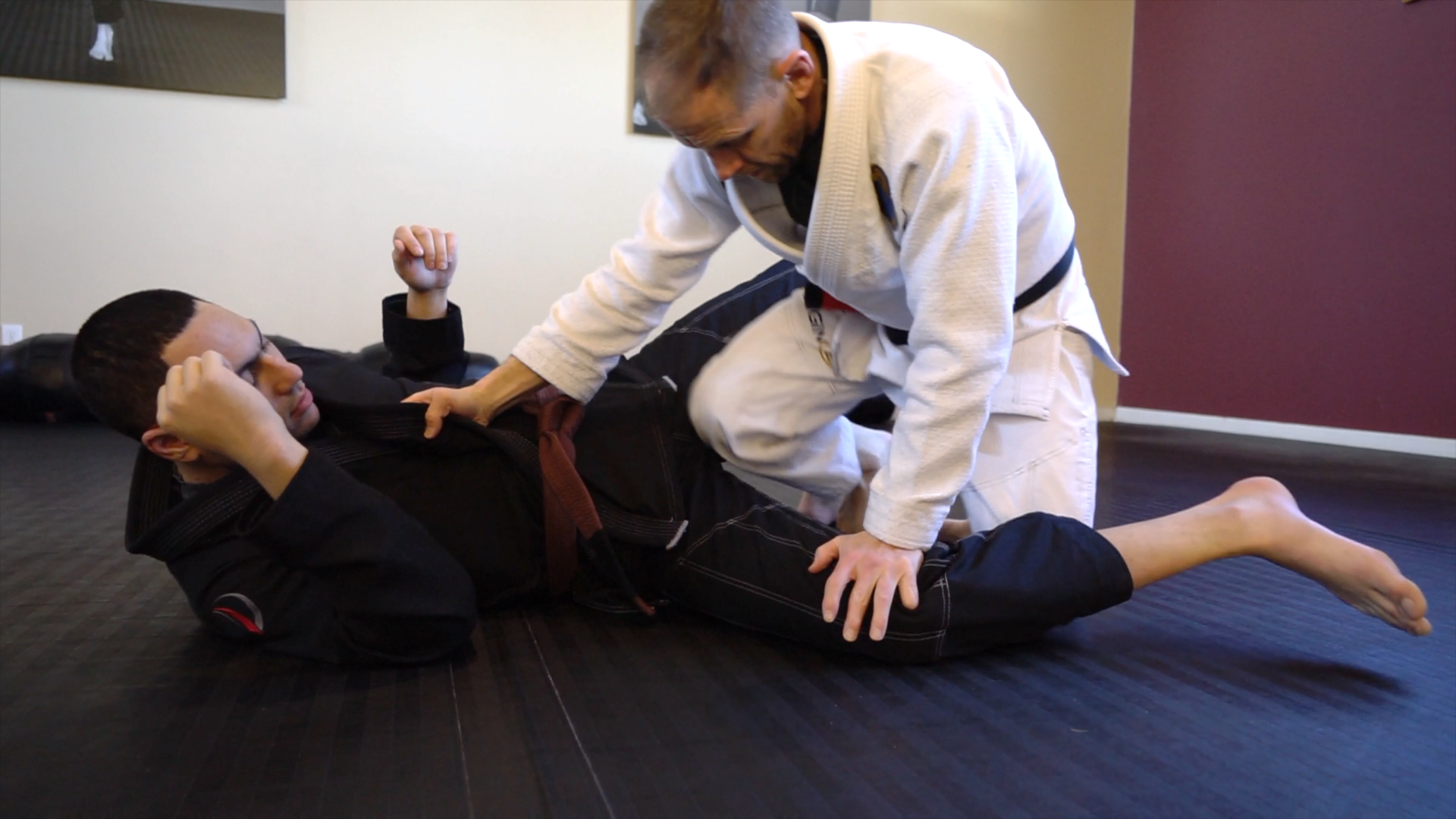
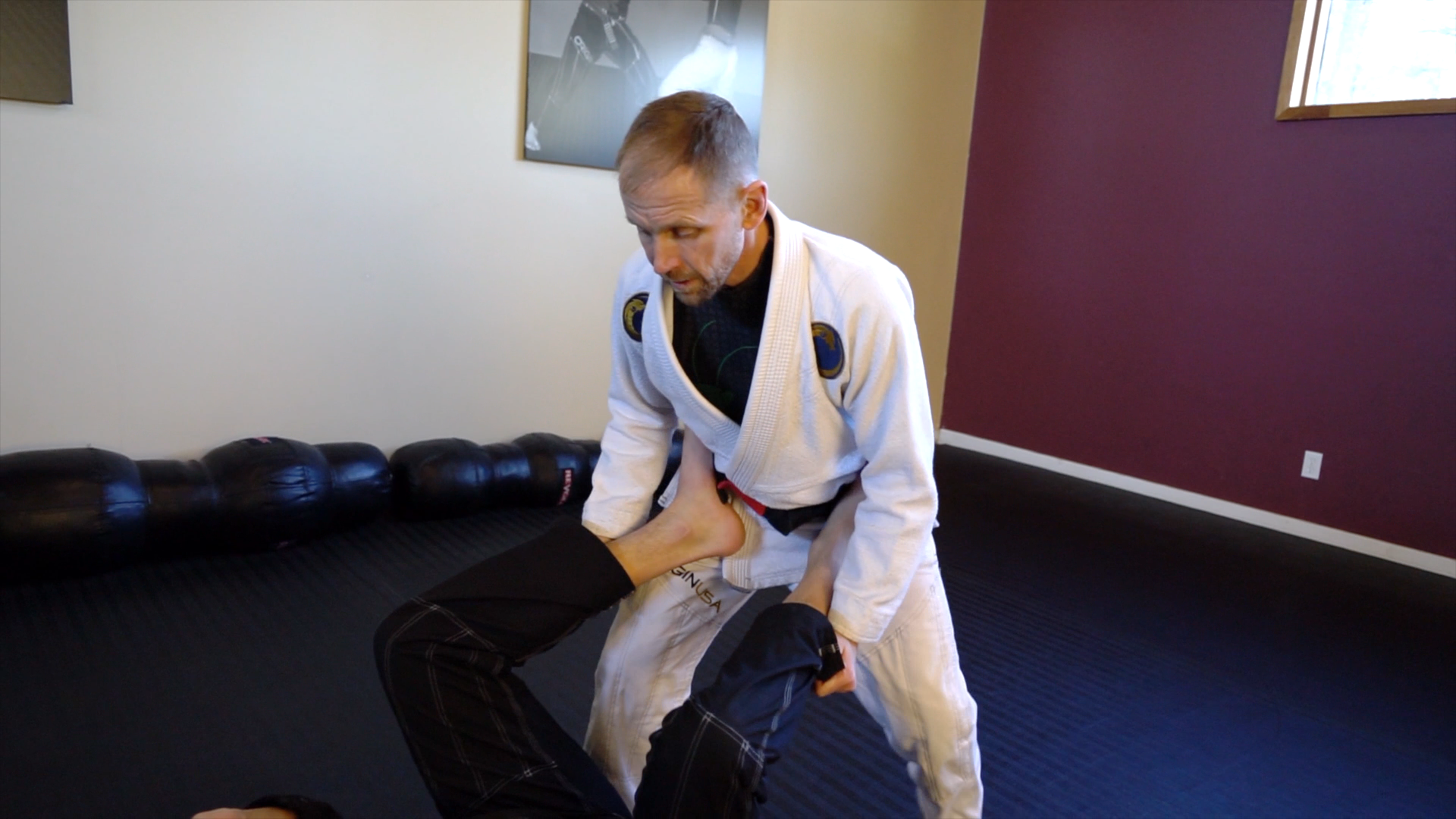
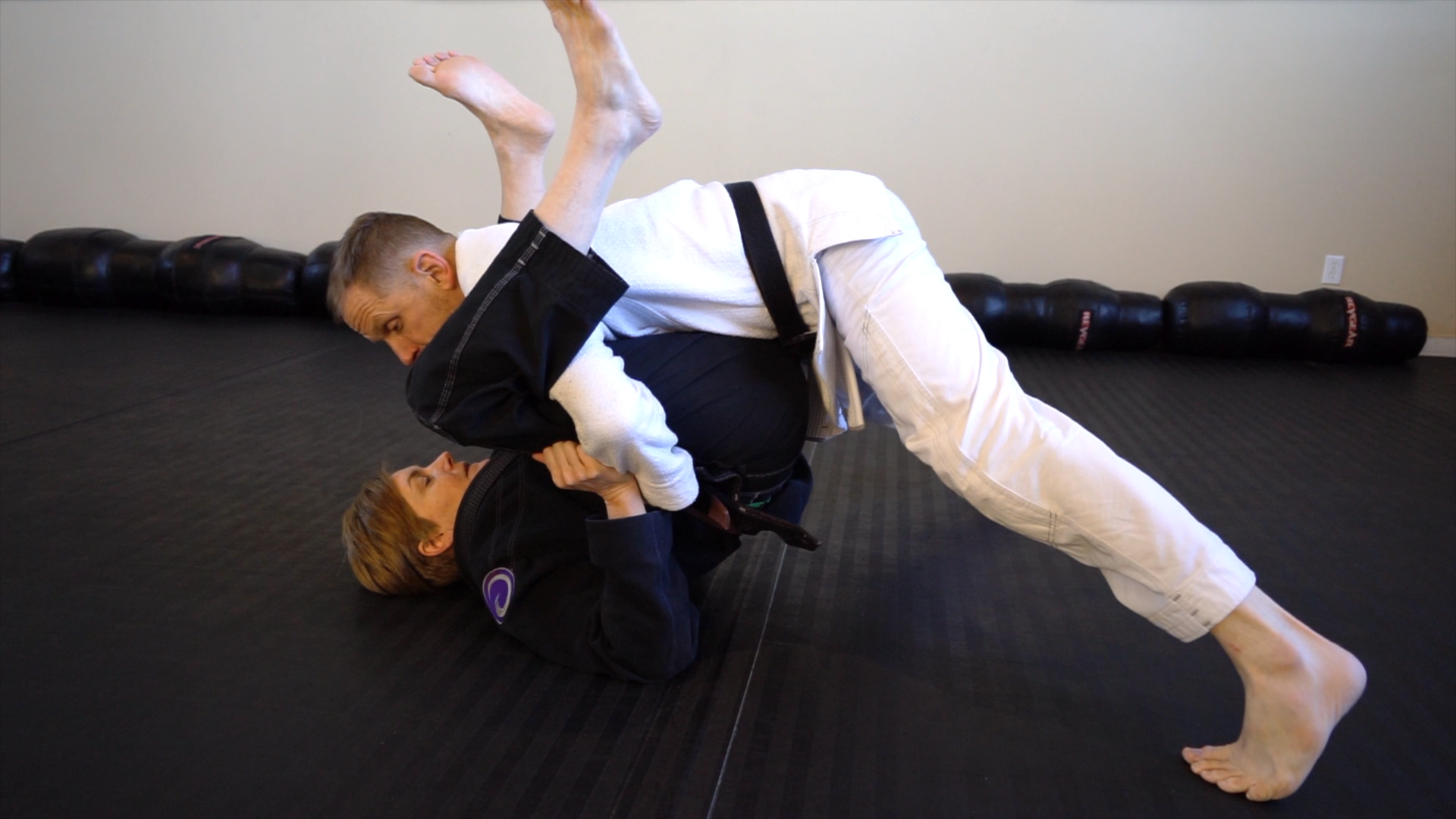
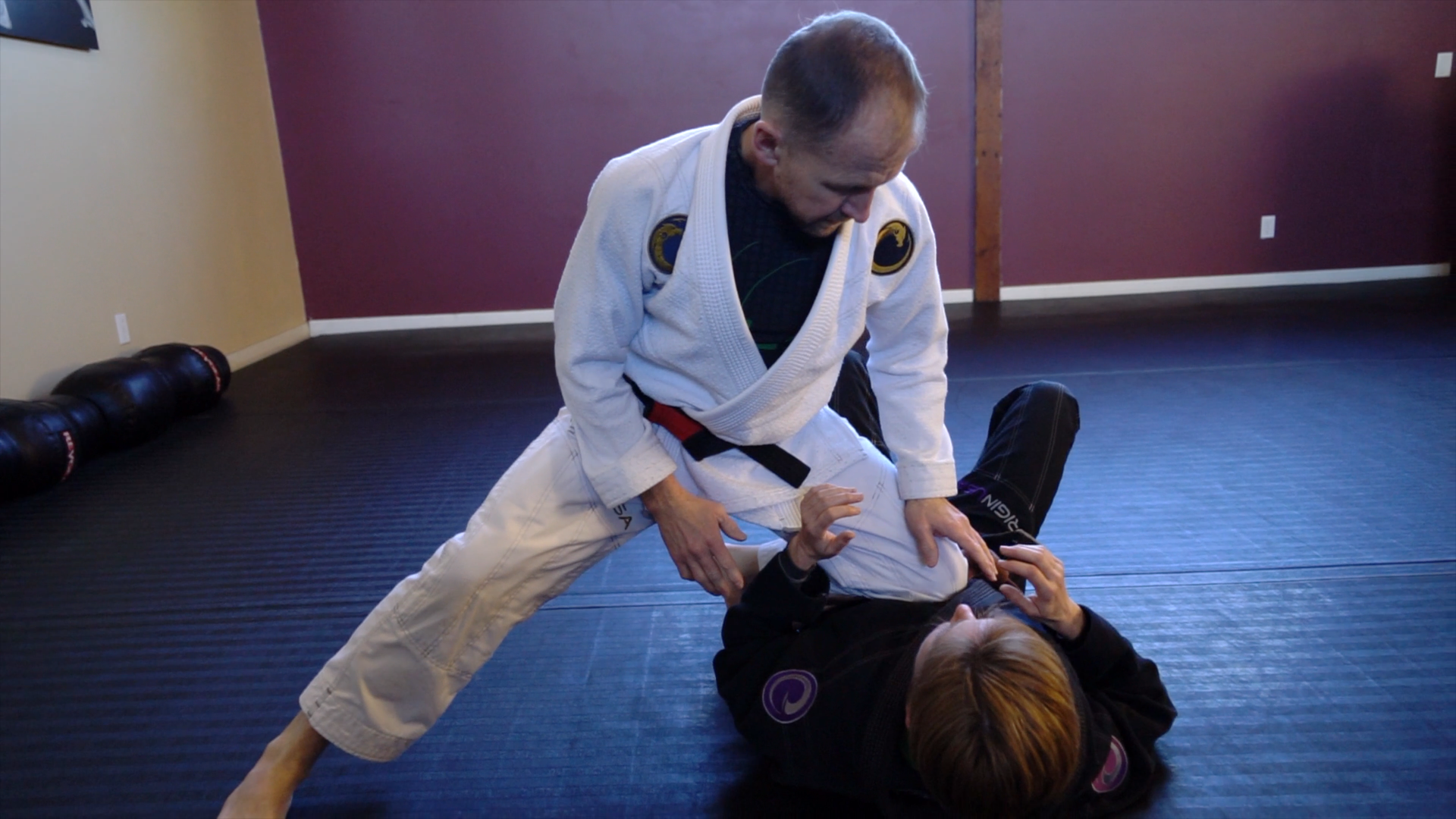
In this course I will dissect the BJJ guard problem into 4 easy to learn steps to help you master this part of your ground skillset and break and pass your opponents guard so you can focus on the exciting aspects of sweeps and submissions. Match the correct breaking method to the right size opponent. Learn how to keep them from pulling you back into guard as you ready for the pass and win that dominant position.
Don’t Take My Word For It…
Here is testimony direct from high-level, professional martial artists on the effectiveness of my course:
“This course is an incredible time-saver for beginners and a solid tune-up for everyone else. There's no fluff in here-- just the info you need to start breaking and passing guard effectively. If you can't take a private lesson with Sifu Randy in-person, then take this course--it's a no-brainer. Recommended!” - Ando Mierzwa - Black Belt from multiple styles, and BJJ Brown Belt
“A brief, yet deep dive into the vital middle ground of newaza. Recommended.” - Roy Dean - 3rd degree BJJ Black Belt
Put a method to the madness and start today!
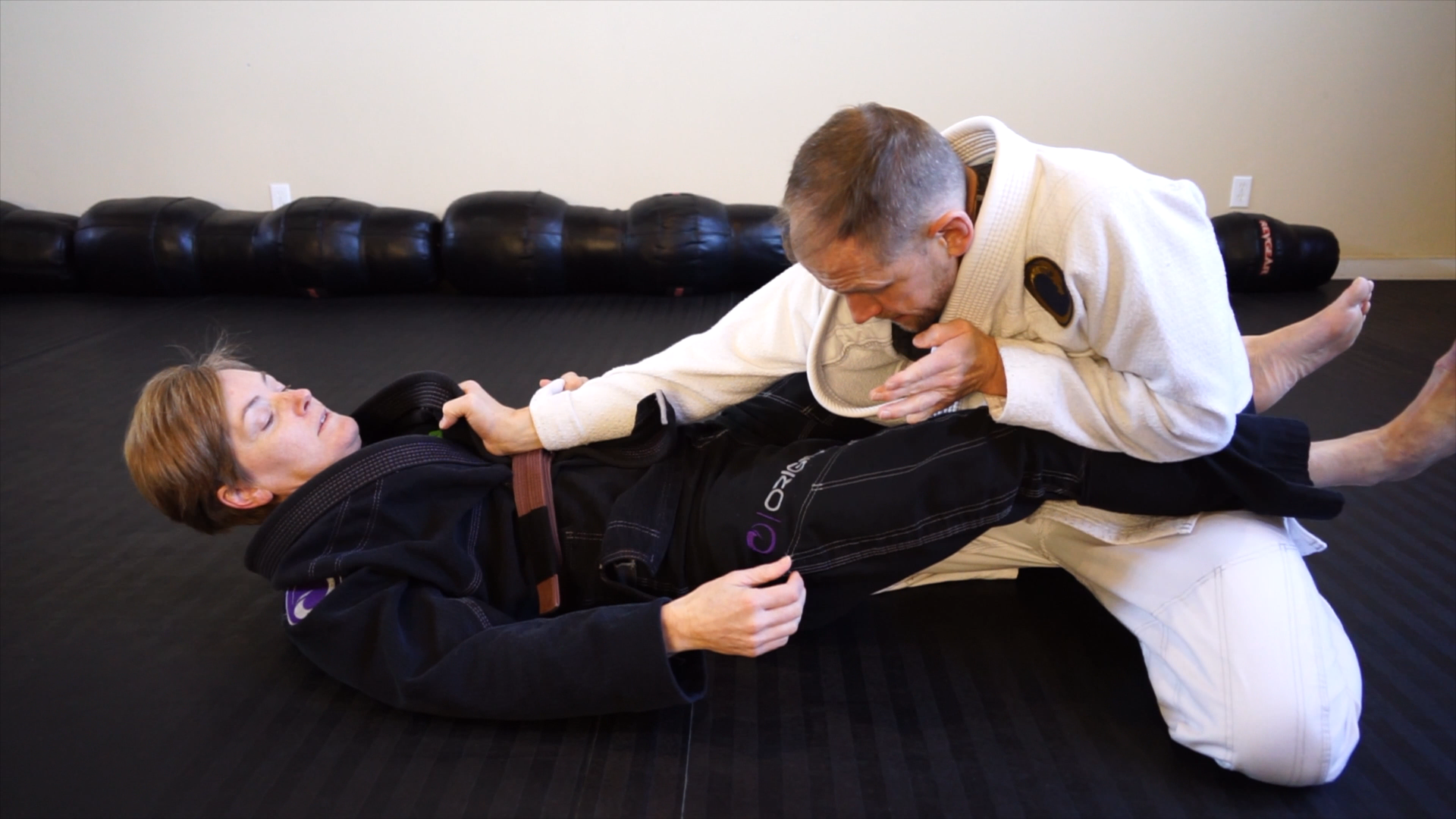
This video includes:
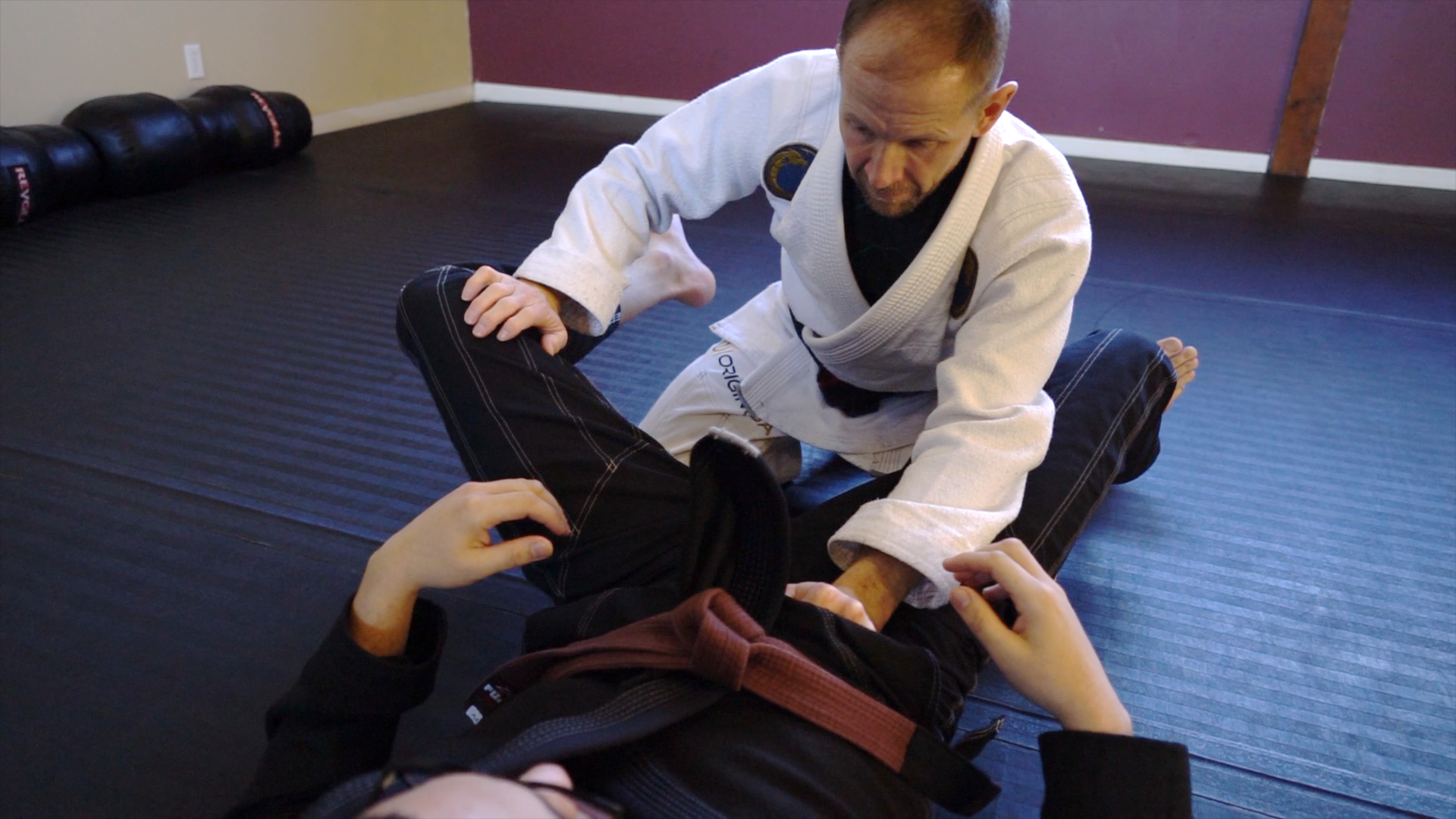
A 32-minute detailed video instruction on how to simplify the break and pass of the guard in 4 easy to follow steps.
Includes managing the guard. Grip-fighting. Gi vs No-Gi. Breaking methods for smaller vs. taller. A variety of standing and ground passes that will stay with you throughout your jiu-jitsu journey.
*course included with Legacy Boxer and Supreme Ultimate Boxer memberships

Countering the Hip Toss
Ever been mistaken for a sack of potatoes? Do you dislike being dislodged from the earth you stand on, turned upside down and dropped on your head or back? Here’s a little tip to counter that nasty hip toss throw your opponent might try out of mistaken identity, or something more nefarious.
Ever been mistaken for a sack of potatoes? Do you dislike being dislodged from the earth you stand on, turned upside down and dropped on your head or back? Here’s a little tip to counter that nasty hip toss throw your opponent might try out of mistaken identity, or something more nefarious.
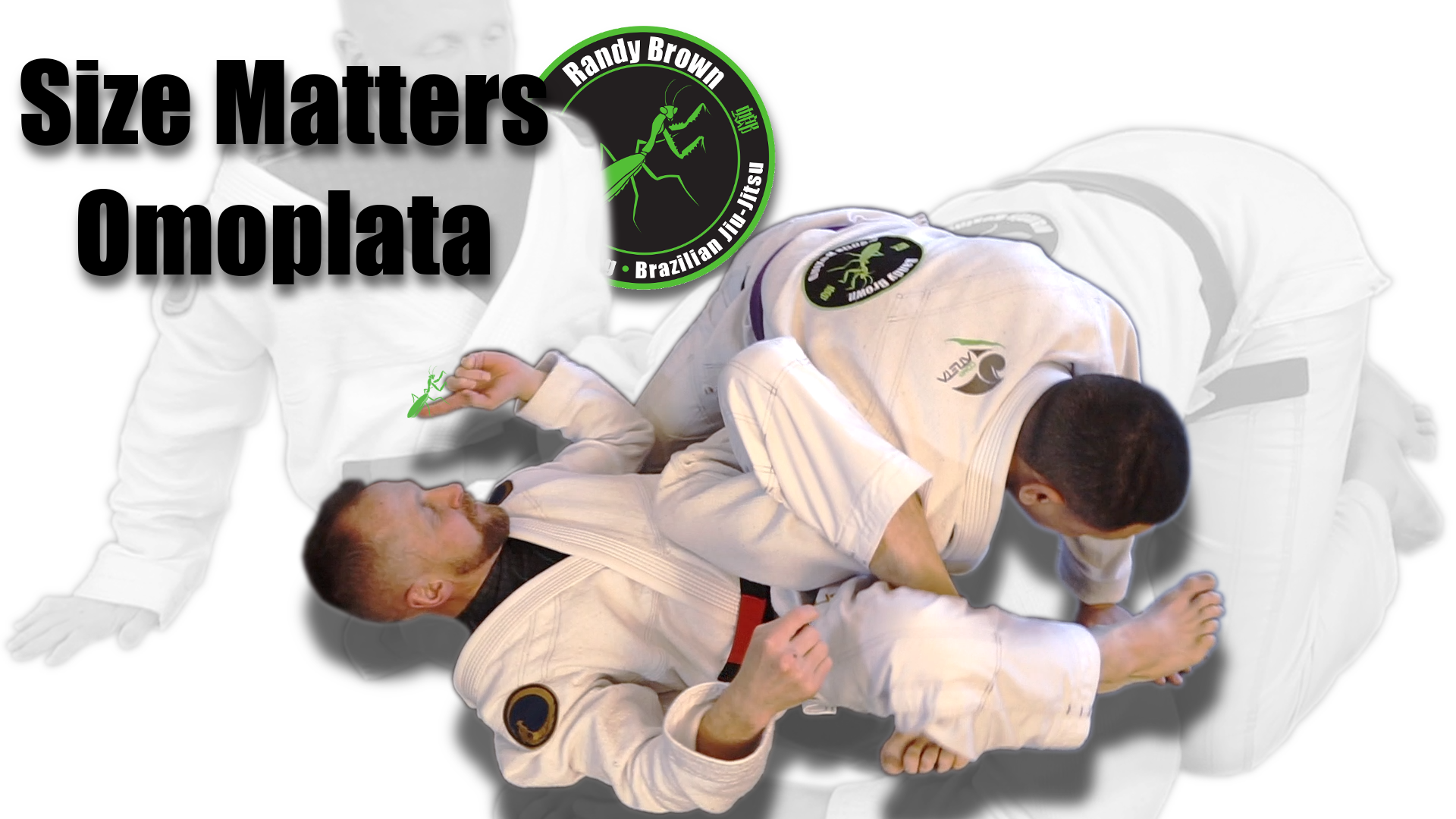
Size Matters in BJJ!!! - The Omaplata Submission
Here are a few tips if you are a smaller grappler trying to submit larger opponents with the omoplata submission from Brazilian jiu-jitsu. This can drastically alter our success rate for finishing, rather than struggling to combat height, strength, and counters.
Here are a few tips if you are a smaller grappler trying to submit larger opponents with the omoplata submission from Brazilian jiu-jitsu. This can drastically alter our success rate for finishing, rather than struggling to combat height, strength, and counters.

"Don't Touch Me" - Why I Hated BJJ
As I’m sure some of you can understand, the idea of having to work closely with someone else, especially on the ground, used to 'skeeve me out'. There is a stark differential between what I was accustomed to - striking, kicking, and takedowns, in contrast to rolling around on the ground with another human being while wearing pajamas, or skin tight clothing. In the world of hindsight is 20/20…
Original article written in 2012 for another blog.

Getting arm-barred in Chin Na training - circa 2000
Let me get this out of the way from the start - I emphatically hate people touching me. I have issues with physical contact, space invaders, faux-hugging, and ‘touchy-feely’ nonsense. After many failed attempts at coping, I simply avoid large crowds, parties, grandmas, and priests. Chalk it up to a plethora of personal experiences early in life, or just laugh at me as you will. Getting my finger lobbed off in a table saw was a more a preferable experience than some weird inebriated schmuck trying to grope me at a party while pretending we’re long lost friends (a good use for martial arts training).
Now that I’ve made it abundantly clear how much I dislike physical contact, perhaps we can relate to one another, since I imagine if you are still reading this you have similar issues with physical contact. This may well be a primary deterrent to you experimenting with Brazilian jiu-jitsu in the first place, or you just really hate Brazilian jiu-jitsu and clicked on this article in the hopes of reading a series of bad things I have to say about it. Spoiler alert: you can bail now and save yourself some time.
False Fears
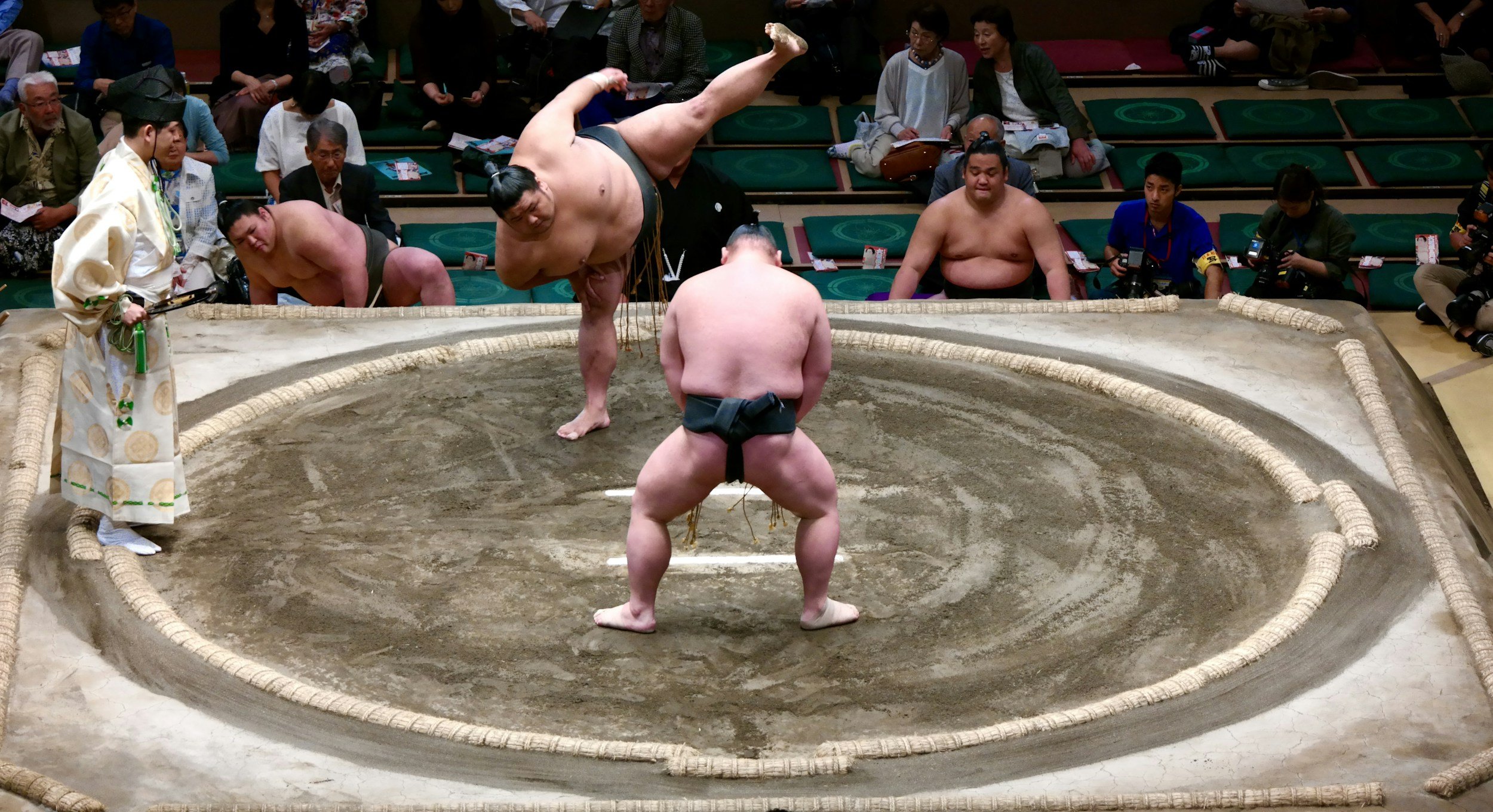
The idea of having to work closely with someone else, especially on the ground, used to 'skeeve me out'. There is a stark differential between the modalities I was accustomed to - striking, kicking, and takedowns, when contrasted to rolling around on the ground with another sweaty human being while wearing pajamas, or skin tight clothing.
However, in hindsight, I probably would have loved high school wrestling given what I know now, but many foes would have fallen trying to force my fat, chubby, adolescent self into one of those onesie-singlets!
During my time training mantis boxing, and other Chinese boxing styles, I became distinctly aware of a giant deficiency they all shared - the lack of a ground game. What to do when an opponent has you on the ground and you are unable to escape; a feeling I was quite familiar with from childhood fights.
I discussed this reality with one of my coaches at the time, being practical and grounded in real-world experience he agreed with the problem, and suggested that I take up BJJ. His advice was to achieve at least a blue belt level, arguing that the blue belt in BJJ being a significant achievement in and of itself. Showing an individual has gone through the grist mill, and survived to a base level of proficiency of self-defense on the ground.
In his assessment, I would have the experience and know-how to deal with an altercation on the ground; if a fight ever ended up there. Which, anecdotally speaking, they usually do when you’re smaller than your opponents. I was reluctant at first (see aforementioned comments on personal space) but eventually I capitulated and decided to try it out. To say my first attempts did not go well is a mild understatement [insert sarcasm]. Unfortunately, my first couple of experiences went horribly awry. I unknowingly chose the wrong coaches/schools to train with, which produced catastrophic results. You can read more about that here.
Before we address the physicality of BJJ, and the close contact dilemma, or even some of the other soft deterrents to training an art like this, let’s dig into some of the benefits I have found that help drive my reasoning on why this is a good thing to overcome.
Ignorance is Bliss - How BJJ can help Martial Artists/Fighters of other styles
Jump below if you are not currently a martial artist but want to learn more about overcoming the physical contact challenges of BJJ

Holly Cyr smashing it with a winning keylock at Boston Summer Open 2013
‘Traditional’ martial arts styles, as they are colloquially referred to, are mostly comprised of arts originating from east Asia. For our purposes we’ll include — western boxing, kickboxing, tae kwon do, karate, aikido, muay thai, shuai jiao, and more. These styles cover one or more of the following modalities in stand-up fighting - striking, kicking, throwing, and at times joint locks.
How do any of these styles, and wrestling as well, account for a larger, stronger, opponent that wants nothing more than to put us on the ground and pummel us? Each and every one of these styles subsist around weight class rule structures in competition. A sound and well rounded martial artist in my opinion, wants solutions for these challenges. Problems such as: being stuck underneath someone that has 100lbs of body weight on us, someone pinning us and choking us to death with their bare hands, or simply pummeling us with fists while sitting on our torso (mount position).
Not only do we want to survive, but as fighters we want to thrive in these situations. To embrace the suck. I have to be frank here - I have seen a variety of nonsensical comments from traditional martial artists over the years when it comes to this very real threat. A belief in their minds, or rather a fallacy, that the threat of someone controlling us on the ground is not real. That arts such as BJJ are useless. These statements include comments such as -
"I will use my eye gouges, groin strikes, and secret pressure point attacks." - anonymous
No, you likely won't, or not for long. You will be too busy trying to figure out which way is up; panicking to get back to your feet, trying to breath as you gas yourself out (the ground is stressful), and performing silent math calculations on how much your opponent really weighs while they crush the soul out of your body with unrelenting pressure.
Another comment I see -
"I won't let them get me on the ground." - anonymous
If the sole purpose of their combat modality is designed to get you on the ground, then you will be on the ground. No doubt about it. Especially if they have been training for years to accomplish said goals. I’ve seen people with a season or two of high school wrestling make short work of people with no grappling game, or defense system against such attacks.
“But I train takedown defense.”
We live in the northeast USA, where snow and ice are prevalent for a large portion of the year. Ending up on the ground is a common mishap for us ‘without’ someone violently assisting us in the process. Bottom line - as a traditional martial artist, or someone with no experience in fighting, we benefit by recognizing the holes in our systems and learning to close these weaknesses. We gain nothing but ignorance, darkness, and oxygen deprivation by hiding our head in the sand.
“Adapt and Overcome”
“Adapt and overcome.” — a common phrase we heard consistently in US ARMY boot camp. As experienced martial artists, adding Brazilian jiu-jitsu, or even wrestling to our game will only improve, not detract, from our primary art. Depending on the style we practice, we may come from arts afflicted by ‘transmission loss’.
Meaning some, or all of the techniques have been lost through the annals of time. We’re left today with empty shells of once proud martial art styles, practicing forms/taolu/kata, and applying best guesses as to the original method(s) of execution. Putting these arts back together can be difficult to downright impossible. I’ve spent the better part of my martial arts journey doing just that with mantis boxing, and taijiquan. I will say, finding crossover principles and techniques in other arts such as BJJ helped link things together in my brain, and improved my primary style of choice.
Brazilian jiu-jitsu has definitively helped me discover more about Chinese boxing and wrestling styles. From takedowns, to defense, to even just kinesthetically putting pieces together to flow and change gears. It has taken my knowledge, my game to a whole new level. This is especially relevant to an art such as mantis boxing, one of many Chinese boxing styles that is rooted in stand-up grappling, and riddled with principles that crossover to BJJ.
Perhaps you are fortunate and train with a school/coach team that has all the applications of your style already intact. Handed down to you in clear drills, and efficient training that turns you into a competent fighter. However, if that art still lacks a ground solution, as my art did, then this is the perfect reason to undertake BJJ, wrestling, or catch wrestling to shore up those weaknesses. You can read more about how BJJ helped me unlock hidden secrets inside Chinese boxing in this essay:
Donut, or Do Not? The fitness benefits of BJJ.

Donut eating me on a trip to train with a new mantis boxing coach - California, 2006
Traditional martial arts teachers across America are known for being out of shape. I have seen it at countless tournaments since the early days of competing. Often embarrassing physical forms of self-titled ‘masters’ of their art, who have clearly not mastered their bodies. Ironic given that we are supposed to be ‘lethal weapons’.
Self-Defense Anecdote: we start classes with proper warm-ups. This can start with — laps around the gym, three minutes of jumping jacks, or jump rope. At times people complain, or whine. My question is always the same: ‘If we can’t manage three minutes of cardio, how are we to last in a full on fight versus one or more opponents, while our heart is racing faster than a greyhound, and our adrenaline is screaming like an eagle through our blood stream?’
A few years after I began training, I myself was overweight. Also while owning and running my school. I had a series of crises in my life that caused my self-discipline to spiral out of control. I ballooned out, and I knew deep down that I was setting a bad example to my students on how I personally believe — a martial artist should live our lives.
Another saying from the military - “fit to fight”. The truth of this simple phrase is so base and fundamental. I’ve fought, sparred, won, and lost to some very good fighters over the years who were better than me, but were grossly out of shape. After 30 to 90 seconds of maneuvering, or light tangling, they were huffing and puffing; buckled over and gassed out beyond function. The amazing skills and techniques they had, rendered useless by a lack of stamina, or basic conditioning. If we’re out of shape, we’re ineffective, or less effective.
How can we stand with our heads high, selling, or marketing fitness, exercise, discipline, along with our self-defense, when we are stuffing donuts down our throat, or puffing cigarettes out behind our dojo? If we are out of shape ourselves, then we are nothing more than an exemplary display of hypocricy. “Do as I say, not as I do.”
How can BJJ change this?
Brazilian jiu-jitsu is an incredible workout. It engages the full body in motion. Exercising almost every muscle in our physical anatomy, including our brain. It takes serious conditioning to roll with another person for an entire class or for a 5 to 10 minute bout at a competition. To get up and down constantly, and often under load.
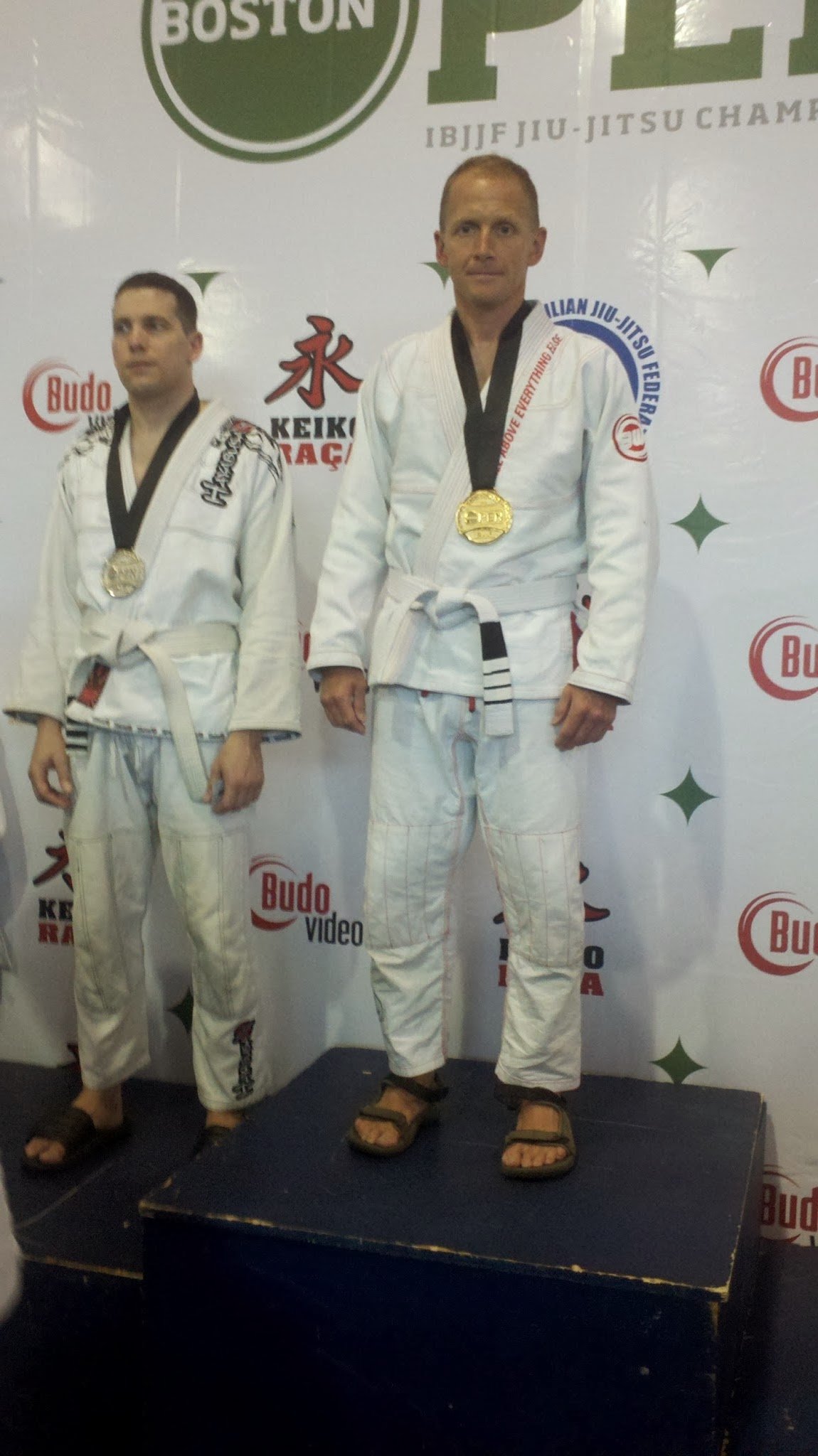
In my first BJJ tournament match, I stepped into the arena with many boxing/kickboxing amateur bouts under my belt, I was no stranger to the exhaustion and fatigue that takes place shortly after an altercation ensues. Additionally, much of our training, and sparring in the gym is inoculation to the stress of what we are going to face for real. With over twelve years of training/fighting, and being in the best shape of my life at the time, I had absolutely no idea what I was going to encounter in my first BJJ match.
Grappling was a completely different animal. The intensity is magnified ten-fold from any san da, boxing or kickboxing match I had ever competed in. The proximity stress, the gripping, tugging, and pushing, all while we’re still on our feet at the beginning of a match, rapidly drains our reserves. By the time we land on the ground, we’re seconds away from being face to face with the ‘adrenaline dump’ (all energy fades from our body).
When the ‘dump’ hits, there is nothing left in the tank; we’re completely gassed. We’re left only with our willingness to give up; or survive. This…is why an IBJJF (International Brazilian Jiu-Jitsu Federation) tournament has more 6 packs than you'll find at a redneck BBQ. It is an incredible test of mettle — physical, mental, spiritual.
During this first fight was the one and only time I looked at the clock in a competition. There was only a minute-thirty on the clock out of a five minute round. I had done hundreds of these rounds (and longer) in the gym, and yet…this felt like Father Time himself was crushing me into dust. I was completely demoralized as I lay under my opponent with a full strength closed guard, a firefighter, who I found out post-match had cut weight from 175lbs (79kg) to 150lbs (68kg) to compete that day.
A voice in my head was screaming for this to be over. That it didn’t matter who tapped, but this needed to end, and end fast. Then the other voice chimed in, calmly, with no emotion, calling the first voice a ‘wussy’. Followed by — “Get it done.” I fought on with everything I had, pushing through the fatigue, the time-demoralization, the doubt.
Fitness Conclusion
What better way to exercise than to have fun? To learn while getting into, or staying in shape? Enjoyment and mental engagement are a necessary function to stay committed to any type of physical activity we choose, BJJ can help us shred fat, build cardio, strength, and keep or return, that weaponized body that some of us once aspired to through joining martial arts in the first place. Of course the nutrition aspect has to go alongside any fitness endeavor, but the mat time we put in incentivizes us to eat better so we don’t gas out in competition or simply training.
The ‘BEST’ Pie is ‘Humble’ Pie.
Soft power wins the gold. Community makes the art.
The saying is - "the mats don't lie." When we walk out on the mats in BJJ, we can't say that we are something we are not. At least we can’t get away with it for long, if we do. When we roll with another grappler the truth becomes abundantly clear who is the higher hand. Hence the above saying.
Having been a part of the ‘traditional martial arts world’ through the rise of the internet, from BBS's, to forums, to facebook, etc., I have seen more petty arguments and nonsensical statements thrown back and forth. Things like -
"My style is the greatest.", "I'm better than you.", "I know more forms than you." “I’ve trained longer than you.”, "My lineage is pure, look who you studied with.", “I trained in {insert country of origin].”, "My teacher is better than your teacher.”, “My grandmother was better than your teacher."

It’s ‘ok’ to get a little mud on our face. Just smile and move on. Chris Meusel — Spartan Race 2012.
This behavior, while downright embarrassing and pathetic, is In direct opposition to the virtues we often seek in martial arts — strength, discipline, confidence, empowerment.
In contrast, I have met some of the nicest people in BJJ. While there are jerks (I met a few in the first couple attempts at starting out), they usually get weeded out early, unless the gym is toxic. The majority of people by and large, are — polite, grounded, and pretty darn cool. All seeking to better ourselves through adversity.
Why the difference? Simple really. In BJJ we have to put our money where our mouth is. We can make claims to ourselves or others about our prowess, our amazing skills, but the truth comes out on the mats.
Each roll, a mirror reflects back on us our own strengths, and weaknesses; whether we’re ready to receive them or not. This is a humbling experience and not for the faint of heart. It requires complete honesty with the most important person listening to us - ourselves.
"In my experience, the more dangerous two people are, the more respectful they are to one another." - Andre ‘Dedeco’ Almeida, BJJ Black Belt.
BJJ, along with any other contact based martial arts, keeps us humble. Aware that we are all just human, flawed at times, amazing at others, even when coaching and helping others. We know in our hearts, and minds — there are always bigger and better fish in the ocean. We all have progress to make in bettering ourselves inside and out. Even if we are the king, or queen, of our own little sandbox, getting tapped out gives us firsthand knowledge and experience in one of the most important martial arts principles to aspire to - humility.
Embrace the Suck
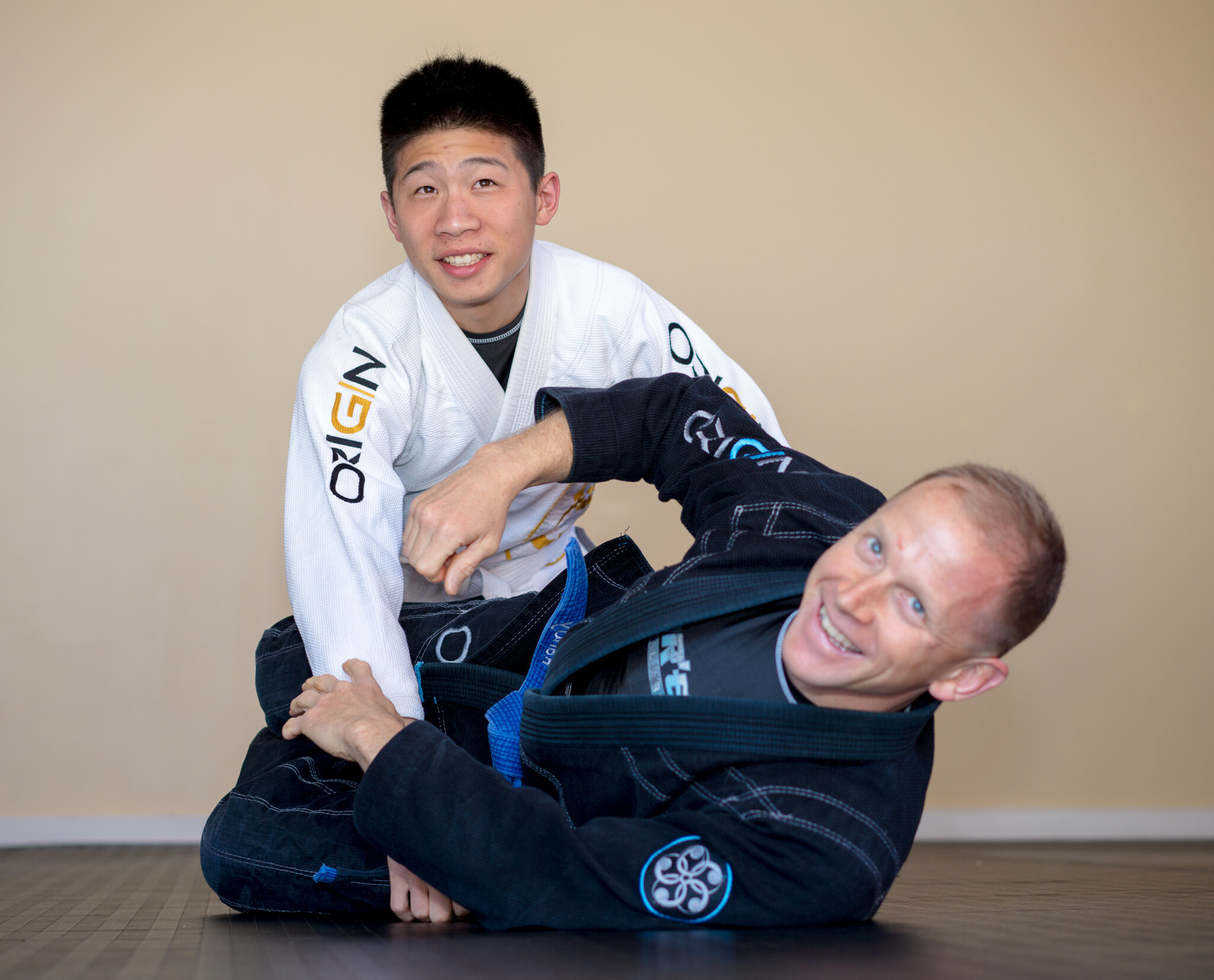
Rolling with Vincent Tseng - 2012. Photo by Max Kotchouro.
All of the above makes the close physical contact worth it. It gives us reason(s) ‘why’ we should we look past our issues with touch, contact, space. But what I can tell you firsthand, having worked through these issues myself, is quite honestly, the contact/space is not that big of a deal after a week or so of training.
Our brain quickly adapts and shuts off the reluctance to these things after we ‘embrace the suck’. Providing our partners are clean and hygenic that is.
We discover that rolling and grappling with someone, the ‘process’ of working with another to better ourselves supersedes the proximity challenge. It is quite different when someone is trying to choke, not grope us.
I highly recommend putting aside your reservations. I believe you will discover, as I did, that praciticing BJJ is just downright fun. One of the greatest challenges you can find, mentally engaging, core-building, and packed with years of intrigue. There are not many sports that encompass all of the elements that BJJ grapples with.
A plethora of the techniques you will learn (sweeps, submissions, escapes, takedowns) are awe-inspiring and a thrill to learn. Empowering. Easily mistaken for magic when we first see them performed by a seasoned grappler, and rewarding beyond measure when we succeed at executing them ourselves; after much trial and tribulation.
STILL RELUCTANT? HERE ARE A FEW TIPS
If you are still struggling with the idea,
Meet different coaches. If you find one you like, do one-on-one training with them. In this environment it should be acceptable to bring up your reservations and have a coach meet you where you are at.
Learn from a friend or family member who trains. Preferrably if they have a couple years of experience. Ask them to show you some moves but avoid grappling until you have a bit of experience. This avoids the competitiveness that can happen between friends.
Join with one or more friends. You can join a team class together, or do a squad style training (semi-private). This gives you the benefit of private lessons while sharing the higher cost of this approach.
If you have overcome this challenge, feel free to leave tips and your experience in the comment section for others to benefit from.
COACHES: RE-KINDLE THE FLAME
As a student, and a coach, I know firsthand that we have to keep the training and the process ‘fun’ in order to stay energized. If you are already a martial arts teacher of another discipline, training BJJ gives us a newfound sense of excitement. The same joy we had when we were a novice student in our original martial art style; when everything was new and enchanting. Reigniting a dwindling flame in our art.
Teaching others is rewarding and fun, but if we are not continuing to learn and grow we can become stagnant, bored, disenchanted, and even bitter. These are a few reasons I highly recommend trying out BJJ for martial artists from other modalities. Try adding it to your game and see for yourself. Box up the ego, don the ‘white belt’ and take the plunge into a fascinating world of new friends, sweet techniques, and all the humble pie you can eat.

Size Matters in BJJ!!! - Part 3 - Breaking Closed Guard
Here's one of my favorite closed guard breaks, and why it is horrible for taller vs. smaller. If you do use this BJJ escape, here is the answer to 'why isn't my closed guard break working?' Enjoy this next installments in our Size Matters series. This is a must see if you are trying to break a smaller grapplers closed guard.
Here's one of my favorite closed guard breaks, and why it is horrible for taller vs. smaller. If you do use this BJJ escape, here is the answer to 'why isn't my closed guard break working?' Enjoy this next installments in our Size Matters series. This is a must see if you are trying to break a smaller grapplers closed guard.

Guest Appearance: Real Fake Swords and Fake Real Swords - Episode 61: Randy Brown the Senior Clinching Mantis
“Sifu Randy Brown is the instructor of Vincent Tseng, with 20 years of experience in the style of Praying Mantis as well as 7 years of Brazilian Jujitsu, he was able to make the 2 arts complement each other. In this episode we explore his background as well as the past and present state of Chinese martial arts and modern combat sports.”
In August of 2019, I was graciously invited as a guest on episode 61 of The Real Fake Sword’s Podcast hosted by Haozhu Wang. This was a thought provoking and at times controversial discussion on training methods, Chinese martial arts, traditional vs modern martial arts, and even martial combat training vs LARP’ing. I thoroughly enjoyed our conversation and I think you will too. You can also listen to other great interviews Peter has had on his podcast with a myriad of guests.
Podcast Description:
Sifu Randy Brown is the instructor of Vincent Tseng (https://realfakesword.podbean.com/e/real-fake-swords-and-fake-real-swords-episode-43-vincen-tseng-the-clinching-mantis/) with 20 years of experience in the style of Praying Mantis as well as 7 years of Brazilian Jujitsu, he was able to make the 2 arts complement each other. In this episode we explore his background as well as the past and present state of Chinese martial arts and modern combat sports.
Credit of Jingle goes to Tengger Cavalry, contemporary Chinese Mongolian folk metal

What Can BJJ Teach Us About Qing Dynasty Martial Arts? - Randy Brown - MAS Conference 2019
This podcast is a re-recording of a talk I gave at the 5th Annual Martial Arts Studies Conference held at Chapman University in Los Angeles, California in May 2019. The event was hosted by Dr. Paul Bowman, and Dr. Andrea Molle. A two day extravaganza of martial arts history, politics, and culture. There is amazing research into the martial arts taking place around the globe today. It was an honor to be a part of this significant event, and contribute in some small way to the Martial Arts Research Network. Below is a copy of the…
This podcast is a re-recording of a talk I gave at the 5th Annual Martial Arts Studies Conference held at Chapman University in Los Angeles, California in May 2019. The event was hosted by Dr. Paul Bowman, and Dr. Andrea Molle. A two day extravaganza of martial arts history, politics, and culture. There is amazing research into the martial arts taking place around the globe today. It was an honor to be a part of this significant event, and contribute in some small way to the Martial Arts Research Network. Below is a copy of the abstract submission for my talk at the conference to help lay context before listening.
Abstract
What Can Brazilian Jiu-Jitsu Teach Us About Qīng Dynasty Martial Arts?
The continually evolving art of Brazilian jiu-jitsu (BJJ) and the journey of this style throughout the 20th century can provide insights into key elements of the Qīng dynasty Chinese martial arts, helping to demonstrate similar developments in the ‘Chinese Boxing’ systems of that era. Specifically, by following the modern evolution of BJJ, it is possible to gain insights into the sudden appearance of totem styles or subsets across China, how these anomalies become styles in their own right, and how they survived and thrived for over a century. A martial arts cross-cultural comparison of style subsets within BJJ, which have developed since the early 1990s, can be juxtaposed with the pre-modern development of comparable ‘subsets’ within Qīng dynasty ‘Chinese boxing’. On the other hand, the survival and globalization of this stylization in China differs with how developments within BJJ propagate, where instead changes become rolled into a pool of common knowledge and do not take hold as independent systems or alternative styles outside of the core art. A question needs to be asked, did ‘Chinese boxing’ of the era, have a similar common pool of knowledge? Qī Jì guāng’s manual would hint at such. Within ‘Chinese Boxing’, attributes, feats, or skills defining one fighter over another became definitive styles of their own right due to events of the time, compared to a failure in modern times for these subsets to survive independent of BJJ, even though properly vetted in the crucible of worldwide tournaments. In the Qīng dynasty a confluence of events which included rebellions, opium wars, global humiliation and the collapse of a dynasty, began to solidify these subsets as styles in China. Eventually, cultural industrialization of Chinese martial arts, notably through the Hong Kong movies, ingrained these styles into popular culture with the result being securing their legitimacy to the public eye without any evidence of martial prowess.
Keywords:
Chinese martial arts, Brazilian jiu-jitsu, Qīng dynasty, animal styles, Chinese boxing
Biography
Randy Brown
Randy is an owner and teacher at Randy Brown Mantis Boxing, Brazilian Jiu-Jitsu in Acton Massachusetts. Randy has over 20 years’ experience with praying mantis boxing with additional cross-disciplinary training in various Chinese martial arts: eagle claw, Hung gar, long fist, Yang, xingyiquan. Randy has trained in 17 Chinese martial arts weapons and specializes in staff, saber, sword, and military saber and has seven years’ experience in Brazilian jiu-jitsu. He has published a number of articles in martial arts journals, including Kung Fu Tai Chi Magazine and Journal of 7 Star Mantis and has competed and placed in both the U.S. National Wu Shu Championships and the International Brazilian Jiu-Jitsu Federation. Randy holds a Bachelor of Science in computer science from Franklin Pierce University. In his spare time, he enjoys writing, drawing, painting, and hang-gliding.
Bibliography
Wile, Douglas. Lost Tʻai-Chi Classics from the Late Chʻing Dynasty. State University of New York Press, 1996.
Lorge, Peter. Chinese Martial Arts from Antiquity to the Twenty-First Century. Cambridge University Press, 2011.
Silbey, David J. The Boxer Rebellion and the Great Game in China. Hill and Wang. 2012.
Tong, Zhongyi. Cartmell, Tim (translator). The Method of Chinese Wrestling. North Atlantic Books, 2005 (original 1935).
Kennedy, Brian. Guo, Elizabeth. Jingwu The School that Transformed Kung Fu. Blue Snake Books, 2010.
Leung, Shum. The Secrets of Eagle Claw Kung Fu Ying Jow Pai. Tuttle Martial Arts, 1980, 2001.
Keown-Boyd, Henry. The Fists of Righteous Harmony - A History of the Boxer Uprising in China in the year 1900. Leo Cooper, 1991.
Kennedy, B., & Guo, E. Chinese martial arts training manuals: A historical survey. Berkeley, CA: Blue Snake, 2008.
Laurent Chircop-Reyes. Merchants, Brigands and Escorts: an Anthropological Approach of the Biaoju ffff Phenomenon in Northern China. Ming Qing Studies, WriteUp Site, 2018, Ming Qing Studies, 2018, http://www.writeupsite.com/eng/ming-qing-studies-2018.htmlff. ffhal-0198740
Article on Biaoju Companies - https://baike.baidu.com/item/%E5%90%8C%E5%85%B4%E5%85%AC%E9%95%96%E5%B1%80/8761785
E. Henning, Stanley. (1999). Academia Encounters the Chinese Martial Arts. China Review International. 6. 319-332. 10.1353/cri.1999.0020.
Interview with the last Manchu archer - By Peter Dekker, January 23, 2015 - http://www.manchuarchery.org/interview-last-manchu-archer
Library of Congress maps - https://www.loc.gov/maps/?c=150&fa=subject:maps%7Clocation:china%7Clanguage:chinese&st=list
List of Rulers of China - Metropolitan Museum of Art - https://www.metmuseum.org/toah/hd/chem/hd_chem.htm
Li San Jian - http://www.shm.com.cn/special/2015-07/22/content_4365668_2.htm
McCord, Edward A. The Power of the Gun. University of California Press, UC Press E-Books Collection, 1982-2004 - https://publishing.cdlib.org/ucpressebooks/view?docId=ft167nb0p4&chunk.id=d0e288&toc.depth=1&toc.id=d0e288&brand=ucpress
Guodong, Zhang & Green, Thomas & Gutiérrez-García, Carlos. (2016). Rural Community, Group Identity and Martial Arts: Social Foundation of Meihuaquan. Ido Movement for Culture. 16. 18-29. 10.14589/ido.16.1.3.
The Mantis Cave - Fernando Blanco - http://www.geocities.ws/mantiscave/fernando.htm
The Taiping Institute - http://www.taipinginstitute.com/courses/northern-central-plains/tanglangquan
Judkins, Ben. Lives of Chinese Martial Artists (13): Zhao San-duo—19th Century Plum Flower Master and Reluctant Rebel - https://chinesemartialstudies.com/2017/04/20/lives-of-chinese-martial-artists-13-zhao-san-duo-19th-century-plum-flower-master-and-reluctant-rebel-2/
Judkins, Ben. Research Notes: Xiang Kairan on China’s Republic Era Martial Arts Marketplace - https://chinesemartialstudies.com/2016/08/14/research-notes-xiang-kairan-on-chinas-republic-era-martial-arts-marketplace/comment-page-1/#comment-81216
Perdue, Peter C., Sebring, Ellen. The Boxer Uprising 1 - The Gathering Storm in North China (1860 - 1900) - https://visualizingcultures.mit.edu/boxer_uprising/pdf/bx_essay.pdf
The Worst Natural Disasters by Death Toll - Contributed by Administrator - June 15, 2007 Last Updated April 06, 2008 - http://www.armageddononline.org
Professor Peter Lorge's keynote, 'The invention of "traditional" martial arts" - given at the July 2017 Martial Arts Studies Conference, Cardiff University - https://youtu.be/9Y_1tKVvwNc

Why I Should Have Quit BJJ When I Started
What I am about to share with you, is my early journey into Brazilian jiu-jitsu. My first attempts were not exactly a ringing endorsement of the art. What happened to me? What can you learn from my experience? Why did I keep trying after all of this?
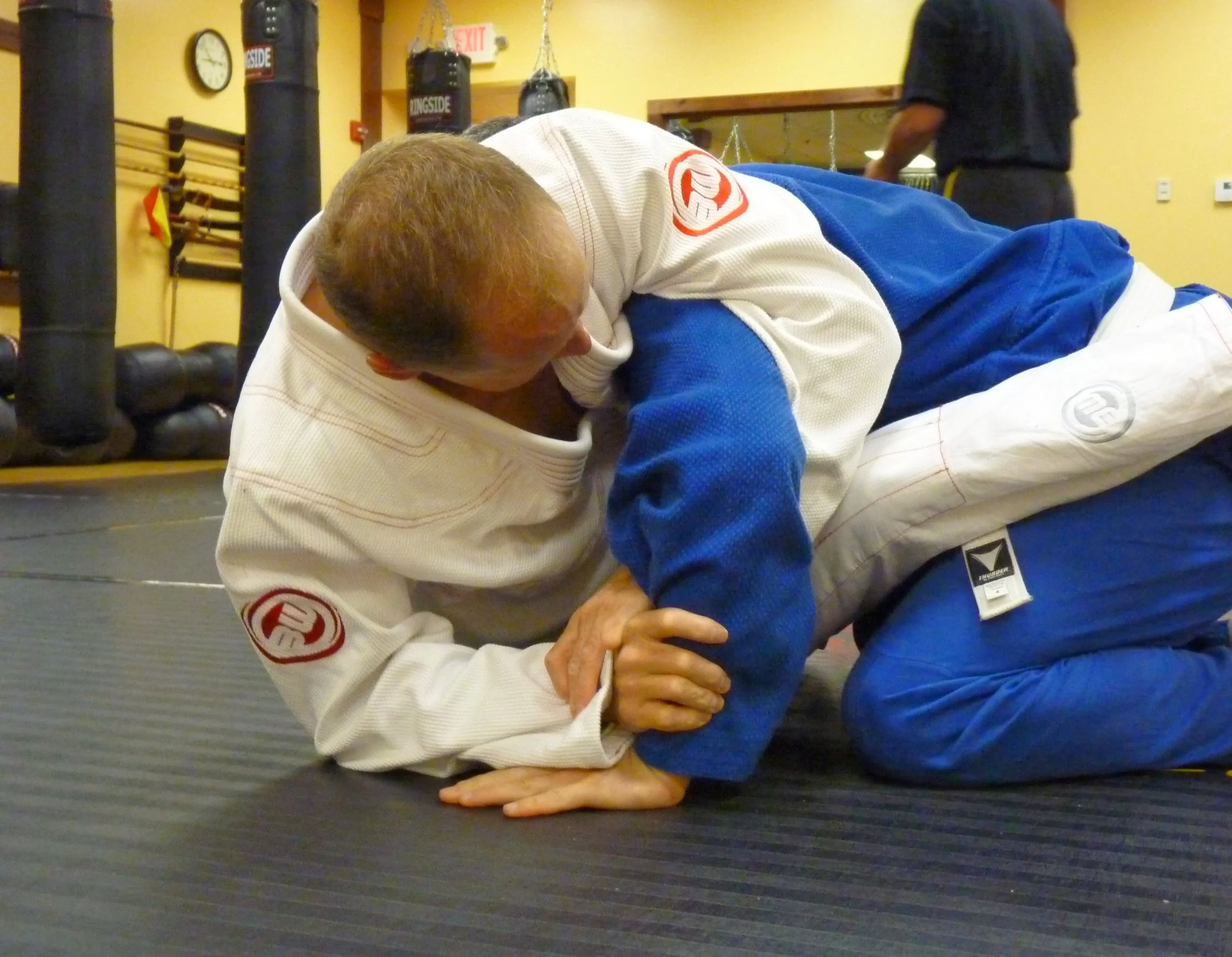
Teaching the Americana shoulder lock from guard — 2011.
What I am about to share with you not exactly a ringing endorsement of the art of Brazilian jiu-jitsu. It is a tale of my early journey into BJJ. If nothing else, it provides a cautionary tale of how important it is to find a good coach/gym to train with. If you cannot, find a different hobby or travel as far as you need to in order to secure good instruction that will keep you training for years to come.
A majority of my injuries in martial arts in the past 20+ years, and all of the most severe ones, have been from Brazilian jiu-jitsu. And yet, I would still recommend the art to anyone — under the right circumstances.
The Beginning
As I started to find truth in mantis boxing after years of training, the UFC was growing more popular than ever. The reality and efficacy of ground fighting and it’s necessity began to seep into my periphery. I would pontificate questions such as -
‘What would I do if someone took me to the ground in a fight?’
‘Would any of my skills, after years of martial arts training, help me?’
After all, someone that is even just incrementally larger than us, has an inherent advantage due to gravity, and the laws of physics. Couple this with a season or two of wrestling in high school/college, or a football tackler, and we have serious deficiencies in our combat capabilities; no matter how good our stand-up fighting is.
When involved in an altercation, once we’re on the ground, which could be from a slip, trip, or fall of our own accord, or after an opponent grabs us for dear life as we throw them to the ground - taking us with them - the game is quickly over if they land on top of us.
I am not the largest guy on the planet, even when I was 70 lbs heavier than I am now. Having the knowledge and technical ability to deal with an opponent in a ground situation was to me, becoming more and more evident, for obvious reasons.
Brazilian jiu-jitsu provides solutions to the problems we face in ground combat, better than any other martial art. Using timing, technique, and those same aforementioned pesky laws of physics, we can turn the laws to our advantage, overcoming larger, stronger, and heavier opponents, if we ever end up on the ground in a self-defense situation.
So, as we said in the Army - I ‘sucked it up and drove on’. Putting my ‘human contact’ issues aside, I undertook a search for a BJJ school to train in. And there the problems began…
ROUND 1

Holly and Joe training the armbar from guard - 2011.
One of my early coaches in the martial arts had some training in BJJ. How much, I never found out, and for good reason.
The two of us were discussing my interests in learning a bit of ground fighting over the phone. He offered a trade — If I would share one of the historical mantis boxing sets I learned while studying with another coach, he would train me in some Brazilian jiu-jitsu.
My first lesson included a few rudimentary tips on what not to do on the ground while in the mount position, followed up with my first introduction to a rear naked choke. We spent and hour or so on the mantis boxing tao lu he wanted, and all seemed fine. We then transitioned to BJJ and started with a mount escape and a guard escape. Everything was extremely rough and had too much strength behind it. I know now that this is a sign of an amateur.
Our next and final phase of the lesson, was introduced by him telling me to stand facing the front of the gym with him behind me. I stood there in a compliant stance excitedly awaiting my lesson in one of the most powerful tools in BJJ - Mata Leon, aka The Lion Killer.
Suddenly, I felt a sharp pain in my throat as the man I just entrusted my life to, slammed his forearm into my trachea fast and hard; crushing my larynx. He then proceeded to apply the choke until I tapped (which was rather quick). It took 6 weeks for my esophagus to pop back out, and size months before I could properly swallow again. Thus ended my my first (and last) lesson with him.
ROUND 2
For my next attempt,
I contacted an instructor a few towns away from my gym. One of the closer places offering BJJ. We discussed my background in Mantis Boxing, and I made it clear I knew nothing about ground fighting. Full disclosure. I explained that I was ‘starting over’ in this art, and I would like to put on a white belt and be treated like any other beginner. Nothing to prove and starting from the ground up (no pun intended).
The first class went relatively well. I had a few minor issues, but nothing to stop me from going back for another class. I was committed to doing this after all. Itching to learn. I returned two days later for my second class where I began to recognize some flaws. One such was the partner I had seemed relatively new and could not perform most of the moves. After casually asking how long he had been training in between one of the moves, he replied, “Four years.”
We continued drilling a variety of moves, shared rapidly and in broken English. It seemed like a shotgun blast of material and I wondered to myself how we were supposed to remember all of it. The coach then started the rounds of rolling (BJJ sparring). He had made it clear on my first lesson that I would not be rolling right away, and yet today he turns to me and says — “You will roll with us too.” Not one to shy away from such endeavors, I jumped in thinking things would be fine.
I went from person to person, 5 minute round to 5 minute round, with each person trying to wipe the floor with me. I made it clear this is not what I was there for at the start, and here I was getting attacked full on by everyone in the gym. I wasn’t having it, and I fought back to protect myself and my reputation. Not a single one of them tapped me out, but as you will see shortly — this was not a win.
The coach, seeing that his students of all ranks were having a problem with me, calls me over to roll with him for the final round. This was after 6 rounds. We start rolling and he was better than the others, but he was not tapping me out. This went on and on, and eventually the entire gym stopped their own rolling and came over, formed a circle around us, and began to watch the festivities.
After about roughly 10 minutes of rolling, he was getting no where. Not being my first rodeo I began doing the calculus in my head: one of three things were going to happen — 1) he was going to get frustrated, go faster and harder, and ultimately break something on me to prove himself, or 2) be humiliated in front of his team, and who knows what would happen from there. I was severely outnumbered, or 3) I could give him a freebie and let him save face in front of his team, thereby giving him the win, and getting out of there in one piece. I chose option 3.
I left with a ripped ear, tweaked elbow, broken toe, and my knee out of whack. I never went back. Which turned out to be a blessing in disguise, as said coach went to jail a few years later for sexually assaulting a 14 year old female student.
ROUND 3
Trying to be a smarter monkey, my next experience was born by referral from a coach I knew down south. I came across this MMA/BJJ coach teaching at an associates school halfway across the country. While visiting for a weekend of seminars, I rolled with this skilled grappler for a couple hours. He shut down everything I had, tapped me out several times, but in a controlled way. He obviously knew his craft. He was on staff at this gym and came recommended to me by the owner, who I had known for years and had been training BJJ with a well known coach for about 10 years.
I enjoyed the session and wanted to learn more. This coach was also approachable, and seemed vested in teaching me how to succeed. Like myself, he was also ex-military. We understood one another on a training and practicality level, and shared that bond of brotherhood formed only as soldiers.
At first it seemed a good fit and he was willing to answer questions over the phone. Soon thereafter I flew him across the country to do a weekend of seminars at my gym. The plan being to also get some one on one training in on the side. The seminars went well, and we had some good rolling/training afterwards, until his PTSD kicked in.
He tore my shoulder out. Not once. Not twice. Three times in one hour. With two extreme americana shoulder locks, and a kimura shoulder lock. I barely escaped this encounter without a total shoulder replacement surgery. This day cost me in total tens of thousands of dollars in medical repairs/treatments. A year plus of rehab entailing hundreds of hours of physical therapy and recovery.
Needless to say, I left him behind, and continued searching for another year. I’m sure, if you are still reading this, you are wondering why the hell I would continue on? Good question!!!
ROUND 4
The Gracie family, considered by some to be the founders of the art in it’s more modern form, had a school in Los Angeles. They were running an instructor certification and training program that sounded enticing. I watched some interviews with them and they appeared upstanding individuals with an earnest and sincere approach to teaching BJJ, without breaking everyone that came through the door.
I began looking seriously at their Instructor Training Program. The downside was it was going to cost thousands of dollars, and a great deal of travel.
Additionally, thousands upon thousands of dollars (about $14,000 dollars by my calculations) to get this program underway in my academy - due to affiliation fees, rules, branding, and contractual agreements I will not bore you with here.
Instead, I pulled one of my instructors aside in the school. She was also interested in learning ground self-defense. I purchased some instructional videos and Holly and I started training BJJ basics a few times per week. This continued moving the ball forward, slowly.
With all the challenges I faced in the world of Chinese boxing, I was no stranger to having to teach myself. I was beginning to think this was once again going to be a reality I would have to accept.
ROUND 5

1st class with Dedeco - 8/2011
My contacts across the country came through once more (this time positively). He hooked me up with someone who would go on to become my final BJJ instructor/coach —Brazilian Jiu-Jitsu Black Belt under Ricardo Liborio and Ricardo De La Riva — Andre ‘Dedeco’ Almeida.
Dedeco was located south of Boston in Rockland, Massachusetts, a little less than 2 hours drive from me. He came highly recommended, and at the time, his Best Way Jiu-Jitsu was being used to train top UFC fighters. For obvious reasons, I was a bit more gun shy about diving into another bad experience, so I asked Dedeco to meet for coffee first to discuss his approach to training. We met at his favorite coffee shop (Starbucks), and broke the ice, or beans.
Dedeco, as he prefers to be called, was super nice. He seemed like an upstanding person. After listening to my experiences with BJJ thus far, he was appalled. It insulted him that his livelihood and passion since he was 12 years old, was being misrepresented and abused in this way. “This is not way beginners are to be introduced to the art”, and art he had been studying since he was a child in Brazil.
Something he said stuck with me after that first conversation -
“Randy, I am not going to have you ‘roll’ (what we call sparring in BJJ), until I teach you how to roll.”
Well didn’t that make a boat load of sense!!! A principle I followed in my own teachings when starting someone out with striking and kicking in mantis boxing. I wondered what short straw in life I drew to go through all this nonsense in order to find a decent coach?
I started private training with Dedeco shortly thereafter (Aug 2011). Dedeco introduced me to the amazing art of Brazilian Jiu-Jitsu, and the myriad benefits it has to offer. After a couple months we started rolling, with him being extremely patient and allowing me to fail repeatedly, while he maintained composure, and guided me through what to do, and not to do.
Initially I had asked Dedeco if I could/should compete? He calmly replied, “You should really wait a while and get more experience first. White belts can be up to 4 years on average before blue belt, so you could jump in the ring with someone who has been training a long time, but still wears a white belt.”
Soon thereafter he invited me to attend the weekly Team Training on Fridays, where grapplers from all over New England would come down for a 90 minute session of 5 minute rounds with 1 minute rest. I joined in and met a bunch of great people. Most of them were really cool (while still going to school on you), and rarely did I cross hands with an undesirable.
Summer 2012 I registered for the International Brazilian Jiu-Jitsu Summer Open in Boston, MA. Entering my first BJJ competition.
Winning Gold at the IBJJF Summer Open 2012

BLUE…ENOUGH
My plan when I started was to simply get to a blue belt level. This was at the time, a significant bench mark for this martial art (it still is depending on the school/coach). Fighters would brazenly step into the cage in UFC fights like a proud peacock donning their blue belt. Unlike other styles of martial arts, that give out black belts like candy, the first belt you get in BJJ (a blue belt), is a monumental achievement in and of itself.
As I trained more and more with Dedeco, and began meeting his other students, and his friends who owned BJJ schools, and their students, I began to witness an amazing family of people that were pushing one another to get better and better, but without injuring one another all of the time.
Left to right - Ricardo Liborio, Randy Brown, Andre ‘Dedeco’ Almeida.
And juxtaposed vs the Traditional Martial Arts World’ I was accustomed too, instead of the stuffy, overly dogmatic experiences I witnessed in other styles of martial arts, what I experienced instead was a relaxed and friendly environment that fostered creativity, freedom of expression, and ingenuity. Embracing the personal expression of an individual’s artform, that we devote years of our lives to.
I later met Dedeco’s teachers (Ricardo Liborio, and Ricardo De La Riva), and witnessed firsthand, the sincerity and kindness in these men. REAL men, who were extremely accomplished fighters, and champions, yet expressed no ego, bravado, or malice. Just humility, and genuine care for the growth of others, and their art.
This was such a powerful experience. It changed my life, and my entire school/approach to martial arts. I mirrored these training approaches in my own mantis boxing program, and my team overall. It had a profound affect, improving my own skills, my team, and above all else, my abilities as a teacher to help others with their art.
The skills inside Brazilain jiu-jitsu are some of the most powerful tools you can ever have in your arsenal. If you train the art with due diligence, it will reward you in spades. After training for a time, if someone is dumb enough to take you to the ground with ill intent - that attacker just stepped into the deep blue waters of the darkest ocean, and you are the shark!

2018 - One of the best moments in my BJJ journey. Receiving my black belt from Dedeco after 7 years of hard work.
That...is why this style is now part and parcel with my mantis boxing inside the halls of my academy, and within my heart.
If you are inspired to learn and embody all that BJJ has to offer, my advice is to take your time and find a coach, and team that are right for you. Do not settle! It is your money, and more importantly your time, and even MORE importantly - your body.
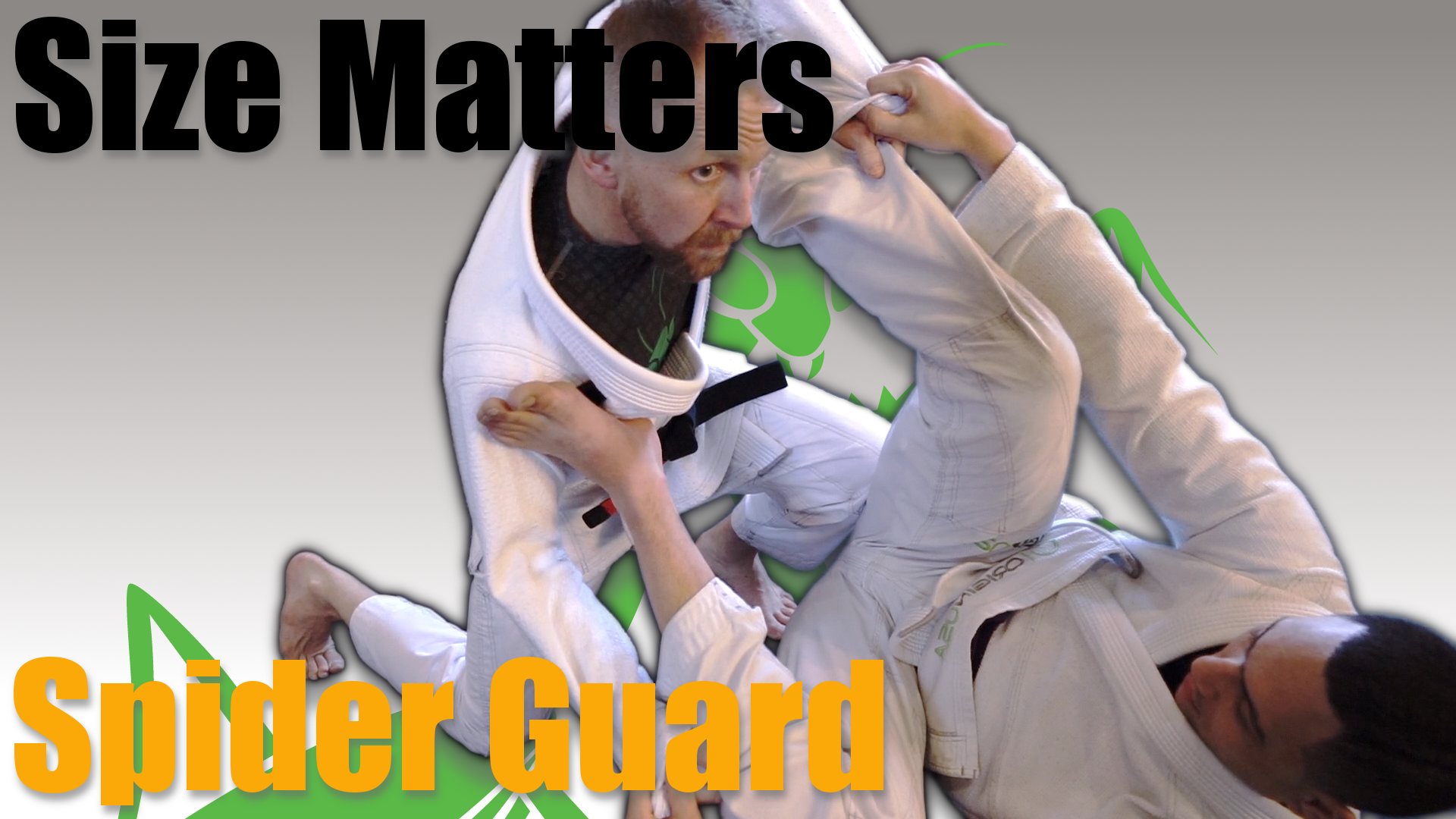
Size Matters!!! - Part 2 - Spider Guard
Part 2 of our new series on how size affects your martial arts. This is another one for BJJ - Spider Guard. There are some important…
Part 2 of our new series on how size affects your martial arts. This is another one for BJJ - Spider Guard. There are some important differences with leg/foot position that can matter if we are a smaller, or larger grappler. Thomas and Vincent assist me in demonstrating a good foot position for spider guard depending on your height.

Size Matters!!! - Part 1 - Turtle Position
New series we're releasing on size matters. When doing martial arts of any kind, size is a determining factor in what moves will work, and what…
New series we're releasing on size matters. When doing martial arts of any kind, size is a determining factor in what moves will work, and what won't for you and your size. We're going to highlight some common positions where this stands out.
In the first episode we tackle the turtle position in BJJ/MMA, and how to choose the right escape for you and your opponent.

6 Submission for 6 Positions - Side Control
Part of your journey in Brazilian Jiu-Jitsu is the transition from surviving, to defending, to getting to a dominant position. Position before submission is crucial for getting a successful submission on our opponent. But what happens when we first…
Here’s a follow-up to our popular video on the 6 Positions of Side Control Drill. Now we can apply a submission in each of these positions to help train our offensive game.
Part of your journey in Brazilian Jiu-Jitsu is the transition from surviving, to defending, to getting to a dominant position. Position before submission is crucial for getting a successful submission on our opponent. But what happens when we first go from surviving/defending, to continuously getting to a dominant position? Often times the brain shuts down, and we don’t have a clue what to do next. It’s important to have a gameplan.
Knowing a submission from each position, will give you a strategy to move from position to submission, or at least attempting one. Here is a companion video to go along with 6 Positions of Side Control video. Once you get that basic drill down, and you find yourself getting to side control frequently. Try this drill to learn a submission from each position and expand your game!

Rise from the Ruins: Embarking Into A Dying Art of Boxing
An Essay on my Early Years in Chinese Boxing Dance
Martial arts forms (kata, tào lù) are more plentiful today than in any time in history. They are widely disseminated in a variety of martial arts schools/styles across the United States, and around the world. A majority of ‘traditional martial arts’ competitions today, are centered around stylists competing with their form of choice. One is hard pressed to enter a school of karate, kung fu; kempo, tae kwon do; or tang soo do, etc. that isn’t consumed by a curricula filled with form after form. Once you complete one form, you’ve earned the ‘privilege’ to learn another...and another...and another.
Years into my training, I went on to scorn these empty shells. For quite some time actually. One reason I held such admonishment toward ‘forms’, was having…
Finding the Mantis
I came across the art of Praying Mantis Boxing in of all places - New Hampshire, USA back in the 1990’s. I was correcting course in my life and on a quest to empower myself with martial arts training and the skills to know how to handle myself. A desire of mine since childhood. I immediately fell in love with the art, even in it’s corroded state.
Sadly, time has not been kind to this, and many other Chinese boxing systems. Much damage has been done over the past century or more, as these arts were no longer used for combat. By the time I began my training, it was difficult to tell what Mantis Boxing was in its original manifestation.
What remained was largely boxing sets (choreographed fighting moves in the air known as forms/kata/taolu), myriad drills, and a plethora of archaic Chinese weapons techniques of a bygone era.
Due to this decayed state my journey early on with this art was difficult and fraught with challenges in finding answers, or seeing an effective use of these movements in sparring/combat. Thankfully, we do have those who carried the torch over hundreds of years; bringing with them the keywords of the style as well as the old ‘boxing sets’ which allow us to view into the past.
I have dedicated over 20 years to mantis boxing, as well as other stand-up fighting arts in a quest to reconstruct the art so that it is intact for my students going forward. Through traveling, studying with experts, training, competing, teaching, sparring, researching; anything I could find that would yield improvements. We move forward with methods so that others, like you, can receive a fighting art that is versatile, effective, and well…quite frankly - RAD!!!
My efforts to ultimately reshape, redefine, and revolutionize the art have created a new version of mantis boxing that is relevant for self-protection in modern times. This last part being of great import to me. I believe any martial art should be applicable and functional. Ensuring not only its own survival for future generations, but also the survival of its practitioners.
BOXING SETS
Throughout my martial arts career I have had many opinions on forms/boxing sets. These viewpoints have shifted like the swirling tides along the rock-strewn coastline of Maine. Early on, when I began my training I was heavily invested in these sets. They were, after all, the primary method of transmission for the art that I chose to study - Tángláng Quán (Praying Mantis Boxing 螳螂拳), and before that, Tae Kwon Do.

Mantis Catches Cicada - circa 1999
Mantis boxing was handed down to me by my early teachers, and their teacher’s before them, with forms as a primary method of transmission. Completely absent of the mechanical inner workings that made these moves functional with live opponents in actual hand-to-hand combat. In all fairness to the first mantis coach I had, was up front with me from the beginning about this. I was under no illusions.
Martial arts forms (kata, tào lù) are more plentiful today than in any time in history. They are widely disseminated in a variety of martial arts schools/styles across the United States, and around the world. A majority of ‘traditional martial arts’ competitions today, are centered around stylists competing with their form of choice. One is hard pressed to enter a school of karate, kung fu; kempo, tae kwon do; or tang soo do, etc. that isn’t consumed by a curricula filled with form after form. Once you complete one form, you’ve earned the ‘privilege’ to learn another...and another...and another.
Years into my training, I went on to scorn these empty shells. For quite some time actually. One reason I held such admonishment toward ‘forms’, was having learned over fifty of them in my first seven years dedicated to wu shu (martial arts) training.
As soon as I would finish one form, I would be handed another; whether by my request for some shiny new toy I was enthralled by, or a suggestion by the instructor(s). It became impossible to remember all of these sets, and far too time consuming to practice them all; little did I understand why at the time.
When it came to fighting and sparring in the martial arts schools I attended, the combative application was entirely disembodied from these forms; like a warrior’s sword detached from it’s handle - once upon a time a dangerous weapon to be feared, now - a toothless tiger.
Crossover from form to fighting never existed in the schools that I trained in. We would warm-up, practice movements, shadow box, and spar the last few minutes. When it came time to spar with classmates, it usually manifested as ‘bad kickboxing’. To be fair to these coaches, their passion lied with what they were teaching - forms, not fighting.
I kept sparring as much as possible, and competing in matches. I became increasingly frustrated over time. I would ask myself - “wasn’t the point of martial arts to learn how to defend yourself? Wasn’t the ultimate goal to become empowered? To know secret ways to disable attackers, fend off bullies, submit miscreants that wish harm upon us, or protect our families?” I was profoundly confused by the training practices I was experiencing, versus what I had envisioned martial arts being meant for.
COMBAT ARMS

Flight School - aka ‘Fight School’ - Alabama 1990
Having been in the military for a short period of my life, I was used to an environment built on training for ‘combat’. We certainly didn’t pretend to drive tanks, or fly invisible helicopters, fire imaginary bullets downrange, or use toy weapons. Lessons on my martial arts path were not adding up with my life experience. Why was a bulk of my time training, just pretending to fight opponents in the air???
While I was stationed in Texas, I briefly undertook the study of taekwondo until my military units’ training schedule was ramped up and I could no longer juggle it in. It was enjoyable at the time, but certainly wasn’t my favorite martial art style. I had a good teacher, and I enjoyed my time there (however brief), but the art was too simple, and too linear for my taste. However, to the instructors credit, in those classes we spent a bulk of our time sparring.
Years later, as I was well into my Chinese martial arts training, I knew something was amiss with the way I was being trained. I tried taking moves from some of the forms I had learned, and experimented with them while sparring in class. This was often met with punishment being doled out by my opponent’s barrage during my risky ventures. Still, I tried to pull them off, but rarely did I find success.
Instead of introducing something new into my game, it became increasingly easier to rely on a few well-timed tricks, and speed/power to overcome my opponents. Sticking to the attacks/counters I was already good at. Reinforcing my current skills rather than growing as a fighter/boxer/martial artist.
Along the way I had decided, with the encouragement, and support of those around me, to become a martial arts teacher for a living. I was instructing at another school while this metamorphosis was taking place, and I opened a school with a friend of mine (2004). Off we went. Things did not improve; quite the opposite actually.
MIRROR INTO THE SOUL

Chris and Vincent - Tournament - Fall 2007
Now that I was teaching others full-time, the disconnect became crystal clear. I no longer had only myself to worry about, but my reflection staring back at me day in and day out. That reflection was my students. The truth became less than encouraging. My students would learn to move, perform cool looking forms, win competitions, but their fighting skills were no match for other martial artists such as boxers, wrestlers, judoka, etc.
I would ask myself - “Why someone taking western boxing for 6 months, could decimate a practitioner from kung fu, karate, kempo, tae kwon do, etc.?” In many cases, the latter had been training for years, or in some case decades.
I was thoroughly frustrated. I could suffer this no longer. We can be either part of the problem, or part of the solution. So I began to change the way I was teaching. I turned the focus of my classes more heavily on qín ná (the Chinese submission art of bone/joint locking and seizing).
In my early training, I had spent 4 years studying this discipline in tandem to my forms regimen. Dedicating multiple hours each week with partners in my first mantis school, and training with friends on the side. I felt better. It wasn’t perfect, but at least this was drilling with live people, and I was giving my students something that felt like martial arts/self-defense, rather than dance.

Jess and Mike - 3 Section vs Staff - 2005
I incorporated more ‘2-person’ hand-to-hand, and weapon sets from kung fu. Again, thinking that at least these had combative moves that involved a live partner to test against. All the while, I was still voraciously searching for answers.
I made it my mission to figure out how these forms worked in fighting; continuing my research; sparring as much as I could with friends that were traditional martial artists, and who were also frustrated by the norm. I turned the pages of tome after tome, reading historical accounts, watching videos. Any sources I could find. I turned my attention and focus to seeking out the core/roots of each system. Then…something enlightening happened.
A pattern began to emerge. I noticed a common theme while traversing my archaeological quest. How these styles began…
Tángláng Quán - two forms.
Yīng Zhuǎ - two forms and one partner set.
Tàijíquán - zero forms.
Hóng Jiā (Hung Gar 洪家) - one form.
Bāguà quán (8 Trigrams Boxing 八卦拳) - zero forms.
Xínyìquán (Intent Boxing 形意拳) - zero forms.
The writing was on the wall. In giant print. None of these styles started out with…so...many...forms. It was now obvious to me what I needed to do. Purge!
I embraced the ‘less is more’ philosophy. Even though, and unbeknownst to me at the time, I was still clinging to too much material. I discarded a bulk of the forms I had learned over the previous seven years. I no longer practiced, or taught them.
I sought out the core forms of the arts that I really enjoyed - Praying Mantis Boxing, Eagle Claw, Tai Chi, and Xing Yi. My intent being to ‘mine’ these forms for applications. To see what the original methods, movements were, so I could reconstruct these arts. Lofty goals to be sure, but I was not to be deterred. I was too invested at this point.
Traditional Long Weapons - Nationals Qualifiers - 2004 - Hershey, PA
After repeated polite inquiries with various mantis boxing teachers around the country, I was rebuffed by taciturn ‘masters’ unwilling to share their art. They behaved as if these forms were valuable magical secrets. As if I was asking for their priceless gems.
These teachers clearly coveted their core forms, like a mage who possessively guards their spellbook. I truly failed to comprehend why teachers were so disinterested in...teaching. I was ready and willing to learn! Why were they not helping me?
I had been learning forms a dime a dozen over the years, why were these such prized antiquities? Instead of welcoming an interested student, people were possessive; greedy, condescending, and cold. Again, rebuffing my ideals of what a martial artist is about.
During my journey, I learned that one “Grand Master” went so far as to try and sue people for stealing his forms. His organization actually attempted to copyright them. Other’s demarcated forms with fake moves so they would know when someone ‘stole’ it from a video, demonstration, or tournament. Marring the art, and further tainting it from its original intent and true purpose. This was chaos incarnate, and I simply did not understand it.
Martial arts in general, and forms specifically, are not something one can ‘steal’. One can copy someone’s form, but if the ‘thief’ does not do the work, or fails to comprehend the intent of the moves within, they have no score.
If the purported burglar does the work - learns it, trains it, tries to perfect it; studies it thoroughly, then they have been taught. Perhaps, without them knowing they’ve been taught. As a teacher, or even a practitioner that wants their art to survive, is that not our ultimate goal and purpose?

Snakes Creeps Down (low single whip) Taijiquan demo - circa 2006
I continued on. I was teaching Tai Chi, and finding it difficult to find any sort of consistency from one person to the next when it came to the movements. Additionally, I could find no one that knew what these moves did, so there was no litmus test to know if a movement was ‘right’, or ‘wrong’. Every reason someone had, seemed esoteric, and subjective. Like judging dance, or art.
Xingyiquan was another focus of mine during this time. I enjoyed the premise behind it. I was told it was highly destructive, energetic, explosive, and aggressive. That it was a badass style of Chinese boxing. I was into that! A coach that introduced me to it, thought it would be a good fit for my…temperament.
Again, it seemed like the standards for success in xingyi, were completely arbitrary. The only ‘depth’ I was finding, was “sit in your san ti (3 dimensional shape) stance for 30 minutes a day.” Aside from that, I wasn’t told how to fix anything, or how to get better at xingyi. Later I realized - because you need to HIT things to really get it!!!
I sought out more coaches in these arts. I was successful in finding a tàijíquán/xingyiquan ‘master’; or so I thought. I attended one of his New England workshops and saw a glimpse of some power generation techniques in his Xing Yi that was of interest to me. I was told “he knows his stuff.” I thought there was something there, so I delved deeper.
I cobbled together some money and traveled to NYC to train with him. I hosted him for a few days at my house and school to help him share his art with my students. To hopefully glean greater technical knowledge from him on how these two arts functioned in combat.
It turned out to be forms, and hocus pocus. The tàijíquán was more incessant drumming of the most mundane minutiae. Where the hands should be aligned to maximize the ‘chi’. How one’s thumb position next to the quadricep was somehow important for mystical energy alignment. No accompanying demonstration of combat application to show why this mattered; nevermind how it was relevant in a real fight.
The renowned xingyiquan, a style known for its destructive capacity, and reputation for general badassery, was also more ‘air-fu’ (martial arts done in the air). Never hitting a punching bag, or pad. Never sparring. Never blocking and hitting. Just more chi (cheese). More pseudo-science. More nonsense. I left it behind.
In addition to the aforementioned individuals foul bathroom habits, and erratic/obnoxious behaviors, this arrangement was not working out to my satisfaction. Could ‘anyone’ in Chinese martial arts actually fight? Using Chinese martial arts techniques? I was growing more and more disenchanted.
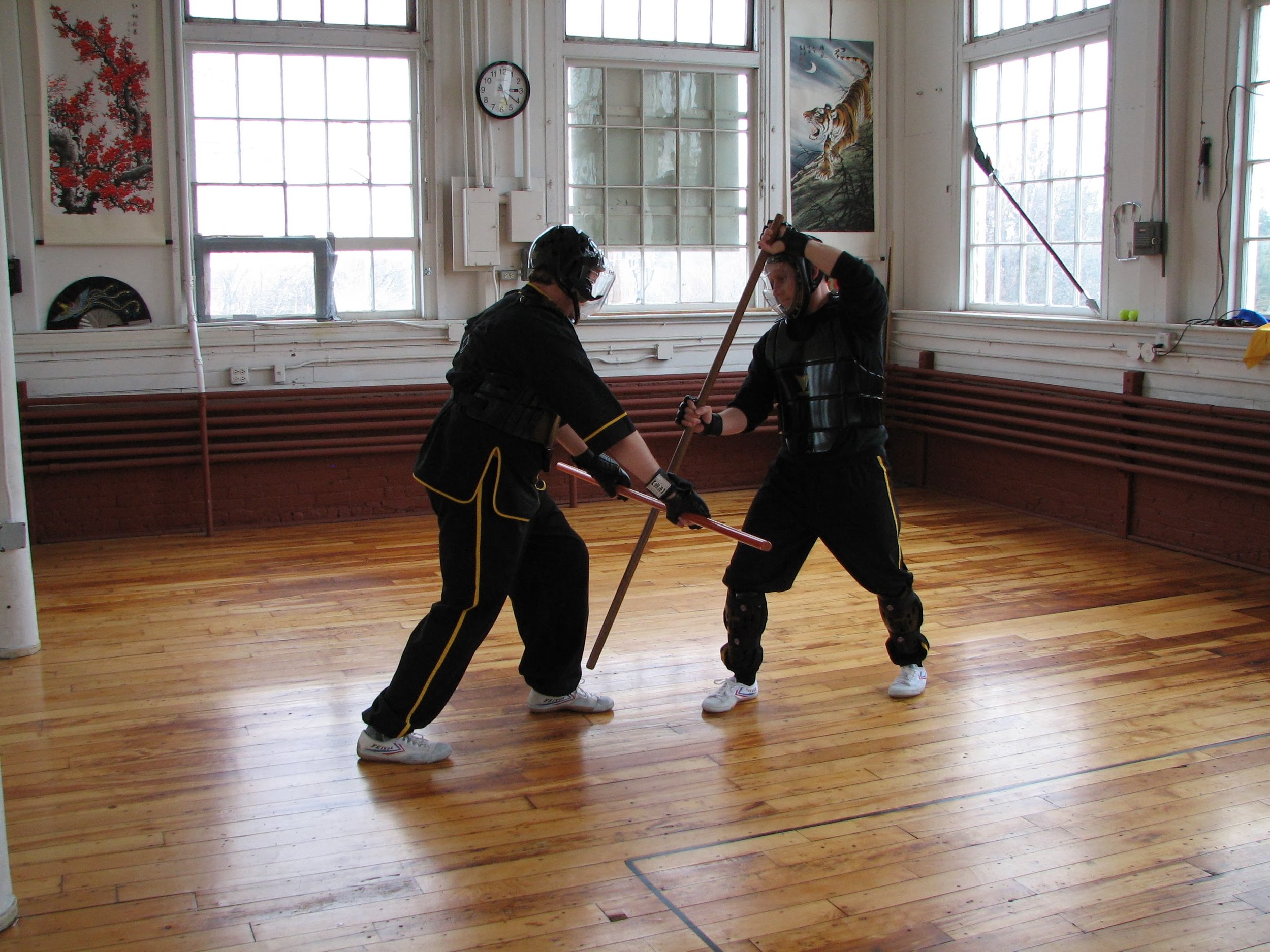
Staff vs Staff - circa 2006
I returned to my research and training. Buying any books I could find. I read over 100 books on Tàijíquán, most of them a complete waste of time. It’s amazing how many words have been written about nothing.
I found the other arts lacking in content altogether. At least to my favor, tàijíquán is well documented. The most widely proliferated Chinese martial art in existence. Unfortunately, much of this is without practical meaning, and comprised mostly of esoteric beliefs, or lacking clarity of purpose. Whether this is intentional, or through innocent ignorance is certainly a matter of debate.
I took to searching for videos of the core forms of the styles I had chosen. For mantis boxing, I was able to find one of Bēng Bù (Crushing Step), but had no such luck with Lán Jié (to Intercept 拦截) , or Bā Zhǒu (8 Elbows 八肘). I ordered videos from China, familiarizing myself with the Chinese characters enough that I could search for books and VCD’s containing these sets, or anything close to them. I signed up for a Chinese class to assist in my quest.
My language venture did not last long. It turned out to be the same misguided approach to teaching language that is rampant in public, private, and even collegiate school systems across America even to this day. Grammar first. Years go by, and one is still unable to speak fluently, or converse with a native speaker. It is odd, that this failure of a student to speak, is not a measure of success for a language arts curriculum, or a teacher’s capabilities...
I digress. It so happened that in my research, I had come across an excellent resource of knowledge - an online forum for mantis boxers. Rich, and fascinating conversations took place in this venue, people seemed to be sharing knowledge and communicating their ‘secrets’ without reservation. I visited it from time to time, never saying much as they seemed far more knowledgeable than I; and there existed an hierarchy of lineage holders that I was not part of.
One day, I read a thread where an individual was chastising and insulting anyone who learned from a video. This individual was particularly demeaning, condescending, and harsh in their criticism. Stating matter of factly, that “anyone interested in learning mantis should only be doing so from qualified teachers; certainly not from video!!!”
This infuriated me. Who was this person to dismiss one of the three ‘primary methods of human learning’ (verbal, kinesthetic, and visual)? What position of expertise did they hold in life to stand up and blatantly proclaim that personal instruction (which I had experienced plenty of), was the ONLY way someone should, or could, properly learn. I balked at this notion. I broke my silence and chimed in.
My response was snarky; full of contempt. I no longer cared who held what position, or however ‘exalted’ they seemed to be. I had too many years of feeling like I had been duped. I rose up upon my soapbox and fired back my reply - “blah, blah, blah, - insert stuff about learning types and video being a modern tool to assist people, - blah, blah, blah”. Then (I paraphrase here) - “perhaps if you mantis masters were not so rude and possessive with your forms, those of us whom you shun, would study from you, rather than be forced to pick scraps from videos.”
Shortly thereafter, I had a reply to my post in the thread. I opened it, adrenaline coursing through my veins. I awaited the inevitable online battle that was sure to ensue. Knowing, full well, some virtual vitriolic response from the original author of the post was there unopened in my inbox. Instead, I was greeted with - “Come to San Diego. I’ll show you the core forms of mantis.”
What!?!?!?! I was stunned. Stopped dead in my tracks. This was not at all what I expected. Who was this person? What did they know? Why were they so quick to offer and share what everyone else tried to hide?
I looked at the member profile. They were a member for years, yet barely posted a thing. I found a name. I Googled it. Nothing (Google was in it’s infancy then). I searched further; looking deeper. I finally found some grainy black and white videos of this Mantis Boxer doing the form Bā Zhǒu (8 Elbows 八肘), and another of one of his black belts doing Tōu Táo (Monkey Steals the Peach 猴子偷桃).
I could tell from the way they moved that they knew how to fight. I replied. “I’m interested. Let’s discuss.” Phone numbers were exchanged. A time set to talk. After an hour or so long phone call, and a lengthy discussion on his background, methods of teaching, and why he only works the core forms of Mantis, I booked a flight and hotel to San Diego, CA. Off I went.
I never looked back. In my first 15 minutes of meeting with this mantis boxer, I learned more about ‘fighting’ than I had in 7 years of kung fu training.
“Where do you look when you fight?”, he asked. I thought about it, and replied with “I look off to the side of my opponent.” He paused, a quizzical look on his face. Apparently he hadn’t expected that response. Then came his reply - “Not at them?” I said, “No, but I’ve been told all things of the sort - look in their eyes. Watch their head…” He asked me why I look off to the side. “It’s just something I do.” I replied. “It seems to work better for blocking.” He grinned.
“You’ve figured something out”, was his response. This made me feel good. I was eager to hear more. He proceeded to explain the reason behind why I was doing this, why it worked, and drills to prove it. Beyond that, he offered up the name of a ‘principle’ to go along with it. I was ecstatic. This was amazing! I had never experienced such a thing in martial arts; neither kung fu, nor tae kwon do. A ‘principle’ to teach fighting!?!?!
We then proceeded outside to work on Bēng Bù, a form from mantis boxing, and the one I was already familiar with. I was more interested in Lán Jié, since I had been unable to find anything solid on this form. However, being one of the core forms of Mantis that I already knew, it was a good launch point and gave us a way to see what one another knew.
We spent the next couple hours training in the parking lot of my hotel in the middle of the night, and well into the next morning. He left for home, and I spent the next hour scrambling notes and trying to calm down enough to sleep.

Qín Ná (Capture and Seize 擒拿) training - circa 2000
The next day we met for training around 9 a.m. We spent hours in the park, going over mantis boxing’s Lán Jié (to intercept 拦截) - as well as an application for each move. I was ecstatic and soaking it up like a sponge. We broke for lunch in the early afternoon and then met up with some of his students at his house. Training went well into the night again.
He asked - “How did you learn to block punches?” I stood there for a moment, realizing how little I had been taught on this. Most of my experience with blocking had been from taekwondo. I replied with something that I can no longer recall, but surely it was meek.
He had me pair up with one of his students to show him how I block. I was not allowed to move, and his student was to throw slow, controlled punches while I demonstrate my blocking skills. He destroyed me.
I blocked one or two shots, and then I was lucky to block one of every five after that. His student, had only been training 1.5 years. I was on my 7th year of training. Countless trophies under my belt, and a National 2x Gold, 1x Silver Medalist. I was running my own martial arts school, with a cadre of dedicated students looking to me to teach them how to defend themselves. This was humiliating, demoralizing, and excruciatingly raw. I felt like a novice. I felt as if I had wasted all my efforts. Years of training had been for nothing.
Right then and there, I had a choice to make. I could leave. Throw my hands up in defeat and walk away; quitting martial arts altogether. Or…I could do something less extreme - go home. Go home and lie to myself that I did fine. That he cheated, or that he did something nefarious to trick me. Pretend I was better than I was.
I looked at his student. Then turned my gaze upon the teacher as he stood there quietly gauging my reaction. My brow furrowed, I looked him in the eye with all my will behind me, and said - “teach me.”
Nationals Qualifier 2004 - Eagle Claw Form - Traditional Hand Forms. Hershey, Pennsylvania
To be fair, and honest, this was a bit of a rigged game. I wasn’t allowed to counter-strike, move, kick, clinch, or takedown. Real fighting, does not subsist with such a ruleset. Just blocking for any length of time is a failed strategy. One should be delivering parry/counter, block/counter, move/counter, etc. But the lesson hit home nonetheless.
I revisited everything I thought I knew, from the ground up. Asking him to go over stances, footwork, punching; anything I had already learned, or thought I learned. I wanted to know what was missing. The rest of the weekend turned to working on everything but, a form. He had to keep asking me - “Don’t you want to learn this form you came for?” [With a grin on his face of course.]
I spent the next few years going to San Diego twice/year, flying this coach to my school once/year. I met up with him at other people’s schools just to squeeze in whatever training I could get with him. Here was someone that knew how to fight, and did Chinese martial arts. I was all aboard.
As far as forms go, I learned Lán Jié, Bēng Bù (again), Báiyuán Tōu Táo (White Ape Steals Peach), 5th Son Staff, Saber, Da Dao (Military Saber), and a couple of 8-Step Mantis forms. I also learned how to block, punch, kick, and move; as well as throws, joint locks, and his core fighting principles to diagnose problems we have when sparring.
He helped me fix some forms I still held onto such as liánbùquán, and gongliquan, and my tai chi knowledge grew deeper and richer. As time went on, I had so much practical knowledge to work, the forms seemed superfluous, and nothing more than distractions.
I progressed, and my students became more and more in need of real skills. I went on to scorn forms in full force. Thinking them unnecessary, archaic, and highly corrupted distractions. Time-sucks that stole focus away from the more important aspects of martial arts - application, combat techniques, and self-defense skills.
Regardless of my disappointment and waning interest in forms, throughout it all, some part deep inside of me always held on to the notion that they are significant, important, and central to the art. Not in the possessive covetous way other teachers hold on to them, but in some more intrinsically valuable way.
Afterall, why were these core sets so important as to be handed down no matter what line of Mantis one studied? Why did the same set, with variations of course, exist across multiple lines in the family tree of Mantis Boxing? Why did almost every style of Chinese boxing have a ‘set’, or ‘sets’?
Ultimately I came to the realization that forms are treasure troves of knowledge. Ancient vehicles designed to carry the knowledge of a fighter’s system. Without the techniques, principles, and applications to go along with it however, or the work ethic to practice them tirelessly, they are worthless shells of long forgotten arts. The form, cannot exist without the function.
Without function, martial arts forms are merely martial dance. A non-practical artistic representation of a bygone mode of combat, and self-defense. There is nothing whatsoever wrong with people wanting to participate in the practice of this ‘dance’. It is only problematic when they believe, or are allowed to believe, that this practice of shadow boxing, will lead to the attainment of ‘real’ fighting skills.
In today’s world of video, books, a literate populace due to mass education, and the accessibility of martial arts schools and resources, forms are no longer necessary for a teacher to carry on an art of hand-to-hand, or weapons combat. As evidenced by judo, jiu-jitsu, muay thai, wrestling, filipino stick/knife arts, boxing, and more. All existing without the need for forms to muddy up the waters, or distract students from the true goal of martial arts - the dedicated practice of methods of violence to empower, embolden, and strengthen themselves out of immediate necessity, or the potential threat of such.
What is sorely needed for Chinese boxing to regain its rightful place on the mantle of formidable martial arts in the world of today is - less forms. More techniques. More application, and definitely more sparring.

The CHAINS of CLOSED GUARD - An Attack Strategy for Resistant BJJ Opponents
The closed guard is considered a dominant position in BJJ. Unfortunately, for most of us as we progress in the art, it devolves into nothing more than holding someone in place. We try the basic attacks we learn, but someone with very little knowledge can…
The closed guard is considered a dominant position in BJJ. Unfortunately, for most of us as we progress in the art, it devolves into nothing more than holding someone in place. We try the basic attacks we learn, but someone with very little knowledge can shut them down through resistance alone.
I found this annoying, and I'm sure I'm not alone. Holly is going to help me show you a chain of attacks I use from 'closed guard' that may help you solve this. Check it out and maybe it can help you improve your success rate at submitting, or sweeping your opponent on the ground in Brazilian jiu-jitsu.