
What Is The Best Martial Art for Kids?
“If we need to play all these games with kids to get them to keep coming back to class, then maybe, just maybe, we’re a giant B-O-R-E!!!”
I previously wrote an article in 2017 on the 5 reasons Brazilian Jiu-Jitsu is the Best Martial Art for Kids. While I still agree with my thoughts on that, let’s just say my thoughts have evolved and there is more to it.
In retrospect, there are more martial art styles out there that are just as good for kids, but other factors have to be in place to make them worthwhile.
So what makes a great style of martial arts for kids? Here are some criteria from my point of view:
Builds independence & confidence. Letting children teach one another in class helps them to become more independent and responsible. For tens of thousands of years of human tribal living, younger kids predominantly learned their life skills from older kids.
Kids crave responsibility, and they build confidence in themselves and others when they are entrusted to help one another learn and work together. Through discovering and solving complex tasks. As instructors, we are guides. We don’t make a clay sculpture with a mallet, we use a light hand to make adjustments here and there.
Giving kids time to work on something together in class, to think critically, sparks their imagination, gives them questions to ask, and builds confidence as they experience success in figuring things out, or helping their peers to figure it out.Entrusts children with powerful tools. Nothing screams trust and acceptance to a child than when we trust them with something powerful. Think about the first time our parents let us light the fire, or to help cook. The thrill of being allowed that responsibility, something we were previously forbidden to touch.
Locking children away from ‘real’ martial arts techniques, things classified as ‘too dangerous’, only reinforces feelings of inadequacy, or immaturity. Martial arts class should teach a child real techniques, and how to behave responsibly with them as they traverse life. This encourages responsibility, maturity, and feelings of trust.Encourages freedom of expression. Martial Arts is called an art, not a science. This is due to the inherent nature of personalizing the techniques to match our individual bodies. We are not creating an army of simulacrum that will all move the same way, have equal strength, size, or wits.
One boxer, grappler, karateka, judoka, wrestler, etc., can gravitate to an entirely different skill set from another. As teachers, our responsibility is to show the art, encourage the development of a strong foundation, and foster personal development in the direction of what works for the child, not for the instructor.Eliminates Boredom and provides mental engagement and stimulation. Kids are smart, and they have an incredible aptitude to learn new and exciting things. While techniques need to be broken down, and simplified for instruction (at any age level), they do not need to be watered down to the point of boredom.
How a class and instructor approaches complex subject matter is of extreme import. The audience (young or old) should be mentally challenged, but not overwhelmed. Monotony must be masked by challenge as repetition is the mother of all skill.
Does that mean a 9 year old needs to throw one type of punch 10,000x while standing in a horse stance just to get those reps in? No. We build over time, and we achieve higher knowledge by combining said knowledge and ideas.
The punch can be included as part of a series of moves, or combined with a takedown, kick, or other strikes. Changing it up stimulates the brain, and challenges the student to make the punch work with control, discipline, and technique rather than putting them to sleep, or calling them hyperactive if they do not comply.
No matter the style, the most important factor is that the school, or gym, the art, the program, hit’s the criteria necessary to ensure children are getting the most from their martial art.
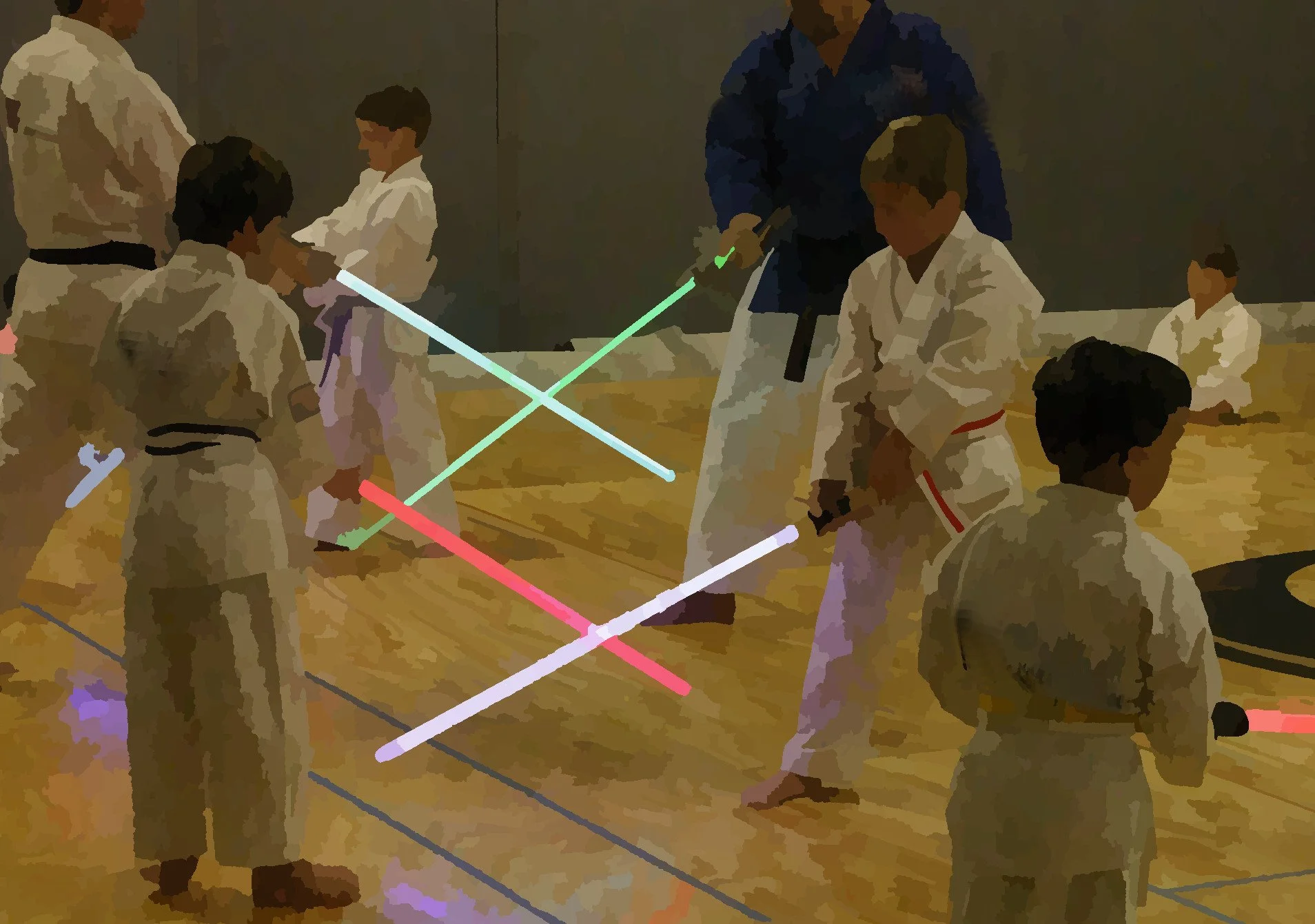
What Is Destroying Kids Martial Arts in America?
Are we as instructors providing a real service to the youth in our communities? Or just offering afterschool care with costumes?
An Open Letter to Parents with Kids interested in Martial Arts
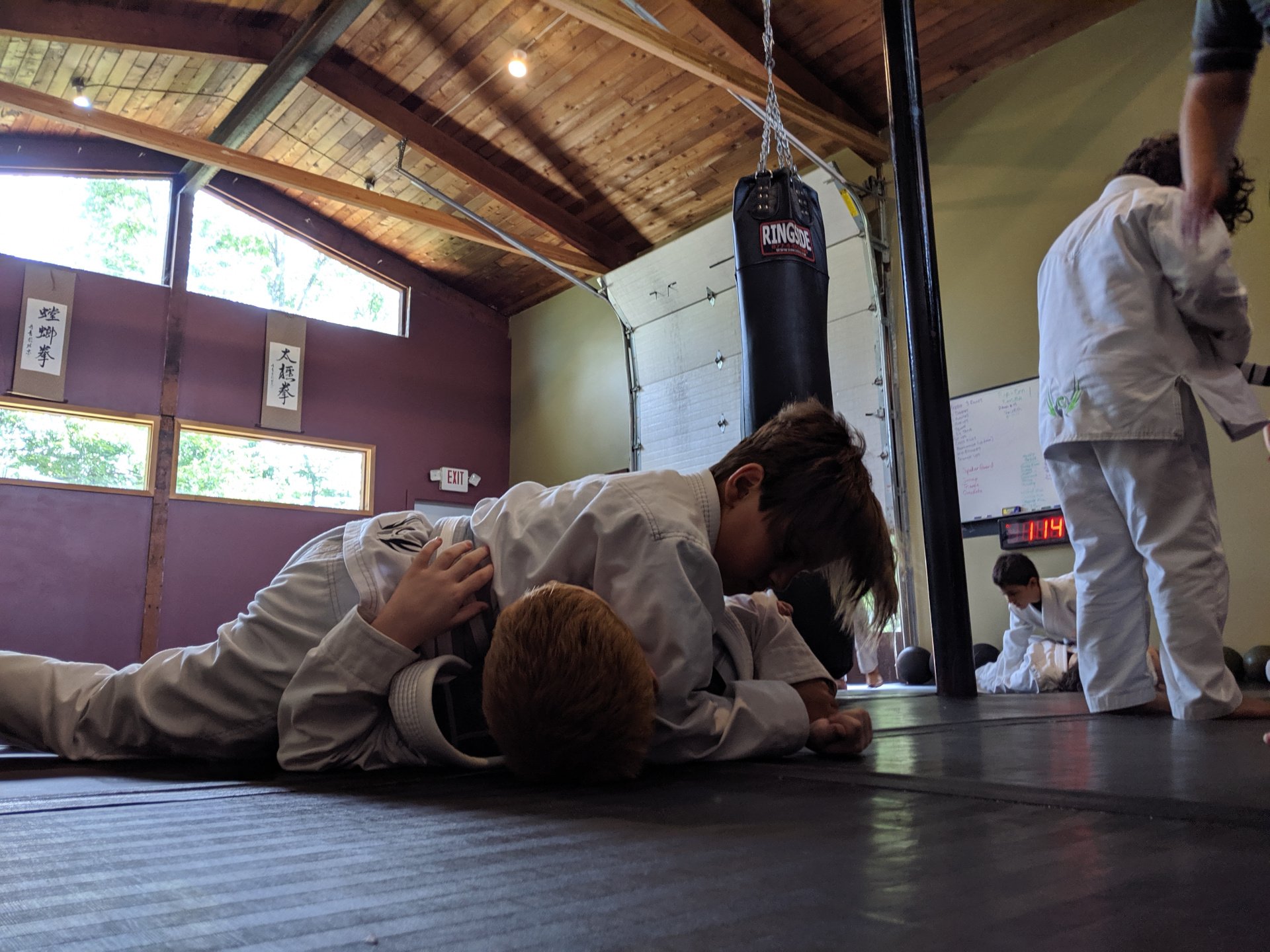
When I was a child I wanted, deep within my core, to know martial arts. Martial arts as I saw it through -magazines, the back of comic books, or VHS tapes in the General Store. Martial arts embodied everything I sought and needed as a small person in this great big world - Confidence. Self-defense skills. Strength. The ability to equalize the playing field.
I was being bullied routinely in the neighborhood, school, and at home. I was often outmatched by someone else’s size and strength. Spirit just wasn’t enough to win battles most of the time. The methods and art of self-defense, at least from where I stood, offered hope for my small, and weary heart.
Unfortunately, there were no martial arts schools for 10’s of miles within our vicinity. By the time I lived close enough to a martial arts gym, I was working, going to school, and trying all I could to not draw the attention of current or pending bullies.
Thus, I never had the chance to undertake this endeavor as a child; when it would have benefited me in my trials and tribulations. It was not until I was an adult before I experienced the life changing benefits of martial arts. The power it holds in enabling us as individuals.
If I sought these life altering skills as a child, I am quite sure there are other children out there today that want the same things, and for the same reasons.
As I later became a coach/instructor myself, I followed the trends and examples of other kids martial arts programs across the nation. I fashioned my own kids training in a like manner, thinking this is what I had to do to be successful. To keep kids coming back. Even though I did not believe in it. And deep down it sickened me. I did this for years.

Eventually I quit teaching kids because I could not wrestle myself to continue on this path. It all seemed so phony. Years passed by and I focused solely on adults and teens. It still gnawed at me though. Kids should benefit from real martial arts training that they want, and/or need.
Never satisfied with the results or sticking with the status quo, I asked myself the following questions as I looked around at kids martial arts classes all over the nation:
Why are kids playing dodgeball, tag, and being chased/beaten with pool noodles in martial arts classes?
Why aren't children learning real skills that can empower them? Help them grow stronger, build character, gain confidence, and develop positive self-worth?
Are we as instructors providing a real service to the youth in our communities? Or just offering afterschool care with costumes?
I realized that these concepts and approaches were highly flawed. What we were doing as instructors was certainly was not what attracted me to martial arts as a child. Then and there, I set out to change things.
I went back to the drawing board and modeled my classes to be more in line with what was found in boxing, wrestling, judo, jiu-jitsu, and other martial arts that focus on empowering kids, rather than entertaining them.
The results speak for themselves. As can be seen by reviews of my program written by actual parents and kids alike. Yes, my classes have structure, respect, and discipline. Not because these are cool industry catchphrases for parents to sign their kids up for my classes, rather because these are necessary tenets to build the framework for a safe training environment. An environment where real skills are being taught.

Mutual respect and self-control are ingrained in the team to keep one another safe while helping one another learn to protect ourselves, and grow stronger. I treat kids with respect. I entrust them with powerful knowledge. I appreciate how intelligent they are even at a young age, and I encourage them to use these attributes in their team training.
My coaches follow in step. Our classes have a positive atmosphere with instructor guidance, not lecture, dogma, and lip service. I believe kids should have the freedom to express themselves, to create, and to help one another grow.
Children are provided time to work with one another solving problems and learning from their mistakes. The older more experienced kids help their newer and younger teammates. Thereby increasing their own understanding and gaining responsibility themselves.
If this sounds like a good environment, what you would like your child to be involved in, then I am happy to have them among the ranks of my team and look forward to meeting you soon.
Randy Brown
Head Instructor
RECENT UPDATE - SEPT 2022
Recently we ran an adult Mountain Training Camp in a resort destination in the mountains of New Hampshire, USA. Our first day of training outdoors in a field, we had a visitor.
The following is an excerpt of an actual conversation between an adult martial artist present at the camp who I will call Carl; Carl taught 1000’s of kids martial arts over the past decade, and a 10 year old girl who I will call Tammy. Tammy has 1+ years of Kids Karate experience.
Coach Carl: Tammy, what’s your favorite thing about Karate?
Tammy: Dodgeball!
5 Reasons Brazilian Jiu Jitsu is THE Best Martial Art for Kids
Striking arts, whether they be Karate, Tae Kwon Do, Boxing, Kickboxing, etc. - all require high degrees of focus on multiple facets of fighting, & self-defense (you can read more on this in my 2015 blog post).
I have spent the past 18 years practicing Mantis Boxing, and the past 5 of those also practicing Brazilian Jiu Jitsu. I also spent years teaching kids both Kung Fu, and Brazilian Jiu Jitsu. My first love will always be Mantis Boxing, but frankly speaking, it is not for kids.
Striking arts, whether they be Karate, Tae Kwon Do, Boxing, Kickboxing, etc. - all require high degrees of focus on multiple facets of fighting, & self-defense (you can read more on this in my 2015 blog post).
I have spent the past 18 years practicing Mantis Boxing, and the past 5 of those also practicing Brazilian Jiu Jitsu. I also spent years teaching kids both Kung Fu, and Brazilian Jiu Jitsu. My first love will always be Mantis Boxing, but frankly speaking, it is not the best for kids.
This is not only because of the recent knowledge we have into the dangers of concussions, CTE, and other brain injuries; which is extremely important. It also has to do with deeper reasons that go far beyond injuries. One such factor is - results.
However, where striking arts lead to more common injuries in the pursuit of 'real' skills, or are watered down to the point of boredom, BJJ can be a fun way to bring kids to a high level of competence; preparing them for dangers life may throw their way while giving them an opportunity to grow into more confident, physically fit individuals and enjoy their time doing so.
Here are the 5 main reasons Brazilian Jiu Jitsu is the best martial art for your child -
1. Natural Art
BJJ is much akin to our natural movements and innate self-defense skills. Like tiger cubs that practice sparring before leaving the safety of their mother, so to do we as humans practice fighting when we are young, pliable, and less likely to hurt one another, and ourselves.
Any parent with multiple children, or adults who grew up with siblings knows this to be true. Growing up in the 70's and 80's, we were always getting in tussles some playful, some not so much.
Watch untrained kids go at it with one another. What do you see? They have a natural predilection towards a rolling around, wrestling modality. If they had fur, a tail, and pink butts you'd think they were monkeys.
BJJ works within the natural instincts we are all born with. It operates predominantly on the ground where it shines above all other martial arts.
2. The Great Equalizer
The bare truth of self-defense is - size matters. In order to beat size and strength, you must have superior skill. The stronger they are, or the more skilled they become with strength, the better your technique must be.
Brazilian Jiu Jitsu uses leverage and physics to equalize this disparity. Kids learn to flip and roll larger opponents, like a chef flipping pizza dough. Except after they flip the dough, they rip it up and choke it out. :-D
Nothing gives a child more confidence than watching their skills progress and being able to do things they never would imagine.
Watch this video with BJJ Black Belt Robson Moura battling a guy that walked into his school and challenged them to fight. Here you will see how size was neutralized with BJJ.
3. Physical Fitness
With regular training in BJJ, you get unmatched core strengthening, and overall functional full body strength. With each movement you are engaging your entire body to perform an action.
Here are a few examples of how BJJ makes you stronger, faster, and in better shape.
Upper body - using your arms to support your weight and maintain 3 points of contact at all times, activates the arms, shoulder, chest, back, and core. Over time, the upper body will gain muscle and tendon strength.
Making grips on your partner's gi, will also increase hand and forearm muscle and tendon strength.
Legs - when on your back, you are using hip flexors, glutes, quads, hamstrings, calves, feet, and back/core muscles to maintain guard, and perform sweeps and submissions. This may all be jargon to many parents, but know this - it's an incredible muscle engagement platform that rolls over into other sports and activities that kids perform in their lives.
Cardio - in BJJ we have something called rolling. Rolling is sparring, but we're mostly on the ground. When learning to roll, and move, the cardiovascular system is working hard to put our bodies through a range of movements, as well as activate muscles that don't normally get taxed in this manner. A typical match is 3 to 5 minutes for beginners.
Early on in the training process, when a match ends, you will typically see people are breathing hard, and sweating like they were working out for an hour.
4. Bully Prevention
This is one area that Brazilian Jiu Jitsu shines above almost every other martial art for kids. There is much confusion with how to deal with the bullying problem in schools, and out. Even adults can have bully problems in the workplace.
The focus seems to always be on the bully, and how to stop them from doing what they do. This is like trying to stop the earth from spinning, or an avalanche from falling. You're pretty much wasting your time unless you can completely change the environment, background, parenting, siblings, or whatever other reason or reasons is causing the bully to be a jerk.
What we CAN change, is us. A bully targets a victim subconsciously based on visual cues they pick up. This can be an obvious physical trait that is difficult or impossible to change - height, skin complexion, deformities, etc. The other criteria a bully uses, is body language.
Human communication is 93% non-verbal (why email and text messaging are such horrible mediums for trying to talk to one another). Most of our communication is through body language. How we stand, sit, walk, can send hidden messages to those around us about how we feel about ourselves.
Take someone who is shy and walks with their head down and their chest concave. This shows a bully we are insecure, lack self-esteem, confidence, and are easy prey to their wicked whims.
Take a stance that exudes confidence, even when we don't feel it, and the secret cues are telling the bully - "Hey, maybe we shouldn't mess with that person." Bullies want easy victims, not those who are going to fight back verbally, mentally, or physically; making everyone around them aware of THEIR insecurities and weakness.
Where does Brazilian Jiu Jitsu come into play? Simple. By empowering people to be able to defend themselves, they walk around with more confidence and self-esteem. Just by believing in themselves, and their skills, they exude an aura of defense that shuns most predators from wanting to partake in a duel of any sort.
This leads to the final reason in this article...
5. Results = Confidence (Belts)
Results are first and foremost in Brazilian Jiu Jitsu. There are no forms (kata), or synchronized choreographed (A + B) from my partner = (C + D) response from me. There is no standing in weird postures for minutes at a time to prove some arbitrary goal of perseverance, or discipline.
Jiu Jitsu for kids is extremely tactile, fun, and engaging. Everything is done with partners, and stress tested to ensure you can make it work. When a child evolves in Jiu Jitsu, they are doing so through real feedback.
Belts in Jiu Jitsu are much harder to come by. Even though it is far easier for kids to move up ranks than adults, it is still far more difficult than many other styles of martial arts. If a child is ranking up in Jiu Jitsu, it is due their constant participation, and skill advancement. They don’t just wear the accolades, they feel the improvement.
There are no 'child Black Belts' in Jiu Jitsu. Period. You cannot even attain a Blue Belt (first rank after White for adults) until you are 16 years old. You cannot be a Black Belt under the age of 19. This makes a huge difference for kids. Kids are smart, and incredibly aware of status and real achievements. They know when they are getting participation trophies vs real rewards for hard work.
When it is time for a promotion, the kids in Jiu-Jitsu are awarded their new belt. Then they go right back to training, and rolling, and learning with their friends. They submit others, get submitted themselves; staying humble.
Do they play games and have fun? Yes, they play games in class, but you won't stay to watch and find your son or daughter playing dodgeball, running around cones, playing tag, or some other unrelated martial art exercise to burn up a majority of the class time. The games are all built around fundamental Jiu Jitsu movements that reinforce their skills and build their physical form, and inner self.