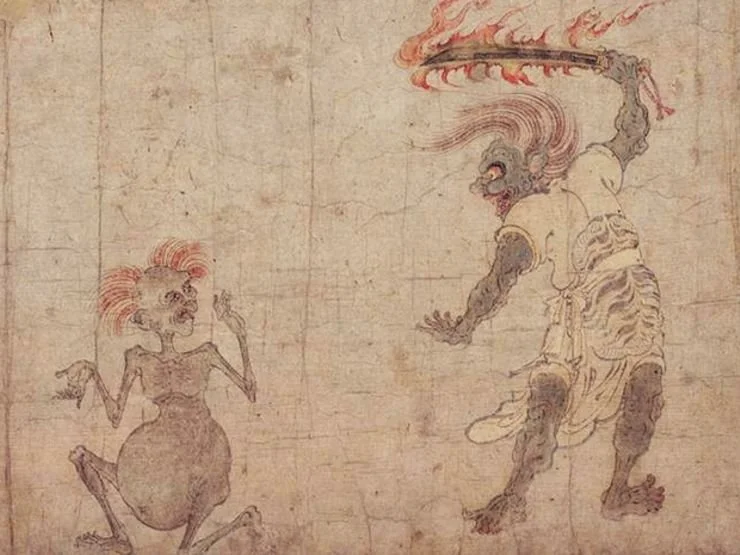
A Daemon in my Dojo
The afternoon sun turns to shadow early as the solar cycle wanes and we fast approach the winter solstice. I was finishing my training and sitting down to meditate when the visitor walked in.
A new visitor arrived in my dōjō today, a stranger from a far off land. It is the beginning of autumn in the year 2012. Dōjō, or ‘way place’ in Japanese, a place to study the way of ‘something’, typically martial arts. In Chinese martial arts we call it a wǔ guǎn (wǔshù guǎn), or martial hall, the place in which we gather for the study martial arts.
The afternoon sun turns to shadow early as the solar cycle wanes, and we fast approach the winter solstice. I was finishing my training and sitting down to meditate when the visitor walked in. Lately I have been consistently practicing meditation as a post training routine to clear the mind, to take inventory, and to stay grateful.
It has been thirteen years since I began practicing Praying Mantis Boxing (tángláng quán), and a bit over a year since undertaking the art of Brazilian Jiu-Jitsu (B.J.J.). I recently competed in my first BJJ competition as a newish white belt. Currently, I am training and coaching six days per week, as has been the case for the past eight years. When I’m not teaching or occasionally unfurling my wings to deftly dance off a cliff to reach for the clouds above, I pen articles on martial arts as thoughts and ideas materialize that may be of use for others on this path. I have been cross training in other arts for a few years, nothing serious prior to BJJ, but enough so that I have been experiencing modalities outside of Chinese boxing arts; seeing a broader picture.
I sit regulating my breathing, trying to focus my mind. A bright warm light washes over me as the door opens. The stranger interrupts with abrupt words that leap forth like a flash of briny sea water surging to shore on the rush of high tide. These noises flood my brain. At first I am annoyed at this intrusion, and try to ignore it for a moment of solitude. Then, I pause to listen to what he said to me.
As my mind churns over the information it feels as if this visitor is casting a bright spotlight into the deepest umbra in my brain. He begins to spout emphatically about Bēng Bù, crushing step for short, but the longer meaning is – steps to cause the enemy to collapse and fall into ruin. Bēng bù is a shadow boxing set found in styles of mantis boxing, I have been practicing this set since 2005 learning five or more versions from the various lines of mantis boxing, part of my quest to decipher the true intent behind the shadow boxing shell transmitted through mantis boxing lineages for the past one hundred years, or more. I’ve vigorously searched for the hand-to-hand combat applications originally intended by the creator(s), wanting my own continuation of this boxing style to be effective in fighting. Something I have rarely seen thus far.
Eventually I settled onto one version of bēng bù that I train a few times per week, occasionally spending time mulling over the potential applications within my head. The stranger's words snap like a bolt of lightning crackling through my mind. Riding along the spectrum of light his question crackles forth: “Why is bēng bù, like so many other Mantis Boxing forms, begun with and finished with the move, ‘Mantis Catches Cicada’?”, he continues on, “This is not a finishing move to end a fight, so why would this technique of all of them be laid out in form after form almost as bookends?”, “Is this just stylization? Is it a meaningful application?” His questions intrigue my mind, I begin chasing the lightning along its incongruous path.
Code breaking comes to mind, more specifically ciphers. I reply to the stranger, “A cipher used to crack open an ancient codex. A boxing form, in this case crushing step, a set of choreographed moves from a boxer of old, is this the codex and Mantis Catches Cicada the cipher? Perhaps this move is ‘the key’ to unlock the applications within the form?” I begin traversing the halls of the labyrinth in my mind, searching every corner, opening every door, looking at each move in bēng bù from a ‘two hooks’ (neck and arm, or colloquially known in fighting circles as a ‘clinch’ position.
The dialogue and the air around this impromptu visitor, ripple with electricity in the air. I struggle to keep pace with the trove of possibilities his questions raise. As I peruse the catalog of choreography in each road of the set, I conclude that some of the bēng bù boxing moves could certainly function from this position, but others clearly not. The questions then enter my mind, “Where is he from?”, “What, or who, is the source of visitors knowledge?”, “How did he happen upon my dojo?”. I asked his name. “Wang”, he replied.
Wang was a pesty guest, talking incessantly his entire visit. “Does he ever shut up?”, I wondered to myself silently. A wave of empathy washed over me, he did travel from afar, and spent so much time alone unable to talk to anyone about this subject matter. A topic that must be yearning to escape the prison of his mind.
Wang spoke day and night, following me home after classes. He had nowhere else to stay on his visit, I felt compelled to open my home to him, annoyed at times, but grateful for his illuminating thoughts and inquiries.
During his stay I rarely caught a wink of sleep. Wang sat next to my bed at night incessantly rambling till the sun came up. With no choice I lay awake listening to the chatter, staring at the ceiling, throwing off the sheets in exasperation, pacing the room, and spending nights shadow boxing while Wang rolled on. I caught a wink of shuteye here and there, only to rise early again the next day. A true insomniac, Wang did not sleep, obsessed with his ideas which spawned forth like seven hundred baby mantids hatching from an ootheca in the midsummer garden.
With seemingly nowhere else to be, Wang stayed for weeks, revealing a series of mantis boxing positions and hand-to-hand combat applications I had never considered before. I immediately went to task testing these in drills, sparring, and grappling as Wang sat looking on in satisfaction. A new world arose around me; a schism manifested, a cataclysmic shift in my worldview of fighting.
Wang, seeing my progress, bid me farewell for the time being, proclaiming as he exited my dojo, “Perhaps I’ll return, but for now, you need to chew for a while before we can dine again.” I bowed to Wang in gratitude, and wished him well on his travels. Thus concluded my first visit with the daemon who sojourned to my dojo.
Discovering the 12 Keywords of Mantis Boxing
The above short story is an allegory based on real events. An episode in my life back in 2012 consiting of an explosion of ideas and thoughts. The dōjō is not the one I train and coach inside night after night, but rather the one I spend far more time in, the one inside my mind.
My daemon, Wang, is based on Wang Lang the mythical founder of mantis boxing. The man accredited with the origin of this boxing style hundreds, or thousands of years ago, depending on who you listen to. You can read more about Wang Lang in an article I wrote on his possible accreditation to the art here: The Apotheosis of Wang Lang
Prior to this experience I had little in the way of instruction or conversance with the 12 keywords of Mantis Boxing. I certainly knew of them, as most serious and long term practitioners of the art do, but I had yet to delve into them. From my observations and experiences any information regarding these keywords, and conversations surrounding them amongst mantis boxers and coaches, devolved into arguments over what the ‘correct’ keywords are, and their true meaning.
The thoughts I had on ‘mantis catches cicada’ were real. However, while this was a ground-breaking revelation that sparked an age of discovery, and helped lead me onto a fruitful path, years later I debunked this theory when my research exposed mantis catches cicada as nothing more than a — brand moniker, rather than an actual fighting technique. A mantis boxing en garde to proclaim, ‘We do mantis.’ This moment in time though, when all these thoughts began to appear, shifted my brain into thinking of each move from a whole new pillar of fighting — wrestling/grappling.
My daemon helped me to see the first three of the twelve keywords of mantis boxing with new eyes. I began to commit pen to paper, to record these thoughts as they manifested. It crawled from my pores with an unstoppable force. We took photos. I wrote my first quasi-article on ‘What is Praying Mantis Boxing’, now titled The Heart of the Mantis, a rough experience. This idea that wrestling was an integral part of mantis boxing was scoffed at by the mantis boxing community, and some were extremely rude in their rebuttals. I charged forth anyway, fully committed and stalwart in my belief that I was on the right path. As with any new endeavor, I was getting my legs under me as I awoke from a slumber.
Over the ensuing years Wang would come by for a visit from time to time. If I was not paying attention he would splash hot tea on my brain, burning me so I would once more bring my full attention to bear on what he had to say. As I continued boxing, grappling, and progressing in BJJ I unlocked more and more positions and fighting applications. An increasing number of the keywords unlocked before my eyes.
I noticed a similarity with other grappling arts and recalled Gichin Funakoshi remarking in his book Karate-Do that I read back in 1999, that Kara-Te (way of the Tang Hand) was a blend of techniques Okinawan nobles would bring home from southern China during the Tang dynasty, and blend them with their indigenous fighting arts. Years later finding out those indigenous arts were wrestling.
As we sat in the garden sipping tea on one of Wang’s visits, he asked me: “What were China’s indigenous fighting arts?” I began to delve into the history of the Chinese martial arts ecosystem as a whole, coming across...Bokh, the Mongolian wrestling arts still alive to this day. This was enlightening especially since many techniques looked similar to postures found within Mantis Boxing (and other styles) forms of Chinese martial arts that I had studied over the years, to include: taijiquan, eagle claw, long fist, and more.
Bokh, and its history/influence on Chinese culture when the Mongols invaded and took over China during the Yuan dynasty, made me grossly aware that Mantis Boxing along with other Northern Chinese Martial Arts styles that I had studied over the years, contained a great deal of stand-up grappling, or wrestling. This realization has evolved over time as my understanding has grown, now aware that the Manchu were heavily vested in wrestling culture, ruling China for over 250 years during the Qing dynasty; the last of the dynastic eras of China. From there a growing realization of Han wrestling, jacket and no jacket wrestling from the Shaanxi, Shanxi provinces, along with a broader understanding of how much wrestling was part and parcel to so many cultures the world over, almost integral to our DNA as a species.
I could now see that a bulk of these ‘systems’ from northern China seemed to revolve ‘around’ grappling as a primary pillar, using methods and tools to facilitate ways to clinch and grapple an opponent, to throw or trip them to the ground.
The other primary art I trained and taught at the time of writing the above essay, was Taijiquan, specifically Yang family style which was originally known as small cotton boxing. The principles within that style also screamed grappling and I began to dig into the 13 keywords of Taijiquan, performing a comparative analysis of mantis boxing and supreme ultimate boxing after finding so many parallels. This is a working document that I return to from time to time over the years - Brothers in Arms: Mantis Boxing versus Supreme Ultimate Boxing
Arriving at ‘my’ 12 Keywords of Mantis Boxing
Hook, Clinch, and Pluck were the first lessons from Wang Lang. These were followed by Lean. Lean was particularly elusive at first simply because myself being a striker/kicker I failed to see why we would want to lean in a fight, only to give our opponent a shorter distance to hit us in the head. Once applied to grappling and the close distance fight, leaning becomes integral to our survival.
The other keywords were increasingly harder to unravel, with growing absences between visits from my daemon. Long arduous periods of contemplation and frustration, times where I would continue to ask questions into an endless vacant void. From time to time though, my daemon would once more return, once more shredding the thick overgrown vegetation of confusion with razor sharp claws.
Once I could see through the adeptly graven undergrowth, and light shine upon the darkness once more, new techniques would reveal themselves. Eventually, a keyword, or two, would whisper from the lips of my daemon and wisp through the tattered leaves in the garden.
Adhere was the next to become apparent, especially due to its significance in BJJ, where controlling, or consuming space from an enemy while grappling on the ground was so significant. The same was true in stand-up grappling.
Strike was not as simple as it seemed. Ultimately, it is simple ‘to hit’, but why would something so obvious be a keyword? My daemon laughed at me, “If you don’t strike as you Enter, you’ll meet your doom.” he said. “If you do not strike to Connect, you will fail to find your enemies limbs, and meet their fists as you arrive.” “If you do not strike in the clinch, be prepared to receive…injury!”, he laughed harder.
Connect & Stick were the next keywords to be codified. Wang Lang, ever the sarcastic ethereal daemon, made disgusting references to gum, saliva, and the various stages of sticking, to bring these epiphanies to life. “That’s the easy part, but knowing when and how to use them without being punished is another issue entirely.” Offensive application versus defensive utilization was worthy of deep study, otherwise a broken nose would ensue.
Beng, to collapse and Fall Into Ruin came to me in the garden one day. Wang Lang was hanging out on the branches of my kale plants attempting to capture unsuspecting wasps, butterflies, and bees. As his hook snapped out to strike an unsuspecting passerby, he did not crush this victim with his deft strike, but caused it to collapse and fold in upon itself, crumbling to the ground below.
Beng was such a loud lesson that I had to write an article for it and publish it in a magazine for all to see. The idea that causing the opponent to collapse and fall into ruin using various methods, was revelatory to say the least. Especially since one of the core forms of mantis uses this in its name.
Wicked, or in other words, to be ‘sly, deceitful, or tricky’. Wang Lang just flat out hit me over the head with a heavenly strike on this one. What is a fake, or feint when boxing, if not a ruse to open up the opponent and land a strike? A loud noise, bang, or yell - are they not a diversion to enrapture our opponent for a brief moment so that we may gain unfettered access to enter and annihilate them? The use of pluck to force an opponent in the opposing direction of our throw, trip, or takedown, gain freedom to adhere and lean as we barrel forth into a takedown; is that not beguiling?
Wang Lang was rather condescending on that last one, especially since I had been using these tools for years yet failed to see the connection to the keyword he left etched in history.
Hang was another slap on the head, or ‘duh’ moment. Hang was pointed out by my daemon genius spirit. He vaingloriously proclaimed to me - “If you don’t root, lower, ‘hang’ on your adversary when engaged with hooks in the clinch, you’ll get tossed and trampled like you tried to wrestle an elephant!!!”
The Keys to the Style? Or Keys to the Stylist?
The 12 keyword formula of Tángláng Quán (Praying Mantis Boxing 螳螂拳) houses the principles that help define the art. These characters, or variations of them, have been passed down through the common vernacular of Chinese boxing methods in northern China. While not unique to mantis boxing, and evidence of their existence in other styles of the region and time period exist, they can establish a definitive strategy for mantis boxers; much more so than a collection of tao lu (forms) that have no consistency from one branch of the style to the next.
Replication of these keywords does exist among the various lineages of mantis boxing, especially in the first few keywords. No matter the style, many of the more obvious in name keywords such as: Strike, Crush, Hook, Enter, Lean, Clinch, Pluck can be witnessed in Mantis Boxing forms. Those which are harder to mimic in the air - Connect, Stick, Adhere, Hang, and Wicked, are absent in the forms from all indications, and are found rather through live training and sparring practice.
Many of the grappling specific keywords exist in various forms of martial arts still alive today. Although lost within Mantis Boxing lines, one needs simply look at other unarmed combative styles to find evidence of not only their existence, but also significance when it comes to fighting.
An art, of any type, is not defined by hard and fast rules, but is open to interpretation and adaptation by the artist. Keywords of a style, or system of boxing, are a series of principles to guide the practitioner. The definition of these principles and what they mean is highly variable and intimately related to the boxer using and/or coaching them.
The keywords can change from boxer to boxer, allowing for wide adaptation and freedom of expression, and each boxer can select which they rely on more than others. As long as the boxer adheres to a loose framework which includes the hook and pluck keywords, as well as the connecting and sticking specifically, then the stylist is still manifesting an art which mimics the fighting traits of the praying mantis.
These 12 keywords I pass on represent the foundational core of my mantis boxing art. Which strikes, kicks, throws, trips, submissions, you choose to use when you fight can vary widely from my own. And yet, with common principles we bond together as martial artists, share, and reward one another’s successes.
It took me six years to unlock what these keywords mean to me. Use them to discover your own methods. Keep what is valuable to you, discard what is not. Practice with it, fight with it, and your own truth will be one day be revealed to you. Validity in martial arts is not established by the opinion of others, but rather it is, and should be, measured by the success of the actions and execution of our methods.
To learn more about my 12 Keywords of Mantis Boxing you can find a course I have available that combines video instruction with more detail in written explanations and descriptions of each of the 12 keywords.

Mantis Boxer Meets A Karateka - A Chat with Iain Abernethy
I have a great first-time conversation for all of you today. I’m joined by Iain Abernethy, a karateka from the UK. Iain runs a popular YouTube channel known as PracticalKataBunkai, is the author of multiple books, and DVD’s, and travels the world teaching Karate.
Over the past year or two…
I have a great first-time conversation for all of you today. I’m joined by Iain Abernethy, a karateka from the UK. Iain runs a popular YouTube channel known as PracticalKataBunkai, is the author of multiple books, and DVD’s, and travels the world teaching Karate.
Over the past year or two, many of you have reached out to me urging Iain and I to connect due to our similar approaches to the martial arts. Well it finally happened, and we have you to thank for this exceptional conversation. Thank you and enjoy.
If you haven't already - I highly recommend you follow Iain @ -
Website - https://iainabernethy.co.uk/
YouTube - https://www.youtube.com/user/practicalkatabunkai
Instagram - https://www.instagram.com/iainabernethy/
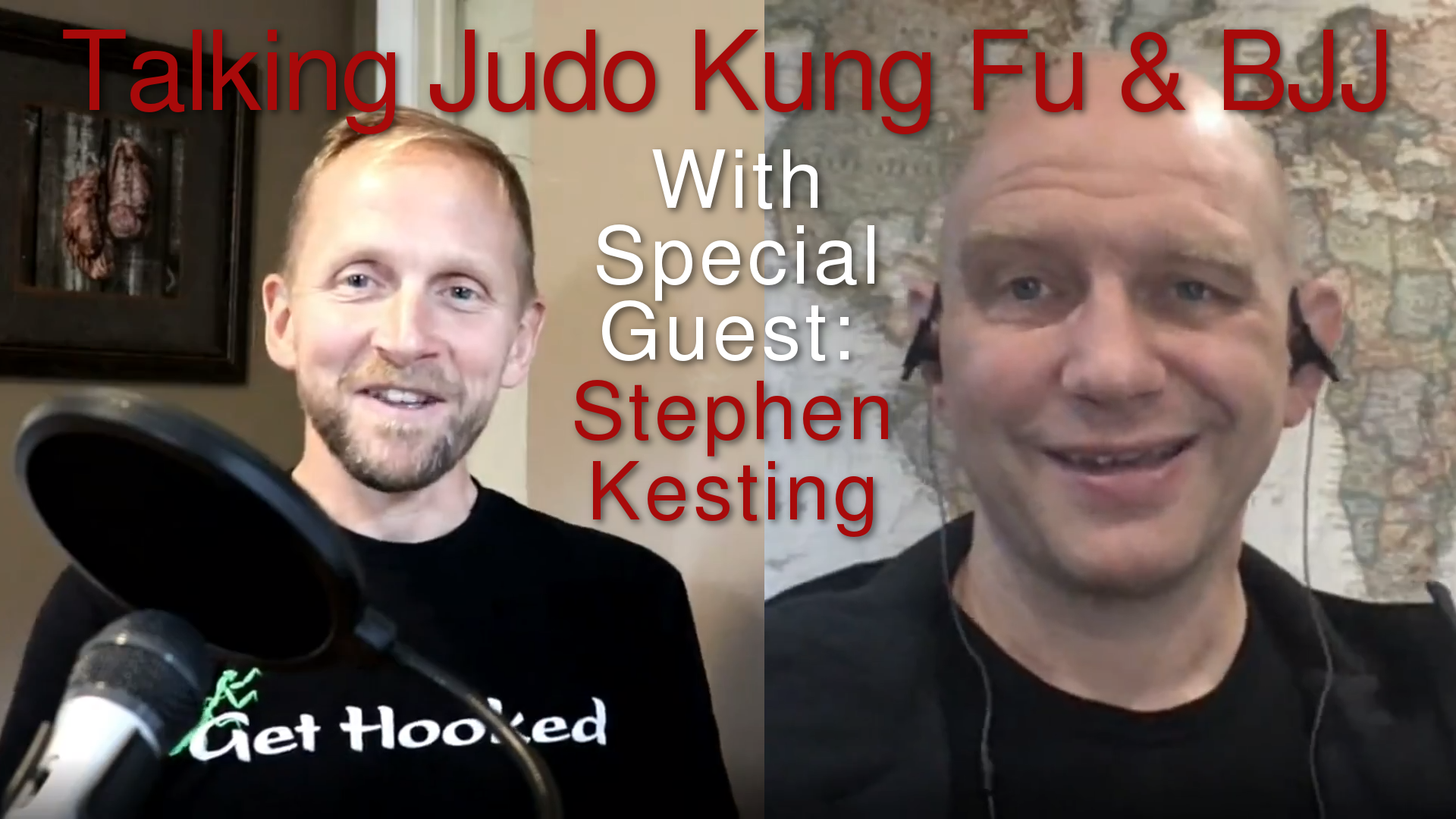
His Dark Roots - Interview with Stephen Kesting
For this podcast my friend and BJJ Black Belt Stephen Kesting stops by to chat about his background in Judo, Kung Fu, and his eventual shift to BJJ. We also discuss the current state of BJJ, where it is heading, and wrap up with…
For this podcast my friend and BJJ Black Belt Stephen Kesting stops by to chat about his background in Judo, Kung Fu, and his eventual shift to BJJ. We also discuss the current state of BJJ, where it is heading, and wrap up with some technical advice for beginners and where to focus your efforts in BJJ early on. A great conversation that I know you will enjoy.
Stephen started his website grapplearts.com back in 2003 to share his passion for BJJ and help others learn through systematic practice and easy to follow instruction.
If you like this podcast with Stephan and I, you can listen to his podcast when I was a guest on his channel:
You can find and follow Stephan @
GrappleArts - Stephan’s website
Instagram - Stephan on Instagram
Check out Stephan's latest book - Non-Stop Jiu-Jitsu

Pandora's Box of Podcasts - Martial Arts Psychology with Sensei Ando
Today's podcast is with my good friend and martial arts aficionado, Sensei Ando of SenseiAndo.com, and Happy Life Martial Arts. We may very well have opened Pandora's Box here with this discussion. In his first appearance on my podcast, Sensei Ando and I discuss…
Today's podcast is with my good friend and martial arts aficionado, Sensei Ando of SenseiAndo.com, and Happy Life Martial Arts. We may very well have opened Pandora's Box here with this discussion. In his first appearance on my podcast, Sensei Ando and I discuss a variety of topics from fitness in martial arts, training failures, martial arts psychology, dissecting frogs, serial killers, bad teachers and whatever other manner of odd conversation that happened to introduce itself to this conversation. As always though, a rich and enjoyable conversation with Ando and something I'm sure all of you will enjoy.
If you liked this podcast, you might like a few more collaborations Ando and I have done:
#58: Randy Brown Interview [Podcast]
Tips to Manage Distance in a Fight with Randy Brown
#82: Are Forms and Kata a Waste of Time in Martial Arts? [Video + Podcast]
Clinch Escapes for Self-Defense
Coach Holly from Mantis Boxing working Scissor Clips with Ando
For more good stuff from Sensei Ando:
Find him on YouTube -
https://www.youtube.com/channel/UCA-fjIPMlUThsqi4mX_tDNw
Find his website and podcast -
https://www.senseiando.com/fight-for-a-happy-life/--
Instagram -
Video Courses -

10 Principles of Success for Boxers
Understand the liability, pluses, and minuses of each position and movement.
Increase our level of skill through easy to understand diagnostics.
Turn our failures into success.
So often in the fighting arts, we lack…
So often in the fighting arts, we lack principles or framework to improve our skills through critical analysis. A few artists/fighters/boxers, mainly those willing to take some beatings, are able to improve their skills, while others are left feeling like they just don’t have what it takes.
When we take our training to the sparring phase, whether on the mat, in the ring, cage, or a backyard, if we find that we are not getting better, that we are simply not improving as fast as we’d like, this manual and the tools enclosed, can make all the difference. Enjoy.
Understand the liabilities and gains, advantages and disadvantages, and the compromise of each position and movement in combat.
Increase your level of skill through easy to understand diagnostics that help you to improve and implement immediate corrective action.
Turn your failures into success.

James ‘Jocko’ Sutton’s gloves - 3x Golden Glove Champion
photos by Max Kotchouro

5 Tips to Setup Your Home for Martial Arts Training
Here are 5 tips to help you with setting up, and training martial arts (boxing, Brazilian jiu-jitsu, wrestling, judo, etc.) at home. Today I'll go over good training practices to make sure you stay with your training, ideal locations and how to adapt to what type of space you live in, types of heavy bags and how to size them, throwing dummies, grappling dummies, and type of mats you want to look for if you do any ground work/takedowns/grappling or wrestling.
Here are 5 tips to help you with setting up, and training martial arts (boxing, Brazilian jiu-jitsu, wrestling, judo, etc.) at home. Today I'll go over good training practices to make sure you stay with your training, ideal locations and how to adapt to what type of space you live in, types of heavy bags and how to size them, throwing dummies, grappling dummies, and type of mats you want to look for if you do any ground work/takedowns/grappling or wrestling.
My favored training products:
►Mats -
Training Mat - (best mats hands down) - https://amzn.to/3eKfrqM
Crash Mat (I use this. Highly recommend) - https://amzn.to/2U5jk1J
►Gloves RevGear
Challenger MMA 4oz Gloves - https://amzn.to/2YN06Ri
►Heavy Bags/Hangers
Heavy Bag - 4' (for shorter spaces) - https://amzn.to/371uIRt
Heavy Bag - 6' (for longer spaces) - https://amzn.to/301Duxt
Heavy Bag Hanger 1 (wood beam - I use these) - https://amzn.to/2zVolTF
Heavy Bag Hanger 2 (wall mount) - https://amzn.to/2U1s1Kf
►Timer
Round Timer - https://amzn.to/3dt75n7
►Grappling Dummies
Budget Canvas - https://amzn.to/2XGr7UX
My personal recomendation - I use this one
►Pads/Shields
Punching Pads (these are the best I've used) - https://amzn.to/2zNi4tn
Kick Shields (have not used this brand but fair price) - https://amzn.to/2MqJKqm
►Ropes
Jump Rope (the one I use) - https://amzn.to/2MmYGWq

Scholar Warrior Interview - Dr. Peter Lorge
Delve into the history of Chinese boxing, famous generals, Brazilian jiu-jitsu, UFC leg locks, gunpowder, internal vs. externals, and all things martial arts, as I interview Dr. Peter Lorge, author of Chinese Martial Arts from Antiquity to the Twenty-First Century.
Delve into the history of Chinese boxing, famous generals, Brazilian jiu-jitsu, UFC leg locks, gunpowder, and all things martial arts, as I interview Dr. Peter Lorge, author of Chinese Martial Arts from Antiquity to the Twenty-First Century.
Part 2 - A continuation of our discussion on General Qi Ji Guang, Sun-Tzu, Brazilian jiu-jitsu, teaching methods, and...INTERNAL vs EXTERNAL nonsense!

Using Chess to Solve Martial Arts Problems
Latest podcast on tackling and solving difficult problems we have in martial arts forms/kata/tao lu. Check out these tips I used to improve, that are found in Chess.
Latest podcast on tackling and solving difficult problems we have in martial arts forms/kata/tao lu. Check out these tips I used to improve, that are found in Chess.

"How Long Does It Take To Be A Black Belt?"
Let’s answer this common question in martial arts with some good ole fashion math!
Let’s answer this common question in martial arts with some good ole fashion math!

Guest Appearance: Are Forms/Kata a Waste of Time in Martial Arts? w/ Sensei Ando
I had the great pleasure of returning once more as a guest on Sensei Ando’s channel Happy Life Martial Arts. We had an amazing, and thought provoking discussion on martial arts forms training, solo training, and more. We even threw some virtual punches, and a shadow Heimlich maneuver was almost necessary. Check out the video for a great podcast.
Guest Appearance: - Episode #82
with Sensei Ando of Happy Life Martial Arts
I had the great pleasure of returning once more as a guest on my friend Sensei Ando’s channel Happy Life Martial Arts. We had an amazing, and thought provoking discussion on martial arts forms training, solo training, and more. We even threw some virtual punches, and a shadow boxing Heimlich maneuver was almost necessary. Check out the video for a great podcast.
I highly recommend following him on his YouTube channel, as well as his podcast. Even though he is famous enough now with over 249,000 subscribers, a few more can’t hurt!
You find more of Sensei Ando here:
Sensei Ando
Sensei Ando YouTube Channel

Our Brain on Solo Training
How our brain and body benefit from solo training in martial arts. But there are pitfalls too.
How our brain and body benefit from solo training in martial arts. But there are pitfalls too.

How to Train Martial Arts on Your Own
These times require us to innovate and adapt to the changes in our lives, routines, and day to day activities. For weeks many of us have been without a class to attend. The good news? We can still train martial arts without a class or partners, and continue to develop our skills and improve.
What does it take to make this happen? You can watch this video I made this week telling a story on why I had to learn to train myself in martial arts, or you can skip below and jump to the bullet points so you don’t have to wait any longer to train.
Either way, rest assured
These times require us to innovate and adapt to the changes in our lives, routines, and day to day activities. For weeks many of us have been without a class to attend. The good news? We can still train martial arts without a class or partners, and continue to develop our skills and improve.
What does it take to make this happen? You can watch this video I made this week telling a story on why I had to learn to train myself in martial arts, or you can skip below and jump to the bullet points so you don’t have to wait any longer to train.
Either way, rest assured whether you are the student, or your a parent of a child that trains a martial arts, I am here to help you navigate this process and I have plenty of experience with self-training to be able to give you advice. Keep training!
Randy
[special section for parents further down]
How to Train Martial Arts on Your Own
Routine
To be successful with training martial arts on your own, you MUST have a routine. This is the most important aspect of self-training, and even group class training. It is too easy to say “I’ll do it tomorrow.” Tomorrow turns into next week, and then next month. Set a schedule for your training times at times during the week you know you can adhere to.Agency
This block of time is yours, and it must have agency. It is not something that we allow to be swayed or taken away by trivial distractions [such as a binge watching session on Netflix]. We treat these blocks of time as sacred, and do not allow ourselves or others to sideswipe them. If we do, we will do it again and again and never train. So treat your own class, just like a scheduled group class at your gym, school, dojo.Place to Go
Try to find a place outside, in a garage, barn, basement, or a separate room in your house/apartment if you have one to spare, that can be used for your training. During these time blocks, this is your dojo/place of training. Other people are not in here unless they are training with you, and others know to leave you be during your session.Frequency
This is up to you, but it should be consistent from week to week. Try to start out with something similar to what you were doing at group classes. If you were training 2 hours per week, then try to set up two 1-hour blocks each week, or four 30-minute sessions instead. If you trained more than that, then add more slots in. If you trained more than one discipline, like my students who train mantis boxing and jiu-jitsu, then have separate blocks of time to focus on each. Again, consistency, agency, private space are all a priority, but this step is important to establish from the beginning as it helps reinforce ‘routine’.Plan of Attack
This is a critical stage and just as important as any of those above. We have to know what we are going to train. This is probably one of the largest failures we have going to a big box gym - “what do I do next” If I can find it, I’ll add a picture to this article later showing you some of my routines/schedules I built for myself years ago when I had no choice but to train alone. Have a log, notebook, where you set aside what you specifically are going to do for each session. Update it weekly.Family Unit
If you are at home with others during this time, have them join you and if they have no experience, you teach them. Teaching others is one of the best ways we get better. We learn what we know and do not know (do not worry, you do not have to have all the answers or know everything to show someone newer than you). This is such a powerful tool, you will be surprised how much it can help. If you are trying to train your kids - focus less on ‘teaching’ them, and more on doing. If they see you enjoying yourself and having fun, they will follow along. Forcing them is counter-productive. See below for more parent tips.Wear your Uniform
This may seem like an odd one at first glance, however, this has more significance than you may guess. The act of putting on our uniform, commits us mentally to the act of training. This is part of the discipline that you exhibit week after week showing up for class. Continuing this ritual on our own puts us in the same mindset and lets us not only commit to training, but keeps us on the rails as we stick to our planned training time. With that said, do not wear your uniform all the time. The act of putting it on, and taking it off when done, keeps that box cordoned off in our mind. We know when we wear it, that this is a sacred time that we need to respect for ourselves.
Parents
See everything above before reading this. Those items are still relevant and will help you in setting up a plan of action for your child.
Routine
I know I mentioned it above, but I can’t repeat this enough. No video games, movies, toys, etc can get in the way of ‘time to train’. These are hard and fast blocks and they should know they have to go to a certain place to train. Consistency is key, so if you are able to set the same time block aside for each day of training, this will be a big help to you in getting them to train. If it is arbitrary or day to day, it is difficult for any of us to become mentally engaged off the cuff.Videos
Use video training [preferably from their school/style] as ways to promote interest and learning. This can be part of the training block i.e., 15 minutes of watching lessons, and 30 minutes of training. As the parent, you may not know what they are working on in class, or where to focus, but asking for help from their teacher, can help you build a lesson plan for them. In some cases, the video may be useful throughout the entire session so it is good to have access to a screen so they can rewind or pause as needed (as long as it is not a game they switch too).
How Long Does My Child Train?
This is based entirely on age. The younger they are, the less time you should expect. A 10 to 12 year old might be good for an hour of training 3 or 4 times per week and have the discipline to stay engaged. A 5 year old however may only work in 15 to 20 minute blocks and need more frequency such as 6 to 8 blocks per week.
Ask for Help
If you need ideas, or direction, ask their instructor to help guide you, or provide a lesson plan for each week so it eases the process and all you have to worry about is the tips we mentioned in the beginning.Older Teaches Younger?
If you have siblings that all train together, this common purpose creates a strong bond where they can help one another get better. If you do not train yourself, it is important to sit back and allow them to teach one another. At times the eldest child will guide and teach, but the younger child may know something they do not, so it is important this is not authoritarian by the older sibling. Keep in mind the parent can become the inhibiting factor in these training session rather than a positive influence. Our job is to make sure they do not hurt one another, or get out of control, but otherwise we keep quiet and give them the autonomy to teach/train together. If they are mature and show positive results with this, then you can run test sessions where they are allowed to spar/roll with one another for short rounds of 3 minutes at a time.
Good luck!
I’ll add more tips as I think of them, but hopefully this is enough to get you started.

Are Head Hits in Boxing/MMA Good or Bad? The Truth...
Is getting hit in the head bad for us when we train in martial arts such as boxing, MMA, kickboxing, karate, muay thai, etc.??? Here is how I see it, and what I did to my students to make them train smarter. Being educated on the truth can keep us training safe for years to come.
Is getting hit in the head bad for us when we train in martial arts such as boxing, MMA, kickboxing, karate, muay thai, etc.??? Here is how I see it, and what I did to my students to make them train smarter. Being educated on the truth can keep us training safe for years to come.

Countering the Hip Toss
Ever been mistaken for a sack of potatoes? Do you dislike being dislodged from the earth you stand on, turned upside down and dropped on your head or back? Here’s a little tip to counter that nasty hip toss throw your opponent might try out of mistaken identity, or something more nefarious.
Ever been mistaken for a sack of potatoes? Do you dislike being dislodged from the earth you stand on, turned upside down and dropped on your head or back? Here’s a little tip to counter that nasty hip toss throw your opponent might try out of mistaken identity, or something more nefarious.

How to Escape the Clinch - Continued
Here is another follow-up to the videos we shot in LA with Sensei Ando last year (May 2019) as we catch up with the backlog of footage. In this one, Thomas and I will cover the Reverse Hook and how to use it to gain control of the clinch, along with options for follow-up such as: crushing knee, wicked knee, and hanging hook.
Here is another follow-up to the videos we shot in LA with Sensei Ando last year (May 2019) as we catch up with the backlog of footage. In this one, Thomas and I will cover the Reverse Hook and how to use it to gain control of the clinch, along with options for follow-up such as: crushing knee, wicked knee, and hanging hook.
You can find the videos with Sensei Ando here:

Size Matters in BJJ!!! - Part 3 - Breaking Closed Guard
Here's one of my favorite closed guard breaks, and why it is horrible for taller vs. smaller. If you do use this BJJ escape, here is the answer to 'why isn't my closed guard break working?' Enjoy this next installments in our Size Matters series. This is a must see if you are trying to break a smaller grapplers closed guard.
Here's one of my favorite closed guard breaks, and why it is horrible for taller vs. smaller. If you do use this BJJ escape, here is the answer to 'why isn't my closed guard break working?' Enjoy this next installments in our Size Matters series. This is a must see if you are trying to break a smaller grapplers closed guard.
Guest Appearance: Real Fake Swords and Fake Real Swords - Episode 61: Randy Brown the Senior Clinching Mantis
“Sifu Randy Brown is the instructor of Vincent Tseng, with 20 years of experience in the style of Praying Mantis as well as 7 years of Brazilian Jujitsu, he was able to make the 2 arts complement each other. In this episode we explore his background as well as the past and present state of Chinese martial arts and modern combat sports.”
In August of 2019, I was graciously invited as a guest on episode 61 of The Real Fake Sword’s Podcast hosted by Haozhu Wang. This was a thought provoking and at times controversial discussion on training methods, Chinese martial arts, traditional vs modern martial arts, and even martial combat training vs LARP’ing. I thoroughly enjoyed our conversation and I think you will too. You can also listen to other great interviews Peter has had on his podcast with a myriad of guests.
Podcast Description:
Sifu Randy Brown is the instructor of Vincent Tseng (https://realfakesword.podbean.com/e/real-fake-swords-and-fake-real-swords-episode-43-vincen-tseng-the-clinching-mantis/) with 20 years of experience in the style of Praying Mantis as well as 7 years of Brazilian Jujitsu, he was able to make the 2 arts complement each other. In this episode we explore his background as well as the past and present state of Chinese martial arts and modern combat sports.
Credit of Jingle goes to Tengger Cavalry, contemporary Chinese Mongolian folk metal

"What Style of Mantis Boxing Do You Do?" - Answering your questions...
I get this question from all of you on my YouTube channel quite frequently - "What style of Mantis Boxing do I practice/teach?" Seven Star, Tai Ji (Supreme Ultimate), Plum Blossom, Supreme Ultimate Plum Blossom, 6 Harmony, 8 Step, Wah Lum? I decided to take some time to answer you instead of leaving a quick comment when you ask. Hope this helps.

The 'Mantis Hand' was simply a 'Mantis Brand'
What has become abundantly clear to me through the research for my book on Mantis Boxing; along with the discovery and extrapolation of more and more techniques from within the forms, as well as the examination of the historical data surrounding the collapse of a dynastic period of a major civilization in world history, is the following…
photos by Max Kotchouro
Suggested Reading:
Prior to reading these notes below, I recommend reading my research notes leading up to this point. It will help you lay context for my observations and findings.
Research Notes: To Dissect a Mantis
Research Tool: Mantis Boxing Historical Timeline
Notes
What has become abundantly clear to me through the research I’ve been undertaking on Mantis Boxing; along with the discovery and extrapolation of more and more techniques from within the forms, as well as the examination of the historical data surrounding the collapse of a dynastic period of a major civilization in world history, is the following -
Mantis boxing as we know it today, the versions of the style passed down to us for the past 120 years, is fake.
Mantis hand posture as depicted in a myriad of forms in Praying Mantis Boxing.
Now that I have your attention, allow me to explain. Fake is a strong word, and intentionally bombastic on my part. It carries with it a harsh connotation especially when it comes to an art that is held so dear to so many loyal followers. Present company included.
Fake, implies deception on the part of those teaching or partaking in the practice of it today. This...is anything but the truth. Without those teachers, practitioners, stewards of the art, who have carried this broken and hollow skeleton forward through time, we would not have any hope of a future for this art, or perhaps even Chinese boxing as a whole. To them, we owe everything. So what do I mean then when I use the word ‘fake’?
The idea that tanglangquan had some ‘special’ technique(s) never seen in any other Chinese boxing, or martial arts style in the world, is unrealistic, fantastical, or…fake. Almost all of the ‘real’ applications (and there are many), that come out of the forms, are absolutely amazing and effective combat methods. Methods that are alive in martial art styles today; including the remaining functional Chinese art, shuai jiao, and it’s progenitor from the Steppes peoples to the north - bokh.
A majority of the forms practiced by the various lines of praying mantis boxing were created after the turn of the 20th century. They are not combative forms. They are not even made by people who necessarily knew how to fight with mantis. This is evidenced by photographs we have of said people that began documenting the art in the first half of the 1900’s.
Photo of application of Wicked Knee depicted in one of many of Huang Han Xun’s books on Mantis Boxing. Technique found in mantis forms such as Seven Star Mantis’ Beng Bu (Crushing Step). Why is he standing on one leg? Why is his opponent holding his fists at his waist?
Wicked knee depicted in a mantis boxing form.
Note: I did not say, these practitioners could not fight. I am saying, that they did not fight with mantis. As is evidenced by the photo representations of the applications depicted in their books (see Huang Han Xun’s manuals for examples). Therefore, if some of the forms are choreographed by people that did not know how to use the moves within, then they are ‘fake’ martial arts.
If the forms contain applications common to the Chinese boxing methods of the time (1800’s), and offer nothing unique that sets the mantis ‘style’ apart, then the forms cannot be what defines mantis as being mantis. The keywords and their integration into a fighter’s combat methods could however, define what it means to be a mantis boxer.
The ‘mantis hand’ itself, is fake. This is unfortunate, as it’s rather unique and extraordinary, but it is the harsh truth. It is nothing short of branding. Marketing, as I explained at Chapman University in the Martial Arts Studies talk that I gave. The fingers curling under (as seen above) are incapable of grabbing effectively, and offer no distinct advantage in fighting. As a matter of fact, it offers a plethora of liabilities.
Unfortunately, this hand posture has confused generations of worthy and dedicated practitioners of the art. Myself included. A fleeting mirage we focused on as we have sought to unlock the applications behind this ‘Mantis Catches Cicada’ posture. Which at its core, is nothing short of - ‘engarde with the hook’ (depicted further below).
The reality of this is simple - these hooks with a hand (without the fingers curling), are common holds, ties, binds, and lifts. Think of how you would hook a leg for a knee pick. How you would hook a neck for clinch. An arm for a hold. These hooks are common to many throws, and clinches in Chinese boxing as well as other martial arts the world over. Something I began to realize and wrote about back in 2013. They are not grabbing full speed punches out of the air. This quickly becomes evident when testing our art against a 3-punch-combo from a western boxer.
Mantis boxing form circa 2000.
The move applied.
Someone, at some point, took said hooks, curled the fingers, and stamped the name ‘mantis boxing’ on it. This includes other moves that have ‘faux’ hooks such as - the double hands up engarde with cat stance (mantis catches cicada seen below), curling the hands over into hooks and branding it ‘mantis’. The double rising hands that is also seen in Méihuā Quán (Plum Blossom Boxing), but without the mantis hooks exists as the opener to a mantis boxing classic known as Lan Jie (Intercept and Counter). This is a push counter takedown that is now stylized with unnecessary hooks. Something akin to performance art, rather than real fighting.
Incidentally, that opening move found in Lan Jie, is the exact opening move of the Méihuā Quán form. Minus the hooks. The closing 180 degree turn to mantis catches cicada? Also in Méihuā Quán minus the hooks. Thanks to the works of Zhang Guodong, Thomas Green Carlos Gutiérrez-García, and Ben Judkins, whose works I cited in my research on Qing dynasty totem styles, Méihuā Quán was being spread through marketplaces in Shandong and other northern provinces and heavily influenced the martial arts of the late 1800’s in China. The abundance of ‘plum blossom’ references in the mantis boxing of the turn of the 19th to 20th century cannot be ignored. An entire line of mantis was born with this moniker, forms were named after it, symbols adopted, and moves in forms were direct simulacra.
Mantis Catches Cicada posture found repeatedly in forms of the style Tángláng Quán (Praying Mantis Boxing 螳螂拳).
Cat stance engarde position found in Méihuā Quán (Plum Blossom Boxing 梅花拳), Chángquán (Long Boxing 長拳), Yīng Zhuǎ Quán (Eagle Claw Boxing 鷹爪拳), and likely more Chinese boxing styles. Often depicted as the closing move of the Méihuā Quán form precipitated by the same 180 degree turn found in mantis forms.
The photos above show exactly the same posture. The former is branded as ‘mantis boxing’ by using the hooks. Countless hours have been spent by myself, and other accomplished boxers/fighters trying to crack open the application of this move. Once you look at the prevalent styles in the Shandong region that influenced mantis boxing, it becomes apparent what this posture truly is - engarde w/ mantis. A way of stating - ‘we are mantis’.
When I use the work fake, it is not to insult, or demean any of us who have dedicated our lives to this art. Mantis practitioners are some of the most committed people I have met. The purpose, is to shine full light on the shadows. Exposing our weaknesses and laying bare a truth that we as mantis boxers all need to come to grips with. Our art stopped working a long time ago. We need to be focused on fixing it.
Embracing this truth so that we may turn our attention away from forms, styles, lineage, ceremony, and other superfluous distractions to what really matters - survival. We must turn to the task at hand. Restoring this dying martial art to relevance in the modern world. Making mantis boxing ‘real’ again. Setting it up to be the art it can truly be - a well rounded hand-to-hand combat system that works superbly in the clinch.

To Dissect a Mantis - A Summarized Re-Written History of Mantis Boxing
The following takes all of the data laid out from my timeline research (people, places, events, catastrophes, wars, rebellions, etc), as well as the mantis family tree, and assembles it into a condensed re-write of a more grounded history for mantis boxing. This is a brief overview notating some discoveries and answering questions, as there were many. For the purposes here, I removed mythical backstories and unsubstantiated people. Beginning instead with verified living representatives/associates.
The following takes all of the data collected this past winter from my timeline research (people, places, events, catastrophes, wars, rebellions, etc), as well as the mantis family tree, and assembles it into a condensed re-write of a more grounded history for mantis boxing. This is a brief overview notating some discoveries and answering questions…there were many. For the purposes here I removed mythical backstories and unsubstantiated people. Beginning instead with verified living representatives/associates.
Chinese soldiers 1899 1901 - Leipzig Illustrierte Zeitung 1900 [Public domain]
Here are a few of the questions I hoped to answer in my research on Praying Mantis Boxing.
The records are foggy prior to the 1800’s on the history of Mantis Boxing. Did mantis exist prior to this period?
If so, why did the 4th generation, fresh out of catastrophe on an epic scale in the late 1800’s, and the Boxer Uprisings that followed, suddenly start branding vanilla Mantis Boxing with other names such as - Plum Blossom, Supreme Ultimate, Seven Star? Other Chinese boxing arts of the region/time period did not see this same anomaly yet it was prevalent in Yantai. Did this ‘branding’ happen with the 5th generation of boxers in the first half of the 20th century?
Why are the forms inconsistent with each line of Mantis? If the forms existed as part of Liang Xuexiang’s art, why then did the next generation of boxers change them? If so, then why for the next century, were practitioners so meticulous about keeping these forms intact with little to no disruption?
Why was Li San Jian credited as a Praying Mantis Boxer when there is no evidence that he ever practiced the ‘style’?
Why did Li’s descendant, Wang Rong Sheng, who, by using dates and events, could not have learned Mantis from Li San Jian, but instead clearly learned mantis boxing from his friends - Jiang, Song, Hao, (‘students’ of Liang Xuexiang), end up as a major representative of the mantis style? Especially when he did not have the pedigree the other’s shared?
There is a recognizable crossover with meihuaquan in tanglangquan. What is the significance of the plum blossom symbolism and the prevalence with its use? Is there a link to meihuaquan? This style was spreading through marketplaces in the northern provinces leading up to the Boxer Uprisings, were the mantis boxers in Yantai connected with the uprisings? This creates more questions as the meihuaquan society was adamantly opposed to the violence and attacks on soldiers, missionaries, civilians, and property, such as churches and railways.
According to records, Jiang created and named a form in honor of the boxers connected with the rebellion - ‘Righteous and Harmonious Fist’. Was Jiang connected to the Boxer Uprising? Or was he simply angry at western encroachment and abuses like many in Shandong during this time?
Why is 6 Harmony Praying Mantis Boxing so different from the other lines?

Begin…
A man by the name of Li Bingxiao (李秉霄, 1713-1813), becomes known for his fighting skills in the late 1700’s and early 1800’s. He supposedly uses technique(s) that hook with two hands. As he gets older, he’s nicknamed - ‘2 hooks, Li’, or ‘2nd Elder of the Hook’. There is scant evidence of his backstory, but what has been carried down the lineage tree, is suspiciously close to the Confucius origin story. Confucius being highly revered in China for centuries, and originating in the same province - Shandong. Borrowing origin stories is a common phenomenon. Li allegedly teaches a student named Zhao Zhu.
Note: 6 Harmony Praying Mantis Boxing Segway
At this point there is an oral note in the lineage charts that Wei San (De Lin), the accredited founder of the 6 Harmony Praying Mantis Boxing line, met and sparred with Li Bingxiao.
“They could not best one another, but Wei San took some of Li Bingxiao’s methods.”
Thus begins the historical record of 6 Harmony Praying Mantis Boxing. Wei San’s background was in liuhequan (6 Harmony Boxing), aka xingyiquan. The oldest form in this line of mantis is known as ‘duan chui’ - referred to in English as ‘short strikes’, but more appropriately it means - ‘to hammer a weak point, or to beat a weak point or fault with one’s fists’. This form is known to be the creation of Wei San’s student Lin Shichun, who was a bodyguard for the Ding family for a large portion of his career.
Note: This form is quite possibly the oldest representation of xingyiquan in a form.]
This form, known as ‘short strikes’, is the only form in this line at the time and has zero mantis hooks within. Something the practitioners of this line seem well aware of as it varies significantly from their other forms. However, it does share much of its striking and power generation with xingyiquan. I will continue this further down as we get to the branching out of mantis.
Resume…
Zhao Zhu (1764-1847), becomes a teacher himself. He allegedly teaches his sons, and a student named Liang Xuexiang (1810-1895) as Liang grows up. Liang goes on to serve in the military, and becomes a famous biaoshi (security-escort master) & boxer; one with a reputation and record that makes him a well known fighter in his province. His nickname is ‘iron fist’.
Li Bingxiao’s, and then Zhao’s techniques are passed on from Liang Xuexiang’s hands, including his own influences, to a new generation (4th) of boxers that includes his son. With the exception of his son, the teaching of many of his students takes place while Liang is in his late 60’s during a major famine preceded by 3 years of drought. Deathtoll - 9.5 to 13 million people died in the region during this 3 to 6 year time period.
At the time of joining Liang, all of these men were reported to be accomplished proficient fighters before meeting their ‘teacher’. Given Liang’s age and the surrounding events, this student/teacher relation appears to be more indicative of a mentor/client relationship. Liang possibly showing them some of his techniques, but their presence being more in line with protecting him and his family in his old age during extremely violent times.
His counterpart, Li Sanjian, did the same with his two students when visiting a friend in Yantai during this same period of unrest in Shandong province. It would make sense that an elderly, seasoned biaoshi (escort master) entering a foreign city in a time of catastrophe, would also be seeking out young, competent fighters to bring into his stable. Li’s students? Wang Rongsheng, and Hao Shunchang,
Note: Li Sanjian was credited with starting the line known as Seven Star Praying Mantis Boxing. Most people are now in agreement that this is false, and a way for Wang Rong Sheng to pay respect to his teacher, a branding advantage, or otherwise. Li never did mantis boxing, and while it is possible he knew, or knew of Liang, there is no indication he learned mantis from Liang, and was a more famous fighter by all accounts than Liang.
Liang Xuexiang, and Li Sanjian were both renowned escort-masters that ran dart bureaus ( biaoju ) in their lifetime. While they were likely still quite capable at defending themselves, it seems more plausible that they saw the writing on the wall in violent and chaotic times, and circled the wagons so to speak. Calling on younger, more capable fighters to assist them.
These fighters would benefit immensely from this relationship as well. It would after all, be an honor to claim either of these famous veterans as one’s teacher. The younger generation benefiting from this arrangement as much as the old.
The fighters under Liang Xuexiang, if they learned techniques from him, would then add Liang’s techniques (these hooking methods) to their own fighting skills. Each of these men could reasonably be considered rough and tumble fighters since they have each gone through multiple ‘mass droughts/famines’, rebellions, and grew up in a region full of strife. Their home province of Shandong has a reputation in China for producing tough, hardy people, especially boxers. It is a significant region in the history of the nation, where rebellions, bandits, invasions, and catastrophe have all left their mark.
The 4th Generation prior to ‘Mantis’
Style Notes:
Luohanquan, or Arhat Boxing, is a term developed in the early nineteen hundreds by boxers of the time attempting to revise history and accredit their martial arts to Bhudda. Stripping this away, it points to a general ‘Chinese boxing’ style of the Qing era that comprised of many common techniques that were not particular to any one ‘style’. Without the ability to label them, anything not clearly defined, usually gets called luohanquan.
Changquan, or Long fist is a more modern term used to classify the large body of ‘styles’, or more appropriately, boxing methods of the northern Chinese provinces. This can include lesser known styles as well as techniques shared in Hong Quan, Meihuaquan, Tongbei, Tanglang, Ying Zhua, Taijiquan, etc.
Hou Quan, or Monkey Boxing, is by all accounts one of the older ‘systems’ in the north. As evidenced by mention of it in Qi Jiguang’s book, in which he takes survey of the local martial arts in 1560 during the Ming dynasty. 300 years prior to the lives of these boxers.
Ditang, or Ground Boxing, is still alive in Shandong to this day. Evidence is lacking from General Qi’s book on the existence of ditang during the Ming, but it is apparent that it predates, or at the least runs concurrent with mantis boxing.
Liuhequan (6 Harmony Boxing), aka xingyiquan is a style born from the Muslim population in northern China and eventually adopted by the Dai family as the fighting methods for their biaoju company, and the guards under their employ. This is relevant to mantis boxing as it is the primary influence behind the 6 Harmony Praying Mantis Boxing line.
The following styles are accredited to each of these mantis boxers prior to their association with tanglangquan.
Jiang Hualong - luohanquan, hou quan (monkey boxing)
Song Zide - luohanquan, hou quan (monkey boxing)
Hao Lianru - luohanquan
Sun Yuanchang - ?
Wang Rongsheng - changquan (long fist) + ditang quan (Ground Boxing) + whatever Li Sanjian taught him. Although that relationship was similar to Liang and his disciples.
Ding Zicheng - luohanquan (family art), xingyiquan/liuhe.
Four of the above mentioned fighters all opened schools post Boxer Rebellion. One of these boxers, Wang Rongsheng, goes on to teach two people privately. A disciple named Fan Xudong (silk merchant), and Wang’s own son. Prior to this, or during, Wang became good friends with Liang’s disciples, and at this time they shared knowledge with one another. Eventually all adopting the common banner of ‘Praying Mantis Boxing’. Each of them have all survived harrowing times up until this point.
6 Harmony Praying Mantis continued…
It is not until the 3rd generation of the 6 Harmony line (and 5th with the main mantis line), that ‘mantis hooks’ show up in 6 Harmony. Also accompanied by more forms. Ding Zicheng grew up under the tutelage of Lin Shichun. Learning Ding’s methods/bodyguard techniques. As we travel into the 20th century, Ding becomes good friends with one of Jiang Hualong’s students - Cao Zuohou, a 5th generation mantis boxing practitioner, now branded as plum blossom style mantis.
Ding and Cao, go on to share students with one another and cross pollinate. It is noted in their records that their followers could come and go to either school. This period is where we begin to see the additional 6 Harmony Praying Mantis Boxing forms. Post Boxer Uprisings and well into the ‘martial arts for physical education’ stage of Chinese history.
Resume Main Line…
Each one of Liang Xuexiang’s students, as well as Wang Rong Sheng, goes on to brand their own version of mantis (seven star, plum blossom, and supreme ultimate). This draws into question the legitimacy of the existence of a ‘praying mantis boxing’ prior to this generation.
Evidenced by the simple fact that the only commonality among all of their arts are the following:
Forms with shared names.
The move known as ‘mantis catches cicada’ (engarde with hooks). Which appears to be nothing more complex than ‘branding/marketing’.
And the hooking techniques - seize leg, twisting hook, piercing hooks, lifting hook.
Nothing listed above is unique per se. The hooking techniques, absent the extra, and highly impractical curled fingers, all exist in Shuai Jiao records. Perhaps these methods were unique to this area at the time, exclusive in the setups to initiate the moves, or the follow-ups to the technique if the move is countered. The last being of particular interest to other fighters as is found in modern fighting arts.
The forms vary from each line at this point, or perhaps were mutated in the generation(s) to follow.
Note: Assuming the style existed prior to these boxers, or more specifically the forms of mantis boxing, and the methods of the mantis were Liang Xuexiang’s and his teachers before him; why would these boxers take it upon themselves to change these forms? Practitioners since then, have been incredibly adept at keeping these forms intact for the past 100+ years. Why would all of these boxers alter them?
Without supporting evidence to the contrary, it is difficult to accept that the name Praying Mantis Boxing existed prior to this point in history. It appears more likely that it was created by these 4th generation boxers/friends in the early 1900’s post Boxer Uprising, well after Liang Xuexiang, and Li Sanjian are deceased.
Did these younger boxers/friends brand their stuff ‘mantis boxing’ as a group? Was it based on the techniques from Li Bingxiao they now have in common with one another?
This would explain how:
They each have different names of their mantis style. Each able to keep an individual identity because they all had their own techniques unique to themselves prior to incorporating these ‘mantis’ techniques of Li Bingxiao on down. We end up with labels to signify the differences of each boxer prior to intercepting mantis - seven star, supreme ultimate, plum blossom.
It perhaps explains why the forms are inconsistent in each line. Shared in name only, but beyond that never having more than 2 lineages with consistent forms to one another. If the forms were handed down for generations prior, they would be sacred and undisturbed, not changed by Jiang, Hao, and Wang.
Liuhe tanglangquan (6 Harmony Praying Mantis Boxing) is a good example of this. The second generation of 6 harmony style (Lin Shichun) created a form known as Duan Chui (the only form prior to the 4th generation. Duan Chui still exists to this day, relatively undisturbed. Practitioners of all other lines of mantis since this period, have been obsessively adept at keeping these forms well intact with minimal changes. This makes it all the more improbable that the 4th generation would all of a sudden change the forms as they saw fit. Unless…there were no forms prior to this time…or forms were considered insignificant and not revered as they often are today.This would explain how, and why, Li Sanjian receives an honorary accreditation for a style he never did. It wasn’t a ‘style’ at all. It was a handful of techniques that Wang Rongshengs’ friends showed him. Wang never studied with Liang Xuexiang, as evidenced by the fact that he took the mantis moniker yet still claimed Li Sanjian (a non-mantis boxer) as his teacher.
If Wang had studied with Liang, and then changed his forms without giving proper credit, it would be incredibly disrespectful, and dishonorable. His ‘friends’ would certainly take issue with this. Instead, if it were simply a handful of methods from Liang that were passed down, it would make it easy to blend in with the other things Wang already knew and learned. Wang keeps his ‘teacher’ because there is no pure ‘line’ of mantis boxing to be loyal to prior to this.This also identifies why one of Wang Rong Sheng’s descendents was selected to represent ‘mantis’ in Jin Wu. Wang wasn’t ‘true mantis’ under the ‘Li Bingxiao -> Zhao Zhu -> Liang Xuexiang line’. So why would one of his students be picked to represent the mantis style for such a major endeavor in the south such a Jing Wu? If it really mattered that is? Why not one of the ‘true heirs’ - Jiang, Song, Sun, or Hao’s students? These boxers even had schools at the time, and Wang was only teaching one non-family member.
Lastly, this would explain why it was so easy for a 3rd generation descendant of Liuhe/xingyiquan to blend ‘mantis techniques’ that he learned from a 5th gen mantis practitioner, with his style of liuhequan. Combining a few techniques using the foundation taught to him by Lin Shichun, Ding Zhicheng wasn’t learning an extensive ‘system’, merely some techniques unique to these mantis boxers at the time. But certainly not unique in all of China, or the world.
What about the forms?
The forms could not have mattered. They obviously were not cemented in place. They were certainly not sacred if they were so freely altered. The techniques within these ‘sacred sets’ were common to other ‘styles’ of Chinese boxing, and Shuai Jiao in the region during that period of the Qing dynasty.
The curled finger mantis hooks expressed within the forms, are not necessary for the techniques to work. They all too often confuse observers/practitioners on the true martial intent of the move. If anything, they prevent the actual moves from working properly due to aesthetic stylization being placed above practicality.
What about the keywords? Aren’t they unique? Do they not define it as ‘mantis’?
No. I no longer believe this to be the case. These words are also part of the common boxing vernacular of the time. They offered nothing unique that isn’t found in Cotton Boxing and other fighter’s systems. Evidence by a few of the 12 keywords, and a plethora of techniques being shared with taijiquan. The mantis keywords that are not primary taijiquan principles, are listed in other subtexts as supplemental to the primary 13 keywords of taijiquan. A comparison can be found here in this working document Praying Mantis Boxing vs. Supreme Ultimate Boxing.
In Summation
As we would find in Brazilian jiu-jitsu today, with someone using the infamous ‘spider guard’ synonymous to that style - in mantis we have Li Bingxiao using his ‘double hooks’, aka - mantis controls/takedowns that caused him to stand out from the crowd of other boxers. Giving him an edge.
His methods were only allowed to exist as a ‘style’, because of a unique set of circumstances in history. Occurring at the end of an era of combat for survival, and the beginning of an era of wuxia, and physical education for profit.
Having seen and studied a wide range of Chinese boxing forms, provides me with a unique vantage point to be able to compare forms from various Chinese boxing systems north and south. The following are the moves I have found to be unique to ‘mantis forms’ that I have not seen in the other styles (this does not mean they do not exist. My knowledge/experience is certainly no where near all encompassing):
Seize leg (one variation)
Wicked knee
Hanging Hooks
Twisting Hooks
Pierce hooks (Edit: I later realized this is a shared application with one of the moves in Yang taijiquan’s - snake creeps down)
Possibly the ‘kicking legs’ methods are also unique.
All of the above methods are easily shared with competent experienced fighters/martial artists. Simple, easy to grasp methods. Akin to what fighters would be learning from one another, rather than convoluted systems of 70, 80, or 100’s of techniques/moves.
If we take each ‘boxing set’ at face value as a fighter’s ‘system’, consider for a moment how unlikely it would be to collect those in times of chaotic strife...
----
Arriving full circle -
We need not be bogged down by the chains of the past - politics, lineage, forms, etc. Take the best, discard the rest.
What is Mantis Boxing? An arsenal of hands, elbows; knees, kicks; throws and locks from Chinese boxing. We have the keywords to define it, and learn by. We have the roots. We honor them in our practice and continuation of the art.