
"How Long Does It Take To Be A Black Belt?"
Let’s answer this common question in martial arts with some good ole fashion math!
Let’s answer this common question in martial arts with some good ole fashion math!

Guest Appearance: Are Forms/Kata a Waste of Time in Martial Arts? w/ Sensei Ando
I had the great pleasure of returning once more as a guest on Sensei Ando’s channel Happy Life Martial Arts. We had an amazing, and thought provoking discussion on martial arts forms training, solo training, and more. We even threw some virtual punches, and a shadow Heimlich maneuver was almost necessary. Check out the video for a great podcast.
Guest Appearance: - Episode #82
with Sensei Ando of Happy Life Martial Arts
I had the great pleasure of returning once more as a guest on my friend Sensei Ando’s channel Happy Life Martial Arts. We had an amazing, and thought provoking discussion on martial arts forms training, solo training, and more. We even threw some virtual punches, and a shadow boxing Heimlich maneuver was almost necessary. Check out the video for a great podcast.
I highly recommend following him on his YouTube channel, as well as his podcast. Even though he is famous enough now with over 249,000 subscribers, a few more can’t hurt!
You find more of Sensei Ando here:
Sensei Ando
Sensei Ando YouTube Channel

3 Ways to Kill Spider Guard
Here are some tips on how to deal with that opponent with a nasty spider guard. I use three S…words to remember these - Stuff, Stand, Step. Once we train them, we can bounce back and forth between them if the first one gets countered.
Here are some tips on how to deal with that opponent with a nasty spider guard. I use three words to remember - Stuff, Stand, Step. Once we train them, we can bounce back and forth between them if the first one gets countered.

CRUSH (Bēng 崩) - 9 of 12 - The Keywords of Mantis Boxing
Crush (Bēng 崩) - to ‘collapse and fall into ruin’. Also known as 'crushing' in many Chinese Martial Arts usages. Bēng is used to attack the vital targets in the midsection of an opponent. Effective strike targets such as: the liver, stomach; ribs, and the real treasure - the solar plexus, or central palace in Taijiquan. All of these targets can…
Crush (Bēng 崩)
Crush (Bēng 崩) - to ‘collapse and fall into ruin’. Also known as 'crushing' in many Chinese Martial Arts usages. Bēng is used to attack the vital targets in the midsection of an opponent. Effective strike targets such as: the liver, stomach; ribs, and the real treasure - the solar plexus, or central palace in Taijiquan. All of these targets can disable an opponent with one hit. This is seen in countless boxing matches, UFC battles, Muay Thai fights, and Kickboxing bouts. What happens when you land a good strike on an opponent in one of these locations? They "collapse and fall into ruin".
Bēng, as a principle, can use a fist, a knee, a kick, all to accomplish the goal of - causing the opponent to - 'collapse, and fall into ruin'.
Aligning the Strike
If you examine the height of many of the stances found in Chinese Martial Arts forms, and in this case Bēng Bù, you'll see that the strike does not align with the opponent's face but rather with the solar plexus/lower rib region of a ‘standing’ opponent.
Dropping the stance aligns the punch to the effective strike targets (liver, stomach, solar plexus). Mantis Boxing uses the Horse-Riding Step (Mǎ Bù 吗步), Bow Step (Gōng Bù 弓步) to accomplish this alignment of the attack.
Punching to the face is certainly an effective attack, but it also hurts the striker if they aren't wrapping their hands, or wearing gloves. Styles of Karate have Makiwara boards, and Chinese Martial Arts has Iron Palm/Iron Fist to train the hands so as not to break/injure the bones while connecting with someone's hard skull.
Iron Fist training takes months/years to train. Conditioning the bones and skin is only accomplished through extreme dedication and commitment. It is faster to teach someone a technique to strike the vitals, meanwhile working on conditioning the hands for longer term strategies.
Keeping in mind: the human skull has evolved over millions of years to protect the brain inside of it. It's hard, and not meant to crumble at the first hint of danger. Quoting a bike-helmet study published in the Journal of Neurosurgery: Pediatrics, "235 kg (520 pounds) or 2,300 newtons of force would be needed to crush a human skull, almost twice as much force as human hands could possibly muster."
Plainly speaking, anyone who has punched another human in the skull with a bare hand can tell you - it hurts when you hit. Knowing this, it is easy to see why a striking principle like Bēng, is so prevalent in the martial arts.
One might be better served destroying an enemy in a soft target, rather than risk the injury of straight on face punching. This can be seen in other Mantis Boxing techniques aimed at the head region using alternate hand shapes: White Snake Spits Tongue, Spear Hand, Thrust Palm, Ear Claw, Slant Chop.
--
Leave your comments and questions below. Don't forget to SUBSCRIBE and GET HOOKED!

Hook vs Circle Punch - What's the Difference?
What's the difference between a Hook Punch and a Circle Punch? Are they really that different? Yes, and yes.
The Hook Punch is used at a closer range, similar to an uppercut. It works well when you are striking in tight, or engaged in a Clinch (Lǒu 摟). In here, a long range strike will extend beyond my opponent. We position the arm in a tighter hook shape to help…
What's the difference between a Hook Punch and a Circle Punch? Are they really that different? Yes, and yes.
The Hook Punch is used at a closer range, similar to an uppercut. It works well when you are striking in tight, or engaged in a Clinch (Lǒu 摟). In here, a long range strike will extend beyond my opponent. We position the arm in a tighter hook shape to help land on our targets such as the temple, kidney, liver, ribs, stomach, and jaw.
The technical position when throwing a hook punch is critical. When bare knuckle striking, there are no wraps to support the wrist, so technique has to be spot on in order to prevent breaks, sprains, and fractures in our own hands/wrist.
The wrist is held in a straight line, and we use the transverse core rotation of the upper torso to connect the punch, versus extending the arm and bending the wrist which is dangerous to our own hand. Thumb position is up.
When the range to our opponent is further out, and we are still throwing straight punches, this is where the Circle Punch really shines. It allows us to attack the side doors as well as down the middle; utilizing the principle of - Randomized Striking.
Connecting with a Circle Punch has the added benefit of increased power generation through a looser whipping action. The punch is thrown relaxed; the arm builds up speed before connecting. If this impacts the temple, jaw, occipital lobe, bracchial nerve, or ear, it can have devastating consequences.
Because of this, when our opponent sees a Circle Punch steaming for the side of their head, they are more likely to open the center doors trying to defend; thereby allowing our other punches to land.
The hand position for the Circle Punch is wrist straight, thumb pointing down.
Timestamps:
0:42 - Technique
4:12 - Pad Drills - Hook Punch
5:29 - Pad Drills - Circle Punch
6:12 - Bag Drills
6:44 - Bag Drills - Circle Punch
7:10 - Bag Drills - Hook Punch
Gear
You can find some of the items we use in the video by following our affiliate links:
Assassin Pads
Punching Bag
Gloves

The Scraping Fist
The Scraping Fist - like a low uppercut, or body shot. One of the advantages of this punch, is the fact that unlike throwing a straight punch…
The Scraping Fist - like a low uppercut, or body shot. One of the advantages of this punch, is the fact that unlike throwing a straight punch toward the body which comes in from a high angle, this punch comes from underneath by dropping the elbow, making it harder to block.
It's a great punch to sneak in shots to the body, especially when using the principle of Changing Levels/Varying Targets. . But it can be dangerous trying to pull it off at the wrong place/time.
Here are some tips along with pads drills, and bag drills later in the video for practicing the scraping fist on your own, or with a partner.
1:20 - Technique
4:56 - Pad Drills for Focus Mitt, Thai Pad training
7:24 - Bag Drills for Punching Bags
Gear
You can find some of the items we use in the video by following our affiliate links:
Assassin Pads
--
Leave your comments and questions below. Don't forget to SUBSCRIBE and GET HOOKED!

Guest Appearance: Fight for a Happy Life with Sensei Ando
I had the honor of being invited onto Fight for a Happy Life martial arts podcast with host Sensei Ando. The episode just released today.
Check out our conversation on topics like - freedom, defining success, barriers to students progress, living life, and weird questions about what I want on my deathbed/tombstone (is this guy planning to kill me???), and lots of laughter.
Fight for a Happy Life Podcast
hosted by none other than Sensei Ando of Happy Life Martial Arts

I had the honor of being invited onto Fight for a Happy Life martial arts podcast with host Sensei Ando. The episode just released today.
Check out our conversation on topics like - freedom, defining success, barriers to students progress, living life, and weird questions about what I want on my deathbed/tombstone (is this guy planning to kill me???), and lots of laughter.
Click the photo above to visit his website for the podcast, or follow the links below for your favorite podcast location. Enjoy the show!

Many of you know Sensei Ando from our previous collaborations, as well as his visit to our school last summer. He's a positive influencer that's always reaching out to help other people. Admirable.
Here are a couple of videos we did in case you missed them. I highly recommend following him on his YouTube channel, as well as his podcast.
Tips to Manage Distance in a Fight
Tips for Defending the Bear Hug
You can contact Sensei Ando -
Sensei Ando
Sensei Ando YouTube Channel

Guest Appearance: The Strenuous Life Podcast w/ Stephen Kesting
On the latest episode of his podcast - 'The Strenuous Life' - BJJ Black Belt and founder of Grapplearts, Stephen Kesting and I debate the value of Kung Fu, and if it can coexist with BJJ and MMA. I think you are going to like this! I highly recommend his channels if you haven't already found him!
"Can Kung Fu, BJJ and MMA coexist? Maybe they can, and maybe they can even learn from each other.
This is a conversation I had with with Kung Fu stylist (and BJJ brown belt) Randy Brown in which we touched on the history of Chinese martial arts and what made them less effective over time, what traditional martial arts look like when you start training them with resistance, and much more. I think you’ll like this one!"
The Strenuous Life Podcast
hosted by renowned BJJ Black Belt, and founder of GrappleArts.com - Stephen Kesting

Stephen was kind enough to invite me on to his podcast 'The Strenuous Life' last month. We finally got our schedules to mesh up last Monday and recorded this podcast for everyone. It was an awesome conversation and I had an amazing time. I think you are going to really enjoy this.
I know some of you are quite familiar with Stephen, and already watch his videos/listen to his podcast. If you haven't heard of Stephen, please check out his website GrappleArts.com and YouTube channel. I highly recommend you subscribe to his stuff. He is extremely humble, puts out top notch detailed content, is super nice, and is always trying to help others.
Click the photo above to visit his website, or follow the links below for your favorite podcast location. Enjoy!
"Can Kung Fu, BJJ and MMA coexist? Maybe they can, and maybe they can even learn from each other.
This is a conversation I had with with Kung Fu stylist (and BJJ brown belt) Randy Brown in which we touched on the history of Chinese martial arts and what made them less effective over time, what traditional martial arts look like when you start training them with resistance, and much more. I think you’ll like this one!
The best way to listen to this podcast is to go to your favourite podcasting platform, subscribe to ‘The Strenuous Life’ Podcast, and then look for episode 128. You can find it on most podcast platforms, including…"
iTunes
Google Play
Soundcloud
Stitcher

Cracking the Black - Holly Cyr
Saturday was a very special day. Holly Cyr received her Black Belt in Mantis Boxing (Tángláng quán 螳螂拳) on Saturday, January 2, 2016. The first Black Belt awarded by my hand. Holly has spent the past seven, almost eight years dedicated and committed to
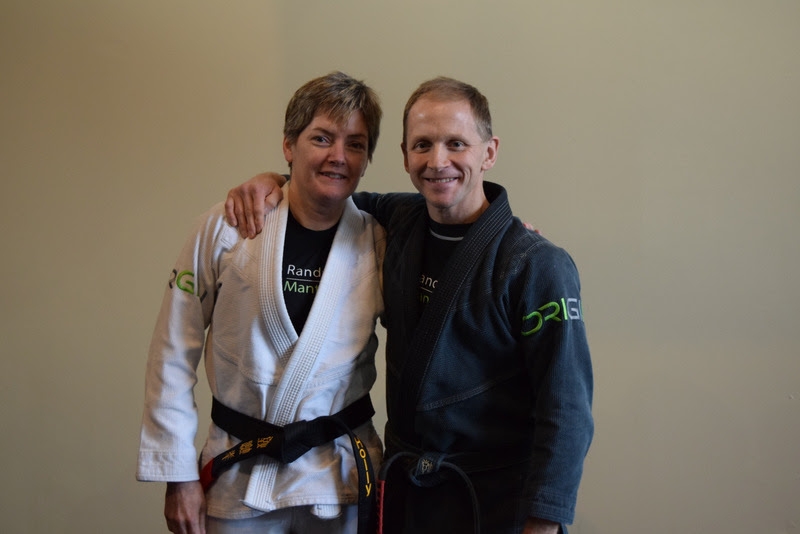
photo courtesy of Haeyong Moon

Saturday was a very special day. Holly Cyr received her Black Belt in Mantis Boxing (Tángláng quán 螳螂拳) on Saturday, January 2, 2016. The first Black Belt awarded by my hand. Holly has beaten the odds and continued to stay the course. Becoming one of the few women to achieve such a rank in Mantis Boxing.
Holly has spent the past seven plus years dedicated and committed to not only her training, but the elevation of her peers. She constantly contributes to the team in any way possible, and has been an upstanding student, mentor, and coach.

Holly receiving her first belt in Mantis Boxing. 2008
Over the years Holly attended classes every possible chance she could. Including workshops (here and abroad), mountain retreats, and competitions. Training during the day, returning again at night. Day after day. Any opportunity to train, learn something new, or hone an existing skill, she was on it. This took second place only to her desire to help others.
As our mantis boxing has grown and evolved, so too did Holly along with it. Change is difficult for many, but rather than let it stop her, she embraced it. If it improved what we did, she never looked back.
In 2010, we added to our striking and kicking, with a class devoted to throwing. Holly jumped right in. When we added Fitness Kickboxing to create a bridge to the local community, she offered to help coach it. When we needed a kids instructor, she was there helping to run the class, and organize holiday events for the kids.
Seeing a need in the local communities, she jumped at the chance to help coach self-defense training for adult and teen women. Later integrating her knowledge of ground fighting into her coaching.
Continuing to add to her skillset, she took on Brazilian Jiu-Jitsu and devoted a passion and focus and to ground fighting and self-defense. She competed and gold medaled at the International Brazilian Jiu-Jitsu Federation in 2013, and was one of the first Brazilian Jiu-Jitsu Blue Belts in our school.
Over the past year, her Mantis Boxing has coalesced into a formidable art; Holly has become a force to be reckoned with on and off the mats. Her hard work has paid off, and will continue to serve her well into the future.

IBJJF Boston Open 2013
It has been a true honor to watch Holly grow and evolve as a coach. It is the pinnacle of our experience to be able to see someone reach this level. Many fall by the wayside over the years, which only makes this achievement all the more meaningful. Staying the course for this length of time, persevering, seeing something through to this level, is a sign of true inner strength.

This accomplishment did not demarcate an end to Holly’s journey, nor a completion of her training. More aptly, it has only served as an entry into Holly’s greater sight, skills, knowledge, and an ever growing desire and ability to share her art with those around her.
No matter where she goes. No matter how hard life gets. No one can ever take this achievement away from her. Thank you Holly for many years of dedication and commitment to the arts, and the pleasure of being able to award you this honor. You are an inspiration to all those who follow in your footsteps. I look forward to seeing where you take the arts from here.

Southpaw and The Crazy Ghost Fist
There is a long history of ancient cultures including the Greeks, Romans, and Chinese, that prejudice left-handed use, or left-handed people. It is seen as - sinister, wicked, evil, and many of the words for such are derived from the word left in these languages.
In Chinese culture, the major philosophies and religions believe in the universe spinning from left to right; things must always start on the left and move toward the right to remain in harmony. This is expressed in many of the Traditional…
There is a long history of ancient cultures including the Greeks, Romans, and Chinese, that prejudice left-handed use, or left-handed people. It is seen as - sinister, wicked, evil, and many of the words for such are derived from the word left in these languages.
In Chinese culture, the major philosophies and religions believe in the universe spinning from left to right; things must always start on the left and move toward the right to remain in harmony. This is expressed in many of the Traditional Kung Fu forms that we see and is heavily documented in Tai Chi manuals. The symbol for Yin Yang depicts this cycle as well.
In stand-up martial arts - a majority of boxers place their left foot forward in fighting, just as a majority of baseball players stand on the left side of the plate at bat. By and large, right-hand dominant people outnumber left-hand dominant people, but this does not give cause to ignore the significance of this change of position when faced with a 'southpaw'.
The term 'southpaw' is typically used to define a left-handed boxer. A fighting position, or stance where one fighter has their right foot forward versus the traditional pose of the left foot forward used by right-handed boxers. Of more interest to us, are the advantages and disadvantages of this opposing, or unorthodox stance.
Why Staggered and not Square
Before we discuss that, let's hammer out why someone stands one foot in front of the other in the first place.
A squared up stance in hand-to-hand combatives can be good from a power based perspective. You give equal power to both arms, as well as equal reach. Some self-defense systems teach this at their core. The cost however outweighs the benefit.
Being square is something you can be successful with in martial arts such as Wrestling, Shuāi Jiāo, or Judo; striking arts change the game. The square position exposes our centerline to our opponent, giving access to vital targets on our body such as the solar plexus, liver, bladder, groin. These can be game-over strikes if they land on us.
By taking up a staggered stance and slanting the upper body, what we call 'blading', we decrease our profile (smaller target), but strikes are more easily deflected off the angle of the body, protecting these sensitive targets. An opponent is then required to circle to the inside line in order to access our centerline. This is easily read by veteran boxers.
Southpaw
In a staggered stance where both fighters are aware of the advantages and disadvantages of being square versus bladed, there is another, deeper component that becomes a major liability - when one fighter is on the opposite foot.
Meaning, boxer A has their left foot forward, and boxer B has their right foot forward - this is where southpaw becomes the challenge. Here are some of the pros and cons to the southpaw position:
Pros of Southpaw
- Easier to attack the flank - kidneys, ribs, temple, ear, and occipital lobe, brachial nerve; all exposed from outside angle.
- Cuts off the opponents second hand from attacking when on the outside line.
- Sets up significant number of trips, sweeps, take-downs.
- If dominant hand is forward - offers a stronger jab stunning the opponent.
- If on the inside line, it squares up the opponent, offering clear shots with the power hand to solid vital targets. in the face and body.
- Exposes the opponents groin to attacks with kicks, grabs, strikes, knees.
Cons of Southpaw
- When on the inside line we are in reach of both hands and susceptible to attacks not normally possible when directly in front of your opponent.
- Opponent can attack our flank hitting vital or destructive targets.
- Groin is exposed to kicks.
- Legs are side by side if opponent is on our inside line, making us more vulnerable to double leg takedowns, crashing tide, leg wraps, etc.
- Fighting southpaw allows our opponent to sweep our foot when we shuffle in, and if we circle to their inside, we are walking right into their power punch.
- This position also affects 'our' own range; placing the forward punch closer to our opponent, yet keeping our reverse punch so far away that it is often too far, or awkward to throw unless the other person makes a mistake.
Training Habits
In training, it is common to fight one-sided. In other words people choose a side to train and often ignore the other side, giving it less attention. In these formats a righty will spend most of their time fighting other righty's, while a lefty, or southpaw, will spend most of their time fighting righty's. This gives the lefty an advantage over the righty. They spend a far more time in this position and are then able to develop superior tactics and strategies from such.
Be aware of this tendency, and train diligently to overcome this challenge by putting yourself in weaker positions on purpose. This will allow you to adapt to this change and be hypersensitive to it in sparring/fighting.
Know your weaknesses and capitalize on your gains
What to do on the outside line
If you are on the outside you want to remain there if possible, providing you have the correct angle. In this position you should be lighting up your opponent with hooks to the head, ribs, and kidney while attacking the inside line with your other hand using effective combinations.
Look for throws that work from here. Side Leg Scoop, and Tiger Tail Throw, Reaping Leg are all obvious choices.
What to do on the inside line
- Strike up the middle high and low while being aware of any position changes made by your opponent that may put you at risk.
- Kick or Punch to the groin.
- Attack with Double Leg Takedown.
The Crazy Ghost Fist of Mantis Boxing
Mantis Boxing's Crazy Ghost Fist - The first move in the core form known as Bēng Bù (Crushing Step 崩步). This move is a perfect example of proper use of the southpaw position.
Our opponent punches. We move to the outside line while blocking the arm and striking the ribs/liver with a reverse punch.
Check out this video on how it's applied.
Southpaw can be a great advantage, or a horrible liability depending on your skill level and how you use it. As a rule, when I teach beginners I leave it out.
It's more important to understand the basic orthodox stance first, and change stance with the opponent in the early stages. This keeps your blocking system intact. Once a boxer is comfortable with this position, then we begin to explore the Southpaw advantage.