His Dark Roots - Interview with Stephen Kesting
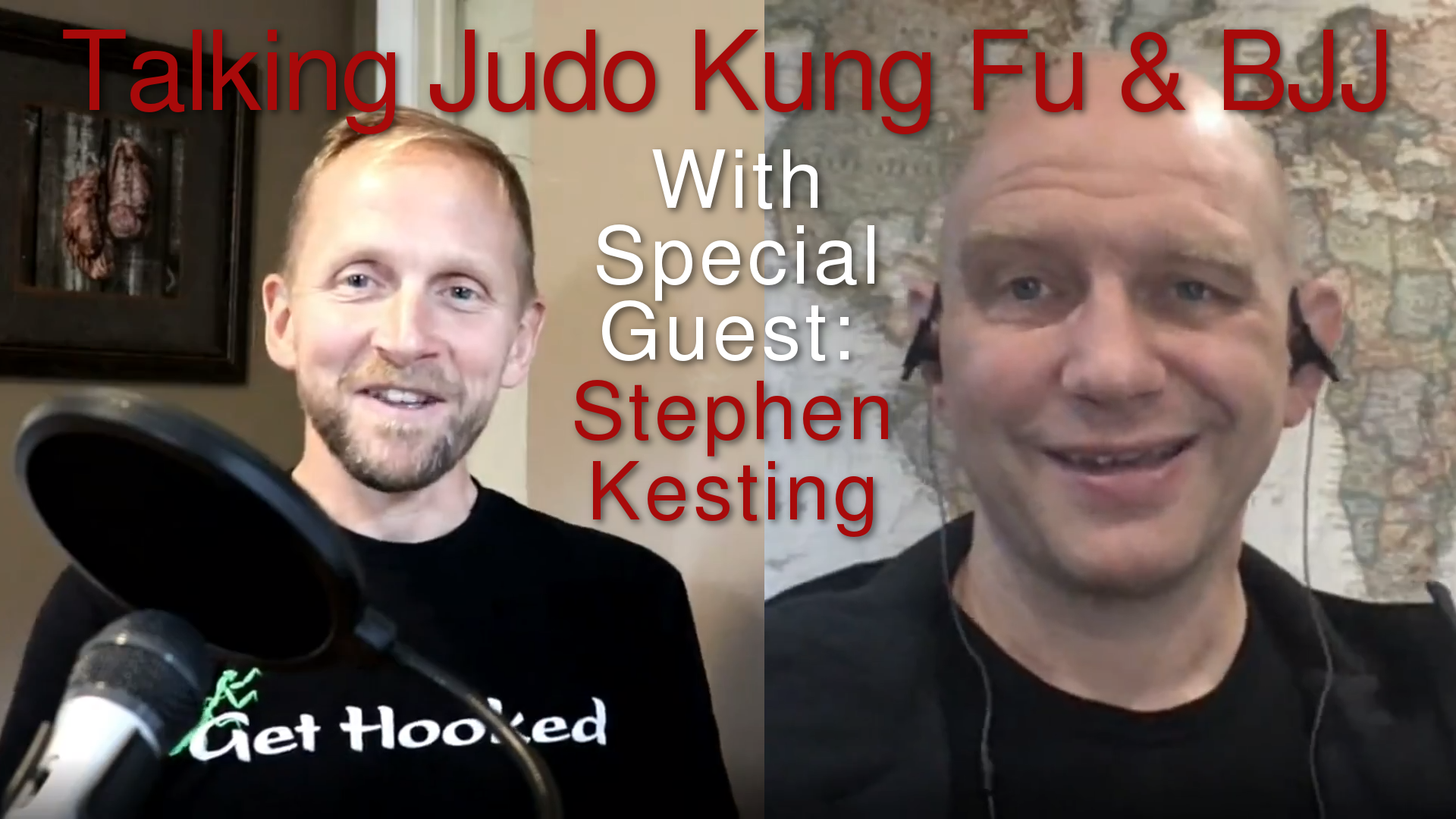
For this podcast my friend and BJJ Black Belt Stephen Kesting stops by to chat about his background in Judo, Kung Fu, and his eventual shift to BJJ. We also discuss the current state of BJJ, where it is heading, and wrap up with…
For this podcast my friend and BJJ Black Belt Stephen Kesting stops by to chat about his background in Judo, Kung Fu, and his eventual shift to BJJ. We also discuss the current state of BJJ, where it is heading, and wrap up with some technical advice for beginners and where to focus your efforts in BJJ early on. A great conversation that I know you will enjoy.
Stephen started his website grapplearts.com back in 2003 to share his passion for BJJ and help others learn through systematic practice and easy to follow instruction.
If you like this podcast with Stephan and I, you can listen to his podcast when I was a guest on his channel:
You can find and follow Stephan @
GrappleArts - Stephan’s website
Instagram - Stephan on Instagram
Check out Stephan's latest book - Non-Stop Jiu-Jitsu

5 Tips to Setup Your Home for Martial Arts Training
Here are 5 tips to help you with setting up, and training martial arts (boxing, Brazilian jiu-jitsu, wrestling, judo, etc.) at home. Today I'll go over good training practices to make sure you stay with your training, ideal locations and how to adapt to what type of space you live in, types of heavy bags and how to size them, throwing dummies, grappling dummies, and type of mats you want to look for if you do any ground work/takedowns/grappling or wrestling.
Here are 5 tips to help you with setting up, and training martial arts (boxing, Brazilian jiu-jitsu, wrestling, judo, etc.) at home. Today I'll go over good training practices to make sure you stay with your training, ideal locations and how to adapt to what type of space you live in, types of heavy bags and how to size them, throwing dummies, grappling dummies, and type of mats you want to look for if you do any ground work/takedowns/grappling or wrestling.
My favored training products:
►Mats -
Training Mat - (best mats hands down) - https://amzn.to/3eKfrqM
Crash Mat (I use this. Highly recommend) - https://amzn.to/2U5jk1J
►Gloves RevGear
Challenger MMA 4oz Gloves - https://amzn.to/2YN06Ri
►Heavy Bags/Hangers
Heavy Bag - 4' (for shorter spaces) - https://amzn.to/371uIRt
Heavy Bag - 6' (for longer spaces) - https://amzn.to/301Duxt
Heavy Bag Hanger 1 (wood beam - I use these) - https://amzn.to/2zVolTF
Heavy Bag Hanger 2 (wall mount) - https://amzn.to/2U1s1Kf
►Timer
Round Timer - https://amzn.to/3dt75n7
►Grappling Dummies
Budget Canvas - https://amzn.to/2XGr7UX
My personal recomendation - I use this one
►Pads/Shields
Punching Pads (these are the best I've used) - https://amzn.to/2zNi4tn
Kick Shields (have not used this brand but fair price) - https://amzn.to/2MqJKqm
►Ropes
Jump Rope (the one I use) - https://amzn.to/2MmYGWq

Our Brain on Solo Training
How our brain and body benefit from solo training in martial arts. But there are pitfalls too.
How our brain and body benefit from solo training in martial arts. But there are pitfalls too.

Are Head Hits in Boxing/MMA Good or Bad? The Truth...
Is getting hit in the head bad for us when we train in martial arts such as boxing, MMA, kickboxing, karate, muay thai, etc.??? Here is how I see it, and what I did to my students to make them train smarter. Being educated on the truth can keep us training safe for years to come.
Is getting hit in the head bad for us when we train in martial arts such as boxing, MMA, kickboxing, karate, muay thai, etc.??? Here is how I see it, and what I did to my students to make them train smarter. Being educated on the truth can keep us training safe for years to come.

Countering the Hip Toss
Ever been mistaken for a sack of potatoes? Do you dislike being dislodged from the earth you stand on, turned upside down and dropped on your head or back? Here’s a little tip to counter that nasty hip toss throw your opponent might try out of mistaken identity, or something more nefarious.
Ever been mistaken for a sack of potatoes? Do you dislike being dislodged from the earth you stand on, turned upside down and dropped on your head or back? Here’s a little tip to counter that nasty hip toss throw your opponent might try out of mistaken identity, or something more nefarious.

How to Escape the Clinch - Continued
Here is another follow-up to the videos we shot in LA with Sensei Ando last year (May 2019) as we catch up with the backlog of footage. In this one, Thomas and I will cover the Reverse Hook and how to use it to gain control of the clinch, along with options for follow-up such as: crushing knee, wicked knee, and hanging hook.
Here is another follow-up to the videos we shot in LA with Sensei Ando last year (May 2019) as we catch up with the backlog of footage. In this one, Thomas and I will cover the Reverse Hook and how to use it to gain control of the clinch, along with options for follow-up such as: crushing knee, wicked knee, and hanging hook.
You can find the videos with Sensei Ando here:

"Don't Touch Me" - Why I Hated BJJ
As I’m sure some of you can understand, the idea of having to work closely with someone else, especially on the ground, used to 'skeeve me out'. There is a stark differential between what I was accustomed to - striking, kicking, and takedowns, in contrast to rolling around on the ground with another human being while wearing pajamas, or skin tight clothing. In the world of hindsight is 20/20…
Original article written in 2012 for another blog.

Getting arm-barred in Chin Na training - circa 2000
Let me get this out of the way from the start - I emphatically hate people touching me. I have issues with physical contact, space invaders, faux-hugging, and ‘touchy-feely’ nonsense. After many failed attempts at coping, I simply avoid large crowds, parties, grandmas, and priests. Chalk it up to a plethora of personal experiences early in life, or just laugh at me as you will. Getting my finger lobbed off in a table saw was a more a preferable experience than some weird inebriated schmuck trying to grope me at a party while pretending we’re long lost friends (a good use for martial arts training).
Now that I’ve made it abundantly clear how much I dislike physical contact, perhaps we can relate to one another, since I imagine if you are still reading this you have similar issues with physical contact. This may well be a primary deterrent to you experimenting with Brazilian jiu-jitsu in the first place, or you just really hate Brazilian jiu-jitsu and clicked on this article in the hopes of reading a series of bad things I have to say about it. Spoiler alert: you can bail now and save yourself some time.
False Fears
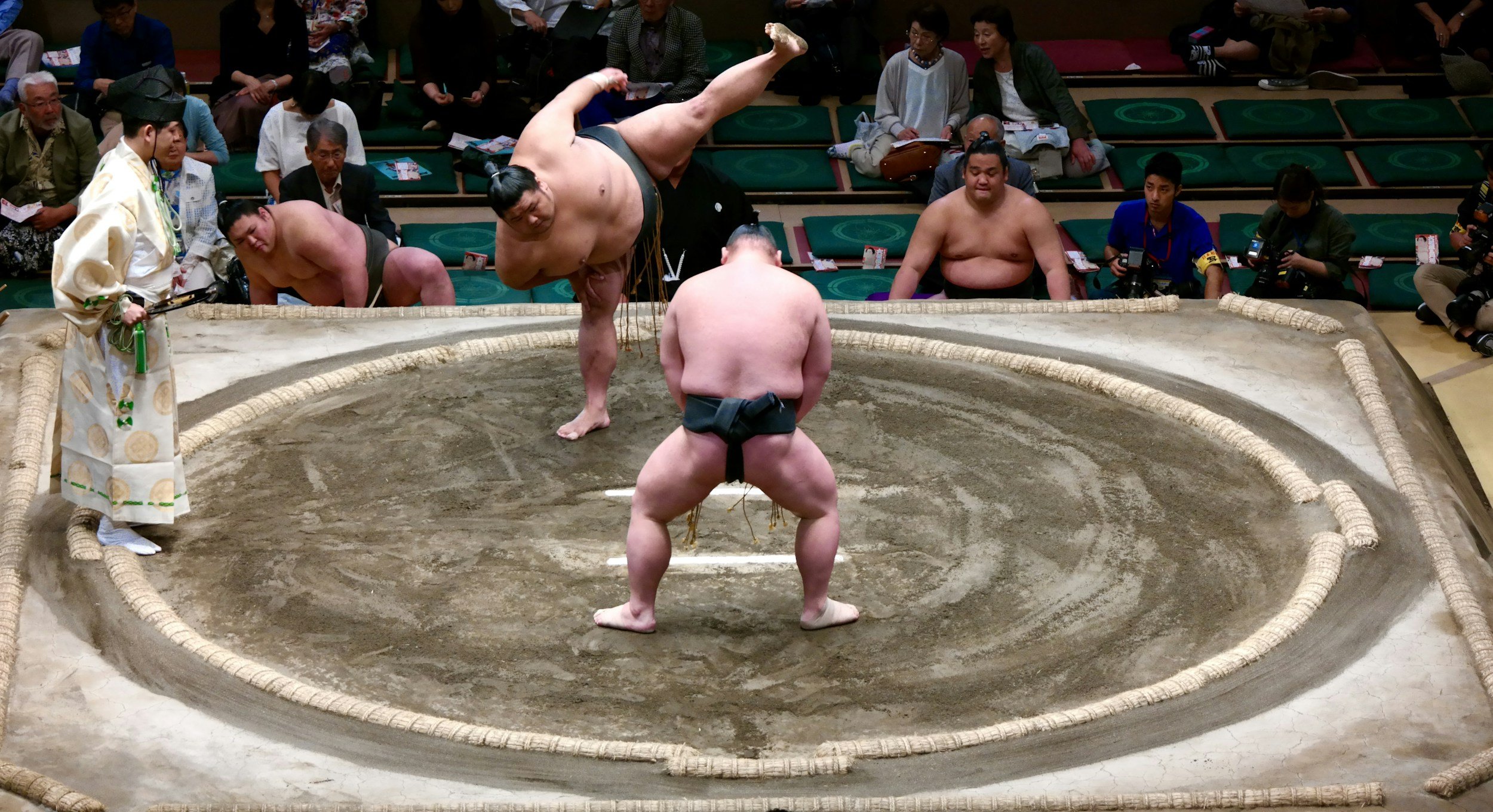
The idea of having to work closely with someone else, especially on the ground, used to 'skeeve me out'. There is a stark differential between the modalities I was accustomed to - striking, kicking, and takedowns, when contrasted to rolling around on the ground with another sweaty human being while wearing pajamas, or skin tight clothing.
However, in hindsight, I probably would have loved high school wrestling given what I know now, but many foes would have fallen trying to force my fat, chubby, adolescent self into one of those onesie-singlets!
During my time training mantis boxing, and other Chinese boxing styles, I became distinctly aware of a giant deficiency they all shared - the lack of a ground game. What to do when an opponent has you on the ground and you are unable to escape; a feeling I was quite familiar with from childhood fights.
I discussed this reality with one of my coaches at the time, being practical and grounded in real-world experience he agreed with the problem, and suggested that I take up BJJ. His advice was to achieve at least a blue belt level, arguing that the blue belt in BJJ being a significant achievement in and of itself. Showing an individual has gone through the grist mill, and survived to a base level of proficiency of self-defense on the ground.
In his assessment, I would have the experience and know-how to deal with an altercation on the ground; if a fight ever ended up there. Which, anecdotally speaking, they usually do when you’re smaller than your opponents. I was reluctant at first (see aforementioned comments on personal space) but eventually I capitulated and decided to try it out. To say my first attempts did not go well is a mild understatement [insert sarcasm]. Unfortunately, my first couple of experiences went horribly awry. I unknowingly chose the wrong coaches/schools to train with, which produced catastrophic results. You can read more about that here.
Before we address the physicality of BJJ, and the close contact dilemma, or even some of the other soft deterrents to training an art like this, let’s dig into some of the benefits I have found that help drive my reasoning on why this is a good thing to overcome.
Ignorance is Bliss - How BJJ can help Martial Artists/Fighters of other styles
Jump below if you are not currently a martial artist but want to learn more about overcoming the physical contact challenges of BJJ

Holly Cyr smashing it with a winning keylock at Boston Summer Open 2013
‘Traditional’ martial arts styles, as they are colloquially referred to, are mostly comprised of arts originating from east Asia. For our purposes we’ll include — western boxing, kickboxing, tae kwon do, karate, aikido, muay thai, shuai jiao, and more. These styles cover one or more of the following modalities in stand-up fighting - striking, kicking, throwing, and at times joint locks.
How do any of these styles, and wrestling as well, account for a larger, stronger, opponent that wants nothing more than to put us on the ground and pummel us? Each and every one of these styles subsist around weight class rule structures in competition. A sound and well rounded martial artist in my opinion, wants solutions for these challenges. Problems such as: being stuck underneath someone that has 100lbs of body weight on us, someone pinning us and choking us to death with their bare hands, or simply pummeling us with fists while sitting on our torso (mount position).
Not only do we want to survive, but as fighters we want to thrive in these situations. To embrace the suck. I have to be frank here - I have seen a variety of nonsensical comments from traditional martial artists over the years when it comes to this very real threat. A belief in their minds, or rather a fallacy, that the threat of someone controlling us on the ground is not real. That arts such as BJJ are useless. These statements include comments such as -
"I will use my eye gouges, groin strikes, and secret pressure point attacks." - anonymous
No, you likely won't, or not for long. You will be too busy trying to figure out which way is up; panicking to get back to your feet, trying to breath as you gas yourself out (the ground is stressful), and performing silent math calculations on how much your opponent really weighs while they crush the soul out of your body with unrelenting pressure.
Another comment I see -
"I won't let them get me on the ground." - anonymous
If the sole purpose of their combat modality is designed to get you on the ground, then you will be on the ground. No doubt about it. Especially if they have been training for years to accomplish said goals. I’ve seen people with a season or two of high school wrestling make short work of people with no grappling game, or defense system against such attacks.
“But I train takedown defense.”
We live in the northeast USA, where snow and ice are prevalent for a large portion of the year. Ending up on the ground is a common mishap for us ‘without’ someone violently assisting us in the process. Bottom line - as a traditional martial artist, or someone with no experience in fighting, we benefit by recognizing the holes in our systems and learning to close these weaknesses. We gain nothing but ignorance, darkness, and oxygen deprivation by hiding our head in the sand.
“Adapt and Overcome”
“Adapt and overcome.” — a common phrase we heard consistently in US ARMY boot camp. As experienced martial artists, adding Brazilian jiu-jitsu, or even wrestling to our game will only improve, not detract, from our primary art. Depending on the style we practice, we may come from arts afflicted by ‘transmission loss’.
Meaning some, or all of the techniques have been lost through the annals of time. We’re left today with empty shells of once proud martial art styles, practicing forms/taolu/kata, and applying best guesses as to the original method(s) of execution. Putting these arts back together can be difficult to downright impossible. I’ve spent the better part of my martial arts journey doing just that with mantis boxing, and taijiquan. I will say, finding crossover principles and techniques in other arts such as BJJ helped link things together in my brain, and improved my primary style of choice.
Brazilian jiu-jitsu has definitively helped me discover more about Chinese boxing and wrestling styles. From takedowns, to defense, to even just kinesthetically putting pieces together to flow and change gears. It has taken my knowledge, my game to a whole new level. This is especially relevant to an art such as mantis boxing, one of many Chinese boxing styles that is rooted in stand-up grappling, and riddled with principles that crossover to BJJ.
Perhaps you are fortunate and train with a school/coach team that has all the applications of your style already intact. Handed down to you in clear drills, and efficient training that turns you into a competent fighter. However, if that art still lacks a ground solution, as my art did, then this is the perfect reason to undertake BJJ, wrestling, or catch wrestling to shore up those weaknesses. You can read more about how BJJ helped me unlock hidden secrets inside Chinese boxing in this essay:
Donut, or Do Not? The fitness benefits of BJJ.
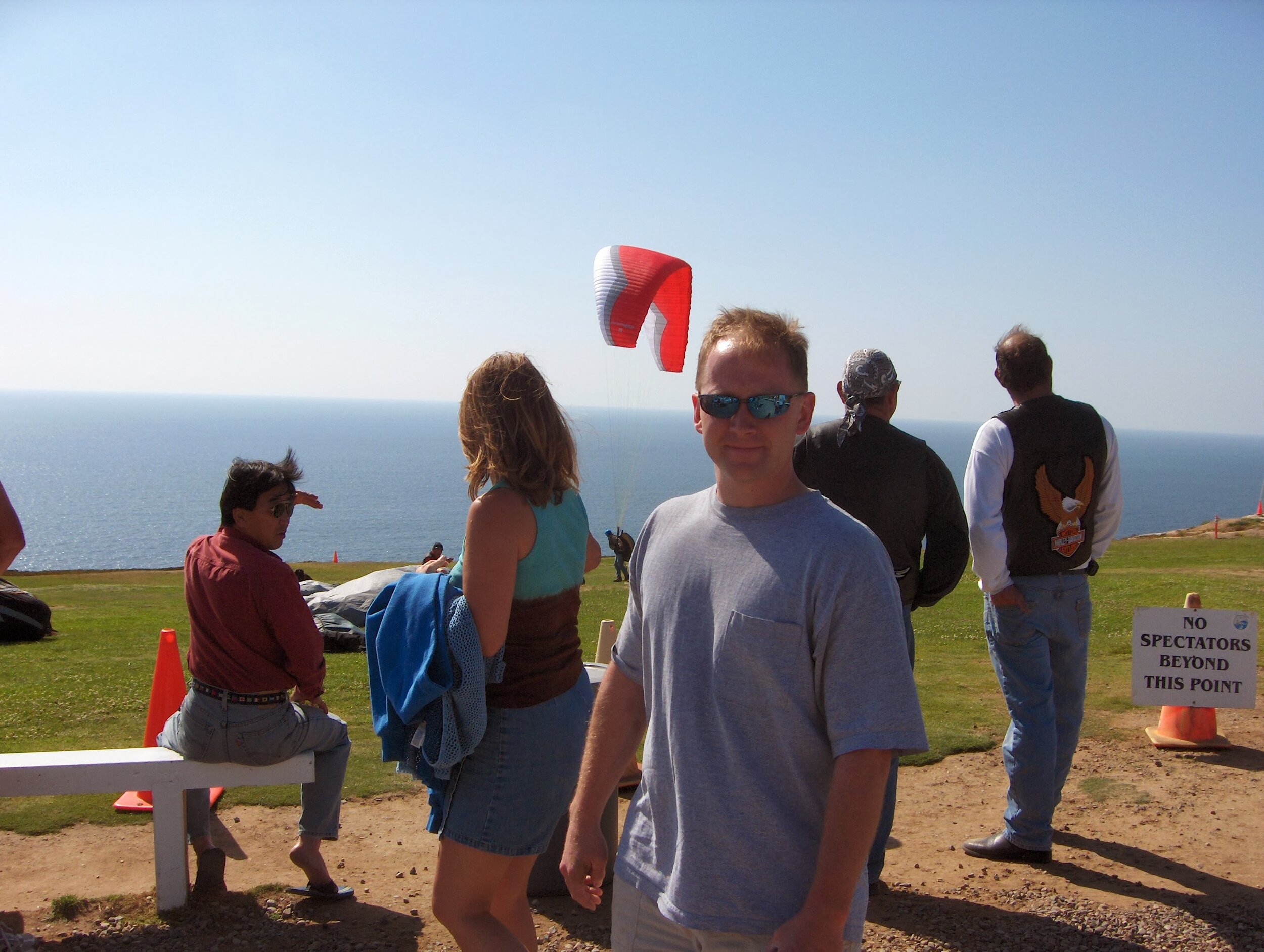
Donut eating me on a trip to train with a new mantis boxing coach - California, 2006
Traditional martial arts teachers across America are known for being out of shape. I have seen it at countless tournaments since the early days of competing. Often embarrassing physical forms of self-titled ‘masters’ of their art, who have clearly not mastered their bodies. Ironic given that we are supposed to be ‘lethal weapons’.
Self-Defense Anecdote: we start classes with proper warm-ups. This can start with — laps around the gym, three minutes of jumping jacks, or jump rope. At times people complain, or whine. My question is always the same: ‘If we can’t manage three minutes of cardio, how are we to last in a full on fight versus one or more opponents, while our heart is racing faster than a greyhound, and our adrenaline is screaming like an eagle through our blood stream?’
A few years after I began training, I myself was overweight. Also while owning and running my school. I had a series of crises in my life that caused my self-discipline to spiral out of control. I ballooned out, and I knew deep down that I was setting a bad example to my students on how I personally believe — a martial artist should live our lives.
Another saying from the military - “fit to fight”. The truth of this simple phrase is so base and fundamental. I’ve fought, sparred, won, and lost to some very good fighters over the years who were better than me, but were grossly out of shape. After 30 to 90 seconds of maneuvering, or light tangling, they were huffing and puffing; buckled over and gassed out beyond function. The amazing skills and techniques they had, rendered useless by a lack of stamina, or basic conditioning. If we’re out of shape, we’re ineffective, or less effective.
How can we stand with our heads high, selling, or marketing fitness, exercise, discipline, along with our self-defense, when we are stuffing donuts down our throat, or puffing cigarettes out behind our dojo? If we are out of shape ourselves, then we are nothing more than an exemplary display of hypocricy. “Do as I say, not as I do.”
How can BJJ change this?
Brazilian jiu-jitsu is an incredible workout. It engages the full body in motion. Exercising almost every muscle in our physical anatomy, including our brain. It takes serious conditioning to roll with another person for an entire class or for a 5 to 10 minute bout at a competition. To get up and down constantly, and often under load.
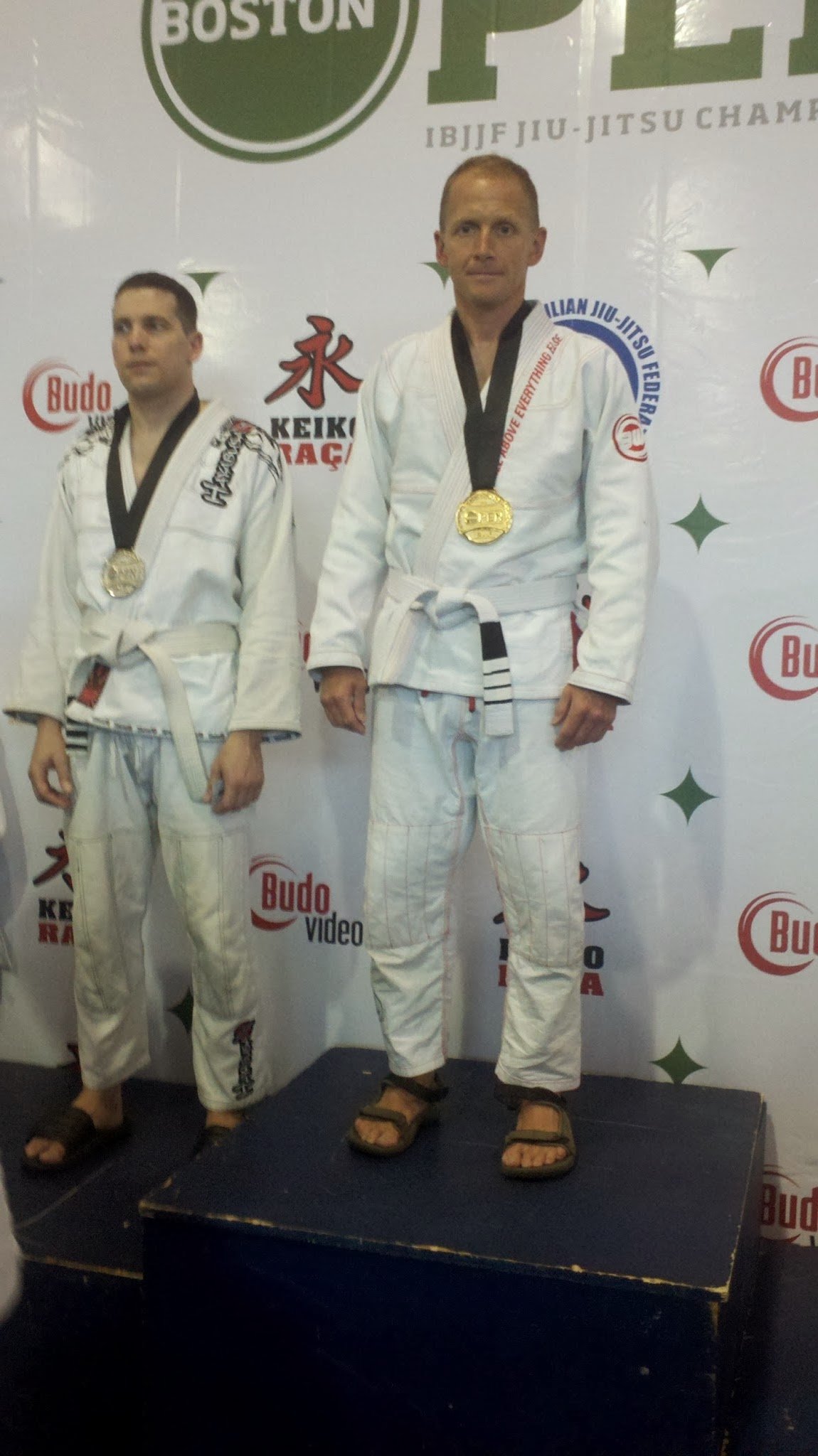
In my first BJJ tournament match, I stepped into the arena with many boxing/kickboxing amateur bouts under my belt, I was no stranger to the exhaustion and fatigue that takes place shortly after an altercation ensues. Additionally, much of our training, and sparring in the gym is inoculation to the stress of what we are going to face for real. With over twelve years of training/fighting, and being in the best shape of my life at the time, I had absolutely no idea what I was going to encounter in my first BJJ match.
Grappling was a completely different animal. The intensity is magnified ten-fold from any san da, boxing or kickboxing match I had ever competed in. The proximity stress, the gripping, tugging, and pushing, all while we’re still on our feet at the beginning of a match, rapidly drains our reserves. By the time we land on the ground, we’re seconds away from being face to face with the ‘adrenaline dump’ (all energy fades from our body).
When the ‘dump’ hits, there is nothing left in the tank; we’re completely gassed. We’re left only with our willingness to give up; or survive. This…is why an IBJJF (International Brazilian Jiu-Jitsu Federation) tournament has more 6 packs than you'll find at a redneck BBQ. It is an incredible test of mettle — physical, mental, spiritual.
During this first fight was the one and only time I looked at the clock in a competition. There was only a minute-thirty on the clock out of a five minute round. I had done hundreds of these rounds (and longer) in the gym, and yet…this felt like Father Time himself was crushing me into dust. I was completely demoralized as I lay under my opponent with a full strength closed guard, a firefighter, who I found out post-match had cut weight from 175lbs (79kg) to 150lbs (68kg) to compete that day.
A voice in my head was screaming for this to be over. That it didn’t matter who tapped, but this needed to end, and end fast. Then the other voice chimed in, calmly, with no emotion, calling the first voice a ‘wussy’. Followed by — “Get it done.” I fought on with everything I had, pushing through the fatigue, the time-demoralization, the doubt.
Fitness Conclusion
What better way to exercise than to have fun? To learn while getting into, or staying in shape? Enjoyment and mental engagement are a necessary function to stay committed to any type of physical activity we choose, BJJ can help us shred fat, build cardio, strength, and keep or return, that weaponized body that some of us once aspired to through joining martial arts in the first place. Of course the nutrition aspect has to go alongside any fitness endeavor, but the mat time we put in incentivizes us to eat better so we don’t gas out in competition or simply training.
The ‘BEST’ Pie is ‘Humble’ Pie.
Soft power wins the gold. Community makes the art.
The saying is - "the mats don't lie." When we walk out on the mats in BJJ, we can't say that we are something we are not. At least we can’t get away with it for long, if we do. When we roll with another grappler the truth becomes abundantly clear who is the higher hand. Hence the above saying.
Having been a part of the ‘traditional martial arts world’ through the rise of the internet, from BBS's, to forums, to facebook, etc., I have seen more petty arguments and nonsensical statements thrown back and forth. Things like -
"My style is the greatest.", "I'm better than you.", "I know more forms than you." “I’ve trained longer than you.”, "My lineage is pure, look who you studied with.", “I trained in {insert country of origin].”, "My teacher is better than your teacher.”, “My grandmother was better than your teacher."

It’s ‘ok’ to get a little mud on our face. Just smile and move on. Chris Meusel — Spartan Race 2012.
This behavior, while downright embarrassing and pathetic, is In direct opposition to the virtues we often seek in martial arts — strength, discipline, confidence, empowerment.
In contrast, I have met some of the nicest people in BJJ. While there are jerks (I met a few in the first couple attempts at starting out), they usually get weeded out early, unless the gym is toxic. The majority of people by and large, are — polite, grounded, and pretty darn cool. All seeking to better ourselves through adversity.
Why the difference? Simple really. In BJJ we have to put our money where our mouth is. We can make claims to ourselves or others about our prowess, our amazing skills, but the truth comes out on the mats.
Each roll, a mirror reflects back on us our own strengths, and weaknesses; whether we’re ready to receive them or not. This is a humbling experience and not for the faint of heart. It requires complete honesty with the most important person listening to us - ourselves.
"In my experience, the more dangerous two people are, the more respectful they are to one another." - Andre ‘Dedeco’ Almeida, BJJ Black Belt.
BJJ, along with any other contact based martial arts, keeps us humble. Aware that we are all just human, flawed at times, amazing at others, even when coaching and helping others. We know in our hearts, and minds — there are always bigger and better fish in the ocean. We all have progress to make in bettering ourselves inside and out. Even if we are the king, or queen, of our own little sandbox, getting tapped out gives us firsthand knowledge and experience in one of the most important martial arts principles to aspire to - humility.
Embrace the Suck
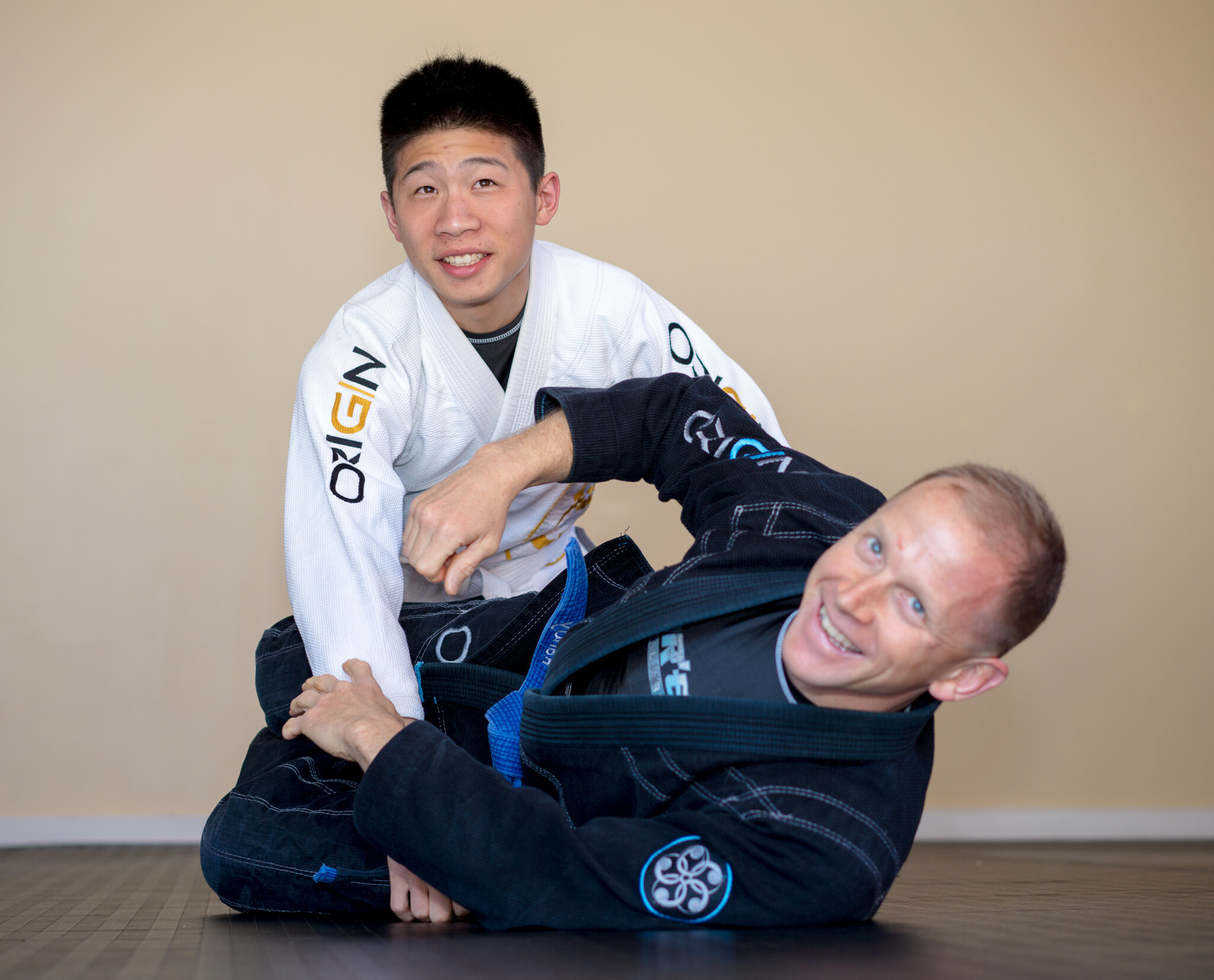
Rolling with Vincent Tseng - 2012. Photo by Max Kotchouro.
All of the above makes the close physical contact worth it. It gives us reason(s) ‘why’ we should we look past our issues with touch, contact, space. But what I can tell you firsthand, having worked through these issues myself, is quite honestly, the contact/space is not that big of a deal after a week or so of training.
Our brain quickly adapts and shuts off the reluctance to these things after we ‘embrace the suck’. Providing our partners are clean and hygenic that is.
We discover that rolling and grappling with someone, the ‘process’ of working with another to better ourselves supersedes the proximity challenge. It is quite different when someone is trying to choke, not grope us.
I highly recommend putting aside your reservations. I believe you will discover, as I did, that praciticing BJJ is just downright fun. One of the greatest challenges you can find, mentally engaging, core-building, and packed with years of intrigue. There are not many sports that encompass all of the elements that BJJ grapples with.
A plethora of the techniques you will learn (sweeps, submissions, escapes, takedowns) are awe-inspiring and a thrill to learn. Empowering. Easily mistaken for magic when we first see them performed by a seasoned grappler, and rewarding beyond measure when we succeed at executing them ourselves; after much trial and tribulation.
STILL RELUCTANT? HERE ARE A FEW TIPS
If you are still struggling with the idea,
Meet different coaches. If you find one you like, do one-on-one training with them. In this environment it should be acceptable to bring up your reservations and have a coach meet you where you are at.
Learn from a friend or family member who trains. Preferrably if they have a couple years of experience. Ask them to show you some moves but avoid grappling until you have a bit of experience. This avoids the competitiveness that can happen between friends.
Join with one or more friends. You can join a team class together, or do a squad style training (semi-private). This gives you the benefit of private lessons while sharing the higher cost of this approach.
If you have overcome this challenge, feel free to leave tips and your experience in the comment section for others to benefit from.
COACHES: RE-KINDLE THE FLAME
As a student, and a coach, I know firsthand that we have to keep the training and the process ‘fun’ in order to stay energized. If you are already a martial arts teacher of another discipline, training BJJ gives us a newfound sense of excitement. The same joy we had when we were a novice student in our original martial art style; when everything was new and enchanting. Reigniting a dwindling flame in our art.
Teaching others is rewarding and fun, but if we are not continuing to learn and grow we can become stagnant, bored, disenchanted, and even bitter. These are a few reasons I highly recommend trying out BJJ for martial artists from other modalities. Try adding it to your game and see for yourself. Box up the ego, don the ‘white belt’ and take the plunge into a fascinating world of new friends, sweet techniques, and all the humble pie you can eat.

Guest Appearance: Real Fake Swords and Fake Real Swords - Episode 61: Randy Brown the Senior Clinching Mantis
“Sifu Randy Brown is the instructor of Vincent Tseng, with 20 years of experience in the style of Praying Mantis as well as 7 years of Brazilian Jujitsu, he was able to make the 2 arts complement each other. In this episode we explore his background as well as the past and present state of Chinese martial arts and modern combat sports.”
In August of 2019, I was graciously invited as a guest on episode 61 of The Real Fake Sword’s Podcast hosted by Haozhu Wang. This was a thought provoking and at times controversial discussion on training methods, Chinese martial arts, traditional vs modern martial arts, and even martial combat training vs LARP’ing. I thoroughly enjoyed our conversation and I think you will too. You can also listen to other great interviews Peter has had on his podcast with a myriad of guests.
Podcast Description:
Sifu Randy Brown is the instructor of Vincent Tseng (https://realfakesword.podbean.com/e/real-fake-swords-and-fake-real-swords-episode-43-vincen-tseng-the-clinching-mantis/) with 20 years of experience in the style of Praying Mantis as well as 7 years of Brazilian Jujitsu, he was able to make the 2 arts complement each other. In this episode we explore his background as well as the past and present state of Chinese martial arts and modern combat sports.
Credit of Jingle goes to Tengger Cavalry, contemporary Chinese Mongolian folk metal

How to Escape the Clinch
We were in Los Angeles last week for the 5th annual Martial Arts Studies Conference, and after it wrapped up, we dropped in on Sensei Ando at his location. While there, I showed some 'clinch escapes' that I like. Ando asked me to come home and share the follow-up to the escapes - takedowns!!!
We were in Los Angeles last week for the 5th annual Martial Arts Studies Conference, and after it wrapped up, we dropped in on Sensei Ando at his location. While there, I showed some 'clinch escapes' that I like. Ando asked me to come home and share the follow-up to the escapes - takedowns!!! We tried to get him to come out here and finish the shoot, but he said the pie in New England is inferior.
Part 1 - Neck Slice/Frame Escape - Slant Chop a.k.a. - Single Whip (擔扁), Single Whip to Embrace Tiger, & the Piercing Hook, also known as Snake Creeps Down in Tai Chi.

Mantis Clinch Counters with Sensei Ando @ Happy Life Martial Arts
In this video Ando suffers through some neck puncturing on my behalf (and a possible stab wound) so we can cover some of the clinch escapes that don’t work all the time, along with some more reliable ones that I prefer. Thanks for watching!
We had the honor of visiting with Ando from Happy Life Martial Arts in Los Angeles this past weekend. Aside from the great hospitality and amazing company, we had some time for a quick tour of his stomping grounds, as well as shooting a video or two.
In this video Ando suffers through some neck puncturing on my behalf (and a possible stab wound) so we can cover some of the clinch escapes that don’t work all the time, along with some more reliable ones that I prefer. Thanks for watching!
Subscribe to Happy Life Martial Arts for some great tips - https://www.youtube.com/user/AndoMierzwa or visit Ando’s website for tons of content - http://www.senseiando.com/

Coach Holly hanging with Sensei Ando @ Happy Life Martial Arts
We had the honor of visiting with Ando from Happy Life Martial Arts in Los Angeles this past weekend. Aside from the great hospitality and amazing company, we had some time for a quick tour of his stomping grounds, as well as shooting a video or two. Here is Coach Holly showing some of her tips for the scissor clip with Sensei Ando!
We had the honor of visiting with Ando from Happy Life Martial Arts in Los Angeles this past weekend. Aside from the great hospitality and amazing company, we had some time for a quick tour of his stomping grounds, as well as shooting a video or two. Here is Coach Holly showing some of her tips for the scissor clip with Sensei Ando!
Subscribe to Happy Life Martial Arts for some great tips - https://www.youtube.com/user/AndoMierzwa or visit Ando’s website for tons of content - http://www.senseiando.com/

The Rowing Hook 2 - 7 Star
Here's a second variation of the rowing hook maneuver found in mantis boxing forms. This time…
Here's a second variation of the rowing hook maneuver found in mantis boxing forms. This time Mantis boxer Vincent Tseng is going to show his discovery. This variation is used when the opponents leg is in front of us versus behind.

The Rowing Hook - A Flank Takedown
This is a unique throw that shows up in some Chinese boxing styles such as Mantis Boxing and Shuai Jiao. In mantis boxing it appears in forms as a single leg stance and what seems to be an…
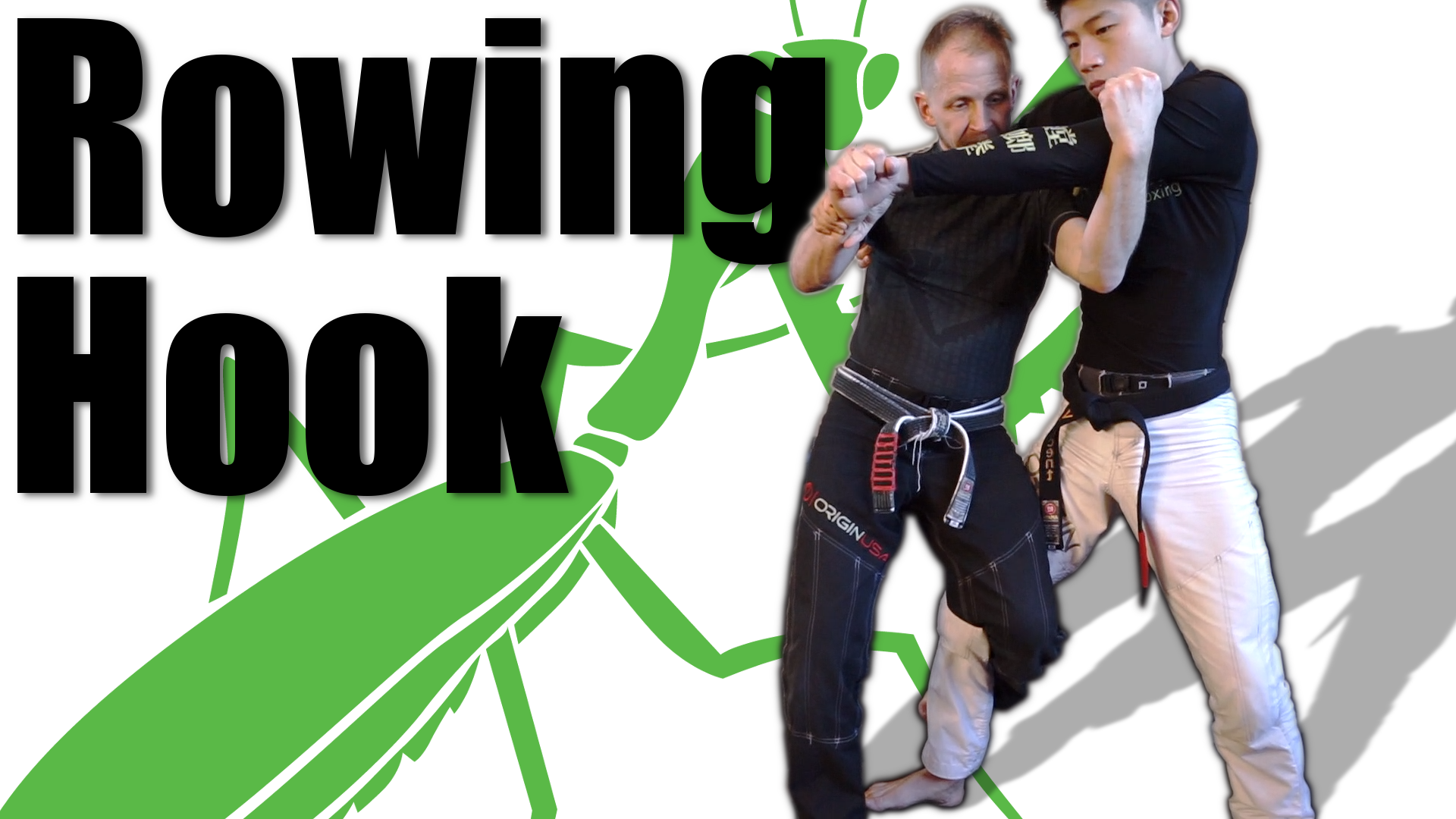
This is a unique throw that shows up in some Chinese boxing styles such as Mantis Boxing and Shuai Jiao. In mantis boxing it appears in forms as a single leg stance and what seems to be an uppercut. Without context, it's hard to see what the move does. It's highly effective for a unique circumstance we can find ourselves when battling in the flank position. Today Vincent is going to help demonstrate the position you find yourself in where this counter shines.

Countering the Clinch (Lǒu 摟) - FRAME! FRAME!! FRAME!!!
The clinch can be a nasty place to be stuck. When our opponent is larger, and/or stronger, and has their hooks on our neck, some of our escapes can be difficult to…
The clinch can be a nasty place to be stuck. When our opponent is larger, and/or stronger, and has their hooks on our neck, some of our escapes can be difficult to pull off. Building frames can help shut down the clinch, but we have to know where to go next after building the frame. Knee strikes, arm triangles, hip tosses. Check it out.
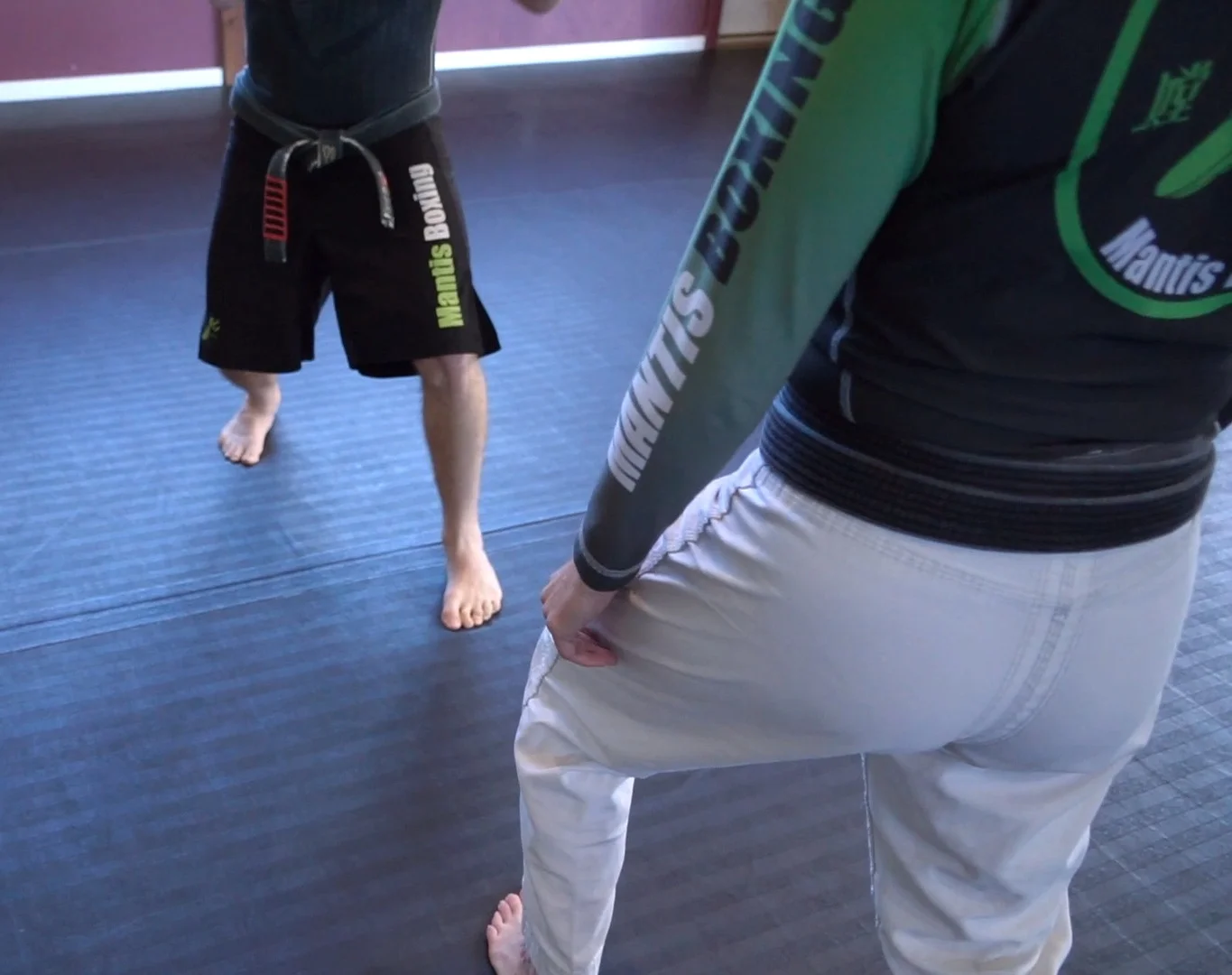
Tear Down the Monkey - Fight Stance Revamp
A critical analysis of the fighting stance we've been using for years. And why I got rid of it.
I recently went through some changes in my teaching and practice. One of these recent changes was in our fighting stance. The reasons for these are many, and too lengthy to explain for these purposes. However, the root of any changes I make are always born of a desire to improve things for myself and my students.
Let’s compare the stance we were using for years, the Monkey Stance, with the…
A critical analysis of the fighting stance we've been using for years. And why I got rid of it.
I recently went through some changes in my teaching and practice. One of these recent changes was in our fighting stance. The reasons for these are many, and too lengthy to explain for these purposes. However, the root of any changes I make are always born of a desire to improve things for myself and my students.
Let’s compare the stance we were using for years, the Monkey Stance, with the 3 Dimensional Stance, 4-6 Stance, or 40/60 Stance common to other Chinese boxing systems from the same region and era.
Monkey Stance (Hóu Shi 猴势)

Monkey Stance
The ‘monkey stance’ is found in seven star praying mantis boxing, plum blossom praying mantis boxing, and supreme ultimate praying mantis boxing. Although used within these branches of mantis boxing it is not necessarily a ‘sparring’ stance. It shows up within moves in the boxing sets of old, but usually aligns with the execution of specific techniques. More common in these old forms, is actually, the bow stance, or mountain climber stance.
Upon recent discovery, these monkey stance techniques are typically leg wrap takedowns which necessitate this stance in order to shadow box the move absent a partner, without falling on one’s face. I had fully integrated this stance into my fighting and movement patterns after having learned it from a coach I worked with for years. He taught/used this monkey stance in fighting predominantly because of the correlation he found in Western Boxing. However, the latter is usually in a much higher posture due to the lack of necessity in defending kicks and takedowns.
The higher posture found in western boxing allows for increased mobility when using this stance/footwork, and has less detrimental effect on the fighter’s balance. The feet are closer together which leaves the stability of the boxer mostly uncompromised. This has issues in a mixed martial art arena, which is why you do not see MMA fighters using this stance.
When used as a lower stance (as we were doing), the monkey stance is rather unstable and rife with problems. Least of which is it’s mobility. Let’s rip it down so we can understand the inherent strengths and weaknesses of this ‘stance’.
Strengths
Offers solid defense capabilities - decreased profile for target acquisition from the opponent.
Forward position offers quicker range to target - a 50/50 weight displacement puts the range to target of the striker closer to their target. This helps get hands on the opponent faster and offers a range assist for smaller fighters.
Increased mobility - this is only active when the fighter is in a high stance. Otherwise, this is negated.
Protects the Knee - this is one of the finer points of this stance in my opinions. With the knee over the toe, the boxer is almost immune to cross kicks and side kicks which are designed solely to attack the knees. Proper execution of this stance nullifies this threat.
Good in the Clinch - when engaged in grappling, the 50/50 position of the monkey stance, and the lowered center of gravity are where this stance shines the most. A stance with weight distribution forward, or behind this 50/50 center of gravity point, causes us to be open for pulls, pushes, and a variety of throws. This, in my opinion, is where the monkey stance becomes necessary, and relevant.
Weaknesses
Unstable - this stance is extremely unstable. Especially from lateral attacks such as haymakers, which are an extremely common strike even from novices. The stance can become stable with a great deal of tweaking and perfection, but the amount of time required to do this, certainly nullifies its benefits, which are few compared to other stances. The ease of which a smaller fighter can be rocked and toppled makes this a dangerous choice when looking at stances to use in hand-to-hand combat.
Difficult for beginners - there is a massive learning curve with this stance. When sitting in this stance to maximize its effective traits, it is extremely finicky. Knee over toe, back foot angle/position, hip alignment, shoulders over hips, balls of the feet, hips dropped. Remembering all of that, while trying to move in a completely foreign manner that is counter to our human movement patterns, can take a casual practitioner years to get down. With diligent focus, the stance still requires hundreds of hours of training to overcome and perfect the stability and mobility deficiencies.
Decreased mobility - when hunkered down in this stance it is lacking mobility in order to maximize defense. While defense is great, it is not the endgame. The ultimate goal, is to defeat our opponent(s). Imagine being faced with multiple attackers, and sitting in a fighting stance that creates a 50% speed reduction. Or you are in a cage fight, facing a mobile, and speedy opponent. You won’t keep up.
Vulnerable to Leg Kicks - The forward 50/50 position for the center of gravity, causes the leg to become a closer target for our opponent’s leg kicks. Additionally, more weight on the forward leg, causes an extreme delay in response time in getting the leg up to check, or avoid an opponent’s leg attack. This is the number one attack I would use against someone in this stance. Destroy leg. Compromise their mobility, and take their will to fight.
Exposed Striking Power - in order to generate maximum power in this stance, a fighter must learn to shuffle with each strike, or twist/rotate the hips when throwing off the rear hand. This is common in western boxing for producing awesome striking power. However, when we twist and throw ‘long’ punches/strikes we create a longer opening in our defense that is susceptible to counter-strikes. This window of opportunity can be an issue against a seasoned opponent.
Takedown Defense - if you were to classify each type of throw, trip, takedown that exists within martial arts styles the world over, and then categorize them based on frequency of use, the single and double leg takedown would be at, or near the top of that list. These are common weapons in the arsenal of wrestlers the world over. The monkey stance, becomes necessary within the clinch, but when used prior to the clinch phase, it creates a leg position that is extremely vulnerable to single/double leg takedowns. Additionally, the 50/50 weight distribution again creates a speed limit on the ability to sprawl. A veteran shoot fighter that is highly adept at setting these up, will close the gap from striking range to the takedown in the blink of an eye. Any speed/range advantage we can have in striking range can be a deterrent against these attacks. This stance is not the choice selection when it comes to this.
The Three Body Solution - San Ti Shi (三体势)
Used in a derivative of Mantis Boxing known a 6 Harmony Praying Mantis Boxing, and a newer (1900’s) subset of that known as 8 Step Praying Mantis Boxing. The 6 Harmony line has roots in another style of Chinese boxing, that is derived from Liuhe Xingyiquan (6 Harmony Mind Intent Boxing). A system taught by the Dai family in Ming dynasty who owned a security/escort company known as a biaoju. This explains why this line has an entirely different stance than the other branches of mantis boxing.
The concept is - simple striking with solid footwork designed to maximize power. The striking was used in conjunction with blocks/intercepts and could be blended together for combinations as needed. Throws and other techniques were included in the system, but it was overly simplified to keep the training methods efficient and effective. Something you would want when training security and bodyguards.
The stance used in ‘mind intent boxing’ is called a San Ti Shi (three dimension stance 三体势) and while not unique to this one style, it is effective. It appears in other Chinese boxing systems originating from northern China as well.
In my opinion, this is a much better stance for a variety of reasons. Hence why I began adopting it in my system and discarding the monkey stance except when grappling. The following breaks down the advantages and disadvantages of the three dimensional stance before we get into the details on proper execution.
Strengths
Stability - this stance is incredibly stable, especially when compared with the monkey stance. The 40/60 weight distribution, with hips dropped offers a stable platform for striking, kicking, or defending even from lateral angles of attack.
Ease of Use - one of my biggest criticisms of the monkey stance is it’s long and finicky learning curve. For beginners who are training 2 to 3 hours per week, the san ti stance is much easier to learn, and execute. Unlike the monkey stance, it takes very little maintenance to get people on board with the concepts and application of it.
Power Generation - next to stability, and ease of use, this is probably one of the greatest advantages of this stance. The power generation capacity from this stance versus the monkey stance is phenomenal when looking at a fixed stance platform to compare. The monkey stance can generate power as well, but usually at cost of defense, or stability when committing to the twist execution to produce the force. The 3-dimension stance however, can outperform without compromising the integrity of the defense/position of the fighter.
Kick Defense - the round kick is a powerful weapon in a boxers arsenal when used as to attack the lead leg of the opponent. Opposite the monkey stance, the three dimension stance offers a quicker reaction time to move our leg, or shin-check the opponent’s attacking leg. When it comes to groin kicks, the narrow stance of the san ti offers defense by itself. Once again, the lighter weight on the front leg allows for a quick reaction time against leg attacks, knee attacks, or groin attacks.
Takedown Defense - this is specific to shoot takedowns such as single leg, double leg, or rushing/tackle takedowns. The rear sitting san ti stance, offers a larger timespan to initiate a sprawl, or rearward step to avoid these takedowns. The forward weight of the monkey stance was not useless, but the timing was harder to get down.
Range Manipulation - another exceptional advantage to this stance, is the ability to manipulate range. The slight rearward weight distribution offers an appearance to the opponent that we are further away than we really are. The lead foot position indicates our true range to target. We can therefore, get that position across the ‘critical distance’ line of our opponent with them unaware that we moved in. This allows for us to gain range advantage on an offensive assault. Additionally, as mentioned above, the defense is also assisted with the range increase offered by the rear sitting san ti stance compared with forward-weighted stances.
Weaknesses

Knee exposed - if your stance sits too far back, meaning you violated the 40% weight on the front and 60% on the back, it exposes the knee. This is improper or lazy execution and can cost you your knee if you are not careful. Be mindful of the cross kicks, and side kick attacks your opponent may throw at your foreward leg and you should have plenty of time to defend if that happens. To nullify this, train the proper weight distribution and sink your hips. This will keep the front knee rounded, arcing against your opponents thrust force.
Mobility - the stance is less mobile in circle patterns commonly found in boxing and MMA bouts. Use it for engagement purposes only, once you have crossed ‘critical distance’ and committed to your assault.
Clinch Deficient - this is not an optimal stance inside the clinch. The weight being back makes us susceptible to being pushed over backward. Once the clinch happens, shifting to the ‘weight-forward’ advantage offered by the monkey stance, bow stance, or horse stance when in the flank, is a better tool for the job.
Mechanical Breakdown

Weight Distribution - 40% of body weight on front leg. 60% on the back leg.
Center of Gravity - CG should be slightly rear of the 50/50 mark. Sink your CG by dropping your hips 3 to 4 inches. This will also bend the knees and create a suspension system in your legs allowing for better balance, and mobility.
Front Foot - aimed at target, or direction of travel.
Rear foot angle - it is imperative for stability that the rear foot be at or around 45 degrees angled off from the front foot.
Width - heel of the rear foot is in line with the heel of the front foot (see diagram).
Splitting the Floor - Focus the pressure on the pads of feet. When hips are dropped, it should feel like you are splitting the floor between your feet.
Posture - sit up straight. Shoulders over hips.
The san ti shi is an all around better stance as we can see from our strengths vs weaknesses evaluation above. The ease of use, striking power increase, kick defense capability, improved range manipulation, and takedown defense make this an optimal fighting stance far superior to the monkey stance. Therefore, it’s a no-brainer from a coaching perspective, as well as a fighter’s methodology. You can see why we switched.

Mantis Captures Prey Takedowns
Trapping the elbow as our opponent shoots for the underhook. They go for the position under the arm to try and set up a variety of throws, or gain positional control. What we have lying in wait for them…
Trapping the elbow as our opponent shoots for the underhook. They go for the position under the arm to try and set up a variety of throws, or gain positional control. What we have lying in wait for them, is a potential shoulder lock if we can get it. If they dive the arm deep to save it, then we follow up with tight arm control and a solid frame as we strike with knees, and/or go for takedowns.
The following are a couple of takedowns I like to use from this position - White Ape Falls In Hole, and Monkey Goes Over Falls.

Needle the Tiger - Using 'Needle to Sea Bottom' to setup 'Embrace Tiger'
Yang's Cotton Boxing has innumerable combinations of moves that transition from one to another. Here, Vincent and I will show the use of 'Needle to Sea Bottom', to setup 'Embrace Tiger Return to…
Yang's Cotton Boxing has innumerable combinations of moves that transition from one to another. Here, Vincent and I will show the use of 'Needle to Sea Bottom', to setup 'Embrace Tiger Return to Mountain'. Embrace Tiger is similar to 'Grasp Sparrow Tail'. The entry is different, but then the next three moves are the same/similar.
Additionally, we show Needle to Sea Bottom to Fan Through Back, and a counter to Embrace Tiger that leads to Retreat Astride Tiger.

Change Moon - Clinch Takedown
Change Moon is an alternate throw from the clinch. Sometimes our attempts at…
Change Moon is an alternate throw from the clinch. Sometimes our attempts at Crane Spreads Wings are blocked. This takedown can provide an alternate strategy that twists the opponents upper body, splitting them from the lower. The leg wrap adds a preventative measure keeping them from stepping out to regain balance and posture.

Essay: The Heart of Mantis
Update - 10-MAR-2019
Below is an essay from May of 2013. After 14 years in Chinese boxing styles, thousands of hours of training, and a year into my journey of Brazilian Jiu-Jitsu, in 2012 my ideas and approach to the art of praying mantis boxing began to shift. I was not happy with the ‘status quo’, the failure of the art (meaning the methods within forms) to ‘work’ in fighting, and I began to approach mantis from a different angle - a grappling mindset. What you are about to read, is written during this early period in my transformation. Some of this (the history in particular) is incorrect, or incomplete. Later, through further training, research, and sparring, I was able to more deeply develop an understanding of the art. This is the foundation, the beginning of the evolution. I consider this to be when my art truly began. While I could delete this, hide it, or pretend I was never ‘new’, I leave this here to demarcate a point in time on my journey in martial arts. - Randy
Update - 10-MAR-2019
Below is an essay from May of 2013. After 14 years in Chinese boxing styles, thousands of hours of training, and a year into my journey of Brazilian Jiu-Jitsu, in 2012 my ideas and approach to the art of praying mantis boxing began to shift. I was not happy with the ‘status quo’, the failure of the art (meaning the methods within forms) to ‘work’ in fighting, and I began to approach mantis from a different angle - a grappling mindset. What you are about to read, is written during this early period in my transformation. Some of this (the history in particular) is incorrect, or incomplete. Later, through further training, research, and sparring, I was able to more deeply develop an understanding of the art. This is the foundation, the beginning of the evolution. I consider this to be when my art truly began. While I could delete this, hide it, or pretend I was never ‘new’, I leave this here to demarcate a point in time on my journey in martial arts. - Randy
The Heart of Mantis - What is Praying Mantis Kung Fu?
By Randy Brown - 28-MAY-2013
photos by: Max Kotchouro
The story goes something like this...
Wang Lang observed a Praying Mantis fighting a larger and more powerful Cicada sometime in the 1600’s. After watching the Mantis defeat the Cicada with ease, he adopted the Praying Mantis' combat style into his Kung Fu. He began mimicking the hooking techniques, as well as the fighting strategy into his own fighting, to much success. Mantis is said to be a hybrid of 18 different styles of Kung Fu; streamlined and polished for efficiency in combat.

Concept art for new logo - 2013
Here is a style created some 350+ years ago in an area of northern China known as the Shandong Province. The style has survived dictators killing/imprisoning/exiling martial artists, rebellions, war, racial boundaries, distrust, and cultural diversity through the annals of time. It has survived in part because of it's legend as a superior fighting art. So why isn't it being used by anyone in the UFC (Ultimate Fighting Championships)? Why isn’t it at the forefront of self-defense like other systems? Why isn't it as well known as Tae Kwon Do, Aikido, Jiu Jitsu, Karate?
As with much of the Chinese Martial Arts known as Kung Fu, the fighting application was lost over the centuries or decades. Practitioners and teachers were left with choreographed forms; empty shells of a bygone fighting art. Speculating on what it meant to fight like a Praying Mantis, and what the true art contained. After all, we don't have 4 legs, 2 arms with large hooks and spikes on them, or the ability to fly. So how does a human fight like a bug? And how is it relevant to hand-to-hand combat in the 21st century?
What is Praying Mantis Kung Fu?

Mantis Hooks
A Praying Mantis seizes it's opponent with it's large arms and hooks. It pulls it's prey off balance, and devours it on the ground. When observing the mantis against a larger foe, one can see the mantis pounce, take the back of it’s foe, use it’s legs to hold on, and continually try to control it's opponent while it bites and gains better hook positions to keep it safe.
We don't have large mandibles to chew on our opponents, nor would I advocate biting your enemies unless absolutely necessary. What's important about the mantis' tactics is, the controlling, the seizing, the binding up...the hooks! This is what I love about Mantis, and what I believe has been misunderstood for quite some time - where the hooks belong.
We often thought Mantis was all about grabbing wrists and pulling our opponents around. Some have made that work quite well for themselves, especially those with large hands, or body types. What of the rest of us? How do those techniques get used against a full speed attacker coming to take you down, or knock you out? How does a smaller person use that to grab someone with wrists twice as thick? It doesn't, and they don’t. Plain and simple. It might work on low skill opponents, or those under the influence of drugs/alcohol. If it worked in full out combat against a trained opponent, you'd see that style of fighting in a venue such as the UFC.
Mantis should be based on the following - if you had two large hooks, not small hands with 10 fingers, how would you control a human opponent? How would you fight like a Mantis? What would you take away from watching a real mantis that could function in live combat?
A Stand-Up Grappling Art

You would use these hooks to clinch, to control your opponent; latching onto their neck, their upper arms, their body - over hooks, under hooks, clinch. Similar to what is seen in other fighting arts - Judo, Jiu Jitsu, Wrestling, Muay Thai, etc. These techniques are still alive today in other art forms. Minus the defining attribute of Mantis - the hooking hand (more on that below).
The moves inside the Mantis forms make much more sense when viewed from this perspective. Many obscure and often seemingly useless applications/movements, suddenly come to life as amazing and ingenious solutions to combat at mid to close range. Approaching it from this angle, one can also disseminate and get rid of stylized marketplace Kung Fu, stuff that has the practitioner just trying to act like a bug with no real purpose.
The hooking hand is used to grab an opponent’s wrist in some applications. Mantis accounts for the range it likes to function in; the hooking hand vs. the forearm/wrist becomes an important tool for maintaining the dominant position or winning the fight when grappling for control.
The Hooks (Gōu 勾)

‘Mantis Hook’ as depicted in Chinese martial arts forms.
The Mantis Hook - an obvious indicator of the Kung Fu style. Making it readily apparent that the practitioner is doing Praying Mantis Kung Fu. This seemingly innocuous shape is highly effective and ingenious in it’s design.
Other martial arts styles use hooks (White Crane, Muay Thai, Wrestling - Mongolian and Western), but unlike Mantis, there is no emphasis on the curling of the fingers. The little finger (a.k.a. - the pinky) is the grip finger. This finger controls our grip and governs the strength of such. When latching onto an opponent, focusing the energy and intent in the pinky increases the tightness of the hold.
When practicing Mantis in the air, folding the fingers into the hook hand engages the muscles in the forearm, making your hooks stronger, thereby giving you more control, and being more difficult to contend with. Use this to clinch and control your opponent so you can topple them to the ground, or cling to them while you strike, knee, elbow. The common hooks are neck hook, over hook on the tricep, under hook, arm hook, wrist hook, leg hook.
Hook positions, And Where They Attach
Some applications involve wrist hooking and lower arm control as stated - defensive measures in the clinch, but predominantly the hooks are used to control upper limbs and body. Control the head, and you control your opponent.
The following pictures show some of the common holds in Mantis, as well as other fighting arts.

Hook variations found in mantis forms. Common to other styles of martial arts as well.
The Mantis Boxer Strategy
Bridge, Strike, Kick, Contact, Cling, Takedown/Throw, Destroy

Bridging with Closing Door Kick
The 5 elements of a Mantis Boxer:
Bridge using deceptive kicking.
Overwhelm with ‘crushing’ strikes (Beng Da) or block counter-strikes.
Contact/Cling - engage the hooks for control in the clinch. Use elbows/knees where necessary.
Takedown or throw the opponent to the ground.
Finish them with ground strikes, kicks, knees, elbows, or joint locks.
This is the overall offensive strategy in Mantis. Overwhelm, seize, control, strike with knees, elbows, tight hooks, uppercuts - all from the clinch; then take to the ground, and finish the fight, mimicking the same actions of a Praying Mantis in the wild. If the opponent is offensive, block incoming blows, close to the clinch, then strike, knee, and take to the ground.
Conclusion

What makes Mantis different from so many of the other fighting arts in the limelight today? Not much. A few incredible things that were developed for the range that Mantis likes to control from, and the nuances of the hooking hand - using it to delay an opponent’s return to a defensive position long enough for a counter attack, etc.
Like many of the Northern Kung Fu styles, Mantis descends from centuries of Mongolian Wrestling (Elephant Style Wrestling). An artform in and of itself, whereby Genghis Khan tested the fortitude and skills of his warriors.
Northern Kung Fu styles such as Praying Mantis developed from these roots and evolved to include combat effective techniques. Used properly, Praying Mantis Kung Fu can be a highly effective and destructive fighting system.

Bridging - How to Close Distance in a Fight
You charge in on your enemy, filled with the hope that you can capitalize on that weak spot you spy in their guard. As you are about to land your punch, suddenly, without warning, BAM!!!! POW!!!! SMACK!!! His strike has met you mid-stride and square in the nose. As blood begins to rush down your face you pause and wonder, why you were unable to hit that giant hole that invited you to enter to begin with?
"You charge in, filled with the hope that you can capitalize on that opening you spy in their guard. As you are about to land your punch, suddenly, without warning, BAM!!!! POW!!!! SMACK!!! A strike has met you mid-stride and square in the nose. As blood begins to rush down your face you pause and wonder...'Why was I unable to hit that giant hole that was wide open, and they were able to hit me'?"
If you have fighting experience then you are likely all too familiar with the above scenario. After countless bouts, sparring matches, fights, most of us have found tricks of the trade that allow moderate success at gaining the advantage as we move in on our opponent (bridge).
Alternatively, some have decided to become counter-fighters, and instead of risking the in-fortuitous disaster, patiently await their opponents charge knowing full well the advantage will be their's.
To help avoid circumstances such as these, here are some solid tactics to incorporate into your training so that you may gain control over this most unsure of moments in fighting; the moment when you go from out of range, to in range. The moment we call - 'bridging'.
The following are a few definitions:
'Bridging' - the act of moving from outside of striking or kicking
range to inside striking or kicking range.
'Critical Distance' - The line that separates the two ranges. Critical Distance is determined by the range just outside the reach of your opponents longest weapon - their rear leg.
'Bridging Tactic' - a method of occupying the enemies mind, body, or both, so that they are unable to move or launch a counter attack the moment you cross the 'Critical Distance' line.
As we explained in above scenario - the danger with bridging is vulnerability when moving or transitioning. Timing (another bridging method) works in this regard. If you are in the midst of steaming headlong into your opponent's waiting defense, while preoccupied with striking, then you are vulnerable. The solution is to incorporate Bridging Tactics into your fighting toolkit to give you the advantage.
Here are some examples for executing an advantageous bridge:
Overwhelm
These tactics involve rushing style attacks that overwhelm the opponent.
Pi Quan
Circle and Chop
Beatdown Chop
Chopping Fist Advance
Flying
Flying Palm
Mandarin Duck Kick
Other
Sān sài bù - 3 Section Step
Distractions
Distractions rely on proper timing to execute. These can vary and you can certainly add more to this list. Here are the primary ones we cover.
Fake Leg Attack Hand
Flag Hand
Smack Hands
Experienced practitioners will also focus on more advanced bridging methods such as:
Feints*
Fakes*
Hiding Motion in Motion
Range Manipulation
*Note: according to veteran coach I worked with, that had been in many fights, these bridging methods have less of a chance of working on people in a street fight situation, who have never been hit. They do not respond as expected because there is no correlation of the fake attack with the actual end result.
Feint
A body movement that simulates a move or shift in one direction while then moving in another direction. This works as a great precursor to an attack when used at the proper range. As the enemy flinches, plants, or reacts in some regard, they are locked into their movement and unable to react to the real attack that immediately follows the lie.
Example on how to Feint-
Pretend to move left with your body and then quickly move right. When your opponent moves to gain advantage or reposition themselves for defense they create openings in their guard. Strike the targets now available, or shoot for the takedown on the exposed side.
Common Pitfalls -
Body movement is jerky and unrealistic. Opponent doesn't believe it.
Feinting, and then moving in the same direction you feinted. This gives your opponent warning of where you are going to move and nullifies the tactic.
Fake
A false strike that triggers the opponents block or counter. Again, as the opponent flinches, you immediately follow the flinch with your real strike to a different target.
Example -
Throw a forward punch (jab) but do not follow through with it. Done properly the opponent should emit a jerk-type response and attempt to block the non-existent punch. More experienced fighter's may resist the temptation, but may blink or twitch instead. Immediately strike the opponent in a different target right after they jerk, blink, or twitch.
Common Pitfalls -
If there is too much of a time break between the fake and the real attack the opponent will have reset and snag the actual strike.
If you try to attack the same target as the fake attack then the opponent will likely block because their hand is already in that region and they previously witnessed an attack to that target a split second before, so they are now expecting a real one.
The fake doesn't look real. You have to sell the fake, as if it is the real deal, without over exposing the limb for them to grab, or seize.
Distraction
An act of motion, sound, or use of surroundings that will trigger a response from your opponent; causing them to momentarily flinch or become distracted.
Example on how to Distract-
Make a loud noise by yelling, stomping, or banging your gloves together. Upon witnessing your opponents twitch immediately bridge and enter past the critical distance and attack. In a street situation, the distraction may be throwing an item such as keys, coins, sand, or an object.
Common Pitfalls -
Too quiet, or not convincing.
Too much lag time between the distraction and the bridge.
You have tried it too many times without following up with a live attack. The opponent is not appropriately conditioned to it and will not respond, making them dangerous if you try to enter.
When bridging, the tactic either works, or does not work. This is immediately determined by whether or not they blocked your attack, moved out of range, or sprawled before you got there. If unsuccessful, the bridging tactic needs to be corrected or refined by training your ability to perform a realistic fake or feint so your partner believes the lie.
Range Manipulation
To be continued...