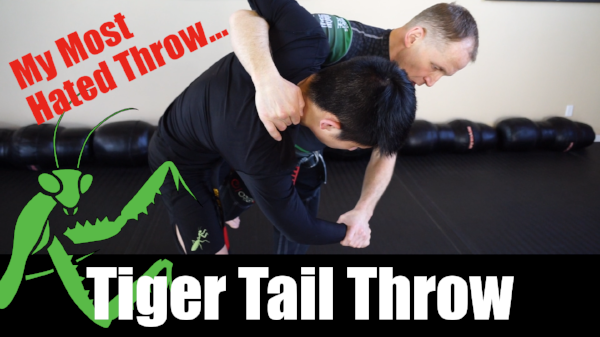
The Tiger Tail - My Most Hated Throw!!!
This was truly one of my most hated throws. In 2009, on one of my semi-annual sojourns to San Diego to train with my Mantis Boxing coach at the time, I was introduced to this personal menace.
The primary purpose of this trip, was for my teacher to share with me the 20 throws of Mantis Boxing that his 8-Step Mantis Boxing teacher had...
This was truly one of my most hated throws. In 2009, on one of my semi-annual sojourns to San Diego to train with my Mantis Boxing coach at the time, I was introduced to this personal menace known as a ‘thigh lift throw’, or in Judo - ‘uchi mata’.
The primary purpose of this trip, was for my teacher to share with me the 20 throws of Mantis Boxing that his 8-Step Mantis Boxing teacher had shared with him. We were to meet up with another of his Black Belt's - Mike Dasargo, and work on these techniques at Mike's school.
As the coach would show each throw, Mike and I would work on them together, and I would scribble notes down as we went. Doing my best to catalog each throw and its variations. As the day went on, we finally arrived on the ‘thigh lift throw’, what I have affectionately named the Tiger Tail Throw (as it looks like the tail of a tiger sticking up). A ferocious takedown.
I don't know what it was, but this throw was the single most difficult one for me to get. Maybe I was getting hungry, or having a 'short day' (sarcastic reference to my height), but this one was just not clicking. It seemed like a throw for taller people; at least that was my whiny excuse at the time. I took it down my notes, maybe even left a nasty comment in there, practiced a bit more, and moved on.
When I returned from San Diego, my ritual was to work on everything I did on the trip as soon as possible, so I would not lose it. I practiced this throw along with all the all 19 other throws even though I didn't care for it.
I'm not sure what happened next, but eventually, this throw became one of my favorite takedowns in Mantis Boxing, and probably the one I use with the highest frequency. Most likely...since I worked on it more than all of the others because of the difficulty I had with it, it began to morph and I adapted to it, and it to me.
In this video, I'm not only sharing the Tiger Tail Throw with you, but additionally the alternative throws (Descending Dragon, Demon Wheel, Retreat Astride Tiger, Mantis Hangs from Branch), Knee Strikes, Guillotine Chokes, that I use when someone counters this throw, or I miss on the execution.
Timestamps:
Tiger Tail Throw - (2:05)
Descending Dragon Takedown - (5:39)
Demon Wheel & Guillotine Choke - (7:00)
Knee Strike & Shoulder Lock - (8:02)
Retreat Astride Tiger - (8:50)
Mantis Hangs from Branch - (10:40)
--
Leave your comments and questions below. Don't forget to SUBSCRIBE and GET HOOKED!

'Sneaky' Americana for No-Gi
Here is a No-Gi variation for the Sneaky Americana (Keylock) I've been using from under the head. Using the shoulder to crack open their frame, can help me pry my opponents arm up closer to their head, where I can snag ahold of it to go for the Sneaky Americana.
Be sure to...
Here is a No-Gi variation for the Sneaky Americana (Keylock) I've been using from under the head. Using the shoulder to crack open their frame, can help me pry my opponents arm up closer to their head, where I can snag ahold of it to go for the Sneaky Americana.
Be sure to insert the hand palm up so you can use the fingers to ply along the muscles of their arm and help you get underneath when they are trying to block it.
Again, this variation I've been using in Brazilian Jiu-Jitsu (BJJ) in order to keep my position during the attack. If I launch my attack across the body, the more savvy practitioners will counter and push my arm away, or launch me over their body.
A nice alternative to the keylock for more flexible opponents, is pushing the elbow vertical and then applying downward pressure to lock the wrist.
The turn away: when they go on their side to defend the arm, we go for the arm closest to us to setup and armbar. If they begin to block that, it will create the opening we need for the Americana. If they block both, step the leg over the waist and roll them back into our guard to finish them from the back.
Have fun with this technique. I've been enjoying it a lot!!!

Ezekiel Choke to Americana Lock (Keylock)
Here is another attack using the same sneaky Americana I've been using from under the head. In this example, we go from the Ezekiel Choke and our opponent defends it. Because my weight is side shifted, my savvy friend will feel my opposite leg go light, and try to push my knee into half guard to gain a better position.
Rather than stay there and let them get half guard, we skip over to position 2 of Side Control. Now they defend the position by trying to build a frame. This presents the arm in a vulnerable position to grab it from...
Here is another attack using the same sneaky Americana I've been using from under the head. In this example, we go from the Ezekiel Choke and our opponent defends it. Because my weight is side shifted, my savvy friend will feel my opposite leg go light, and try to push my knee into half guard to gain a better position.
Rather than stay there and let them get half guard, we skip over to position 2 of Side Control. Now they defend the position by trying to build a frame. This presents the arm in a vulnerable position to grab it from under the neck.
In order to finish them, we need to change our position however. Here is where the hip break comes into play. We hip break over to the opposite side and go to position 3 of Side Control. This gives us the position we need to finish the Keylock/Americana.
Max asked, "what happens if they block our hip break?" Great question. By attempting the hip break, it lifts their arm off the ground, so we can simply return to position 2, and throw our arm under so we can finish the Keylock/Americana from there.
--
Like the video? Hit subscribe and Get Hooked!
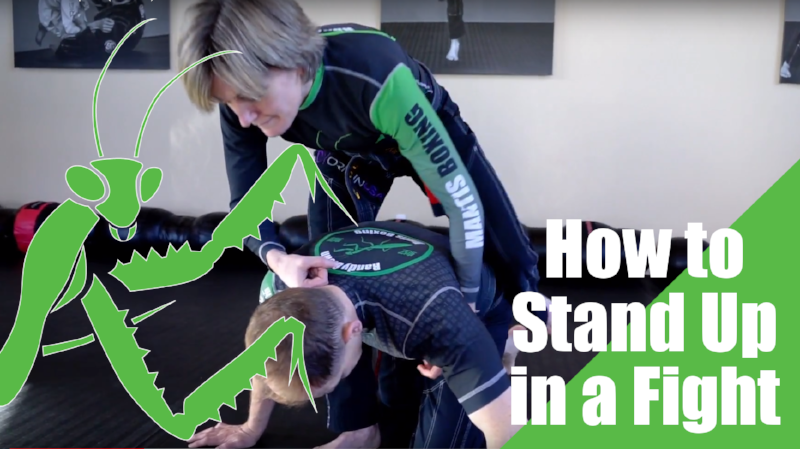
How and When to Stand Up in a Fight
Team Note: I know many of you who train with me will enjoy this video. Truth be told, I wish we had done it years ago because it is so fundamentally important. There isn't enough time in the day to practice everything, so feel free to take this and practice it whenever you can, and as much as you want.
Video Description: Whether we like it or not, sometimes we end up on the ground in a fight/altercation, or just a dangerous situation. When and how we stand up, can mean the difference between success and fail. Here are some tips for standing up when someone is waiting to pounce.
Team Note: I know many of you who train with me will enjoy this video. Truth be told, I wish we had done it years ago because it is so fundamentally important. There isn't enough time in the day to practice everything, so feel free to take this and practice it whenever you can, and as much as you want.
Video Description: Whether we like it or not, sometimes we end up on the ground in a fight/altercation, or just a dangerous situation. When and how we stand up, can mean the difference between success and fail. Here are some tips for standing up when someone is waiting to pounce.

Stop Your Opponents Crushing Side Control
Do you hate being crushed in your opponent's side control? Here's something I've been working on in my game that will hopefully help your game. Building a mountain under your opponents crushing side control can give you space and mobility for countering their attacks, and possibly bringing us to a better position.
Do you hate being crushed in your opponent's side control? Here's something I've been working on in my game that will hopefully help your game. Building a mountain under your opponents crushing side control can give you space and mobility for countering their attacks, and possibly bringing us to a better position.
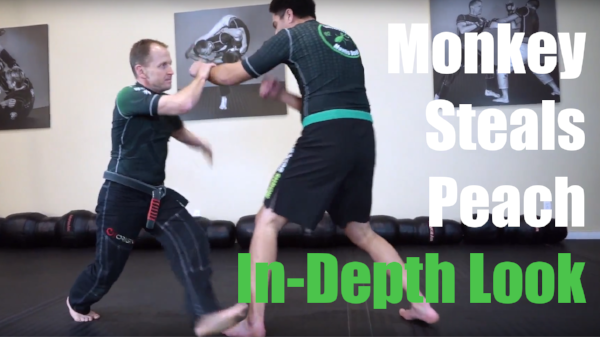
Monkey Steals Peach: In-Depth
An in-depth look at the Mantis Boxing move - Monkey Steals Peach. This is one of my favorite counters. Over the years, I've come to rely on a few follow-ups after people began countering the move, and we're including some small details to help you with the execution.

The Straight Punch - Throwing the Forward and Reverse Punch
The Straight Punch - devastating and destructive! Forward and Reverse punch are a good place to start when learning to punch in Mantis Boxing, or other striking arts. They are destructive, and can easily be modified to open hand strikes if necessary.
The following video shows the in's and out's of...
The Straight Punch - devastating and destructive! Forward and Reverse punch are a good place to start when learning to punch in Mantis Boxing, or other striking arts. They are destructive, and can easily be modified to open hand strikes if necessary.
The following video shows the in's and out's of starting to punch with these two strikes and some of the pitfalls to watch out for.
Using footwork with punches, increases the power, improves range, and helps keep us mobile instead of fixed. Check out pad drills, and blocking drills, or use these on a heavy bag to train on your own.
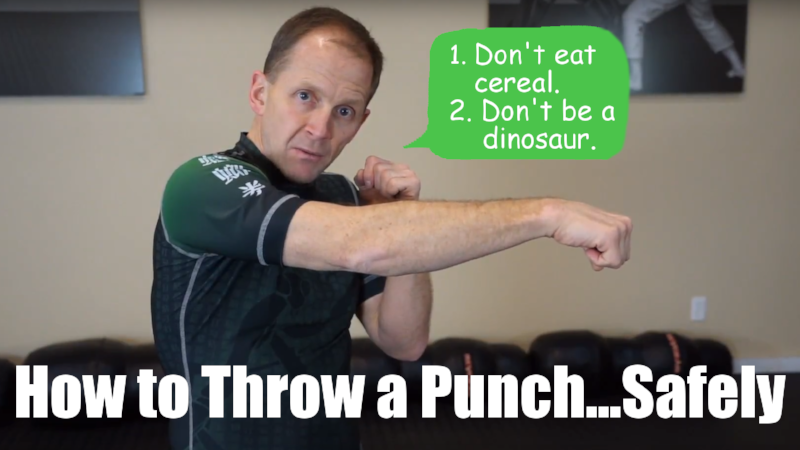
How to Throw a Punch...Safely
Having an improper structure, leaving a finger misplaced, or snapping our elbow, can all cause lasting damage, injuring ourselves more than the object we are trying to hit.
Whether we are hitting bags, pads, mitts, makiwara boards, or sparring partners, it's important to keep these tips in mind to keep us punching without injury for years to come.
Having an improper structure, leaving a finger misplaced, or snapping our elbow, can all cause lasting damage, injuring ourselves more than the object we are trying to hit.
Whether we are hitting bags, pads, mitts, makiwara boards, or sparring partners, it's important to keep these tips in mind to keep us punching without injury for years to come.

Hooking Legs
The Leg Hook is a great easy to use takedown, but sometimes our opponent steps out on us on our first attempt. Here, Thomas helps demonstrate how we use a combination of Mantis principles (strike, hook, pluck, hang, lean) to execute our initial outside leg hook attempt, and then a follow-up inside leg hook if they step out.
Afterwards we tackle the ground component and what happens if they immediately try to pull guard.
The Leg Hook is a great easy to use takedown, but sometimes our opponent steps out on us on our first attempt. Here, Thomas helps demonstrate how we use a combination of Mantis principles (strike, hook, pluck, hang, lean) to execute our initial outside leg hook attempt, and then a follow-up inside leg hook if they step out.
Afterwards we tackle the ground component and what happens if they immediately try to pull guard.
Thanks for watching.
--
Like the video? Hit subscribe and Get Hooked!

Bag Beatdowns for Brains 2017- Annual Alzheimer's Charity Boxing Drive
Bag Beatdowns for Brains is our annual Alzheimer's Research Charity Boxing event; a way for us to help raise funds for research to combat this devastating disease. Anyone can donate even if you can't attend the event (please spread the word).
Unleash your inner fury on a heavy bag for a good cause. Punch. Kick. Slam. Or show up to support someone else. Follow it up with some good eats prepared by a local cafe, and boxes of donated coffee.
Bag Beatdowns for Brains 2017
Our Annual Alzheimer's Charity Boxing Event
Coming Soon!!!

What is it?
Bag Beatdowns for Brains is our annual Alzheimer's Research Charity Boxing event; a way for us to help raise funds for research to combat this devastating disease. Anyone can donate even if you can't attend the event (please spread the word).
Unleash your inner fury on a heavy bag for a good cause. Punch. Kick. Slam. Or show up to support someone else. Follow it up with some good eats prepared by a local cafe, and boxes of donated coffee.
Let's come together and do our best to help put a dent in the cost of researching a solution, prevention, or cure. Help 'Punch Out' Alzheimer's! All are welcome.
Please sign-up for the event by email, in person, or on Facebook page. Thank you!
Date: Saturday, Nov 18
Deadline to Sign-Up: 11-14-17
Deadline to Donate: 11-20-17
Time: Heats start at 10am Sharp!
Location:
Randy Brown Mantis Boxing
930 Main Street
Acton, MA 01720
Last year, with your help, we raised over $3600 for Alzheimer's Research; beating our goal by well over a $1000!!!. This year we'll set the bar higher and see if we can beat it again. Let's make this an event that makes a difference!!!
No experience required. Adults and Kids welcome. All proceeds go to charity.
Sponsors

Our event shirts are brought to us by Cool As a Moose again this year. If you are in Maine on vacation, please stop in and say hello at one of their awesome stores.

We have some excellent food being donated for the event by Metropolitan Catering Co. in Westford, MA run by Ken Messinger and his crew. Once we wrap up the heats, we'll dig into some eats!!

Starbucks Westford is supporting the event again this year. The Manager Linda and her team will be providing boxes of coffee for everyone to enjoy. Awesome!

Bruce is an amazing designer and illustrator. His office is next door if you need Graphic Design work. Bruce has run magazines, and later helped start this dojo with me.

Our very own Dominic Breen located right in Chelmsford. Check him out for your IT solutions.

My top notch Brazilian Jiu-Jitsu teacher Andre 'Dedeco' Almeida is contributing again this year.
You will see him again in December for belt ceremony and workshop.

Eric Reardon changed my life with his nutrition expertise. You'll see him working out alongside you at the event. Pick his brain if you have questions.

Dr. Kate Kelly is one of my goto people when I'm dealing with an injury. I highly recommend her.

Another sponsor this year is Boston Kung Fu Tai Chi. Joshua Grant is an exceptional martial artist, athlete, and teacher. He is incredibly supportive of this event and our cause. Please visit if you are in Boston.

The Round Kick - Like a Dragon Lashing It's Tail
Here we help you set up the round kick without getting hit, run over, or shut down. Check out our video on Advanced Footwork if you need help with some of these angles.
This is an extremely powerful kick. It's like getting lashed by the tail of a dragon. When fighting, getting hit here can be a huge game changer. Whether we take our opponents leg out from under them, or we weaken/injure the leg to get them to change sides.
Here we help you set up the round kick without getting hit, run over, or shut down. Check out our video on Advanced Footwork if you need help with some of these angles.
This is an extremely powerful kick. It's like getting lashed by the tail of a dragon. When fighting, getting hit here can be a huge game changer. Whether we take our opponents leg out from under them, or we weaken/injure the leg to get them to change sides.
Check out these angles that can help you set up a good position to throw it from. Thanks for watching.
--
Like the video? Hit subscribe and Get Hooked!
►SUBSCRIBE on YouTube: https://www.youtube.com/mantisboxers
►Get FREE Email Updates on everything I do: http://randybrownmantisboxing.com/#contact-section
▼ FOLLOW ME ▼
FACEBOOK: https://www.facebook.com/RandyBrownMantisBoxer/
INSTAGRAM: https://www.instagram.com/randybrownmantisboxer/
Get Hooked!!!
★ LIKE ★ SHARE ★ SUBSCRIBE ★

I'm Not Ready For That.
Another article on the inner demons that get in the way of our training. This one - "I'm not ready for that."
"I'm not ready for that." is a healthy approach to training things that overwhelm us.
Here are a couple of counters to the standing guard pass to help your game. Years ago I learned the second of these moves at a workshop with Renan Borges. I was still a white belt at the time, and even though I really liked the move, it wasn't something I was ready for.
I filed it away in the "I like this, but I'm not ready for it right now. I'll do my best today, and someday I'll come back to this." A few months ago, it started reappearing in my rolls and here's how I integrated it and hopefully you can too. When you are ready.
Sickle Sweep - place the feet in the hips as they stand up. As they push the leg down, rotate your foot inside to help with leverage. Not necessary, but it can give a good bite on the hip.
Use your other arm to attack the ankle with an underhook. Push up with the foot in the hip, and slice the back of the ankle with your leg as you hold the other ankle.
Deep Pass Defense - when they step through more aggressively, it is difficult to get the leverage to apply the sickle sweep. Here we shoot the arm through the leg following with our head and shoulder. Think of the hand as the tip of the arrow, and the head is the feather.
Place the back of the tricep on the back of the leg to help finish rotating through. No need to pull the leg all the way through, and it is faster to use the shin with the other leg. Grab the ankles and leverage up.
You can then take the back, or attack the ankles.
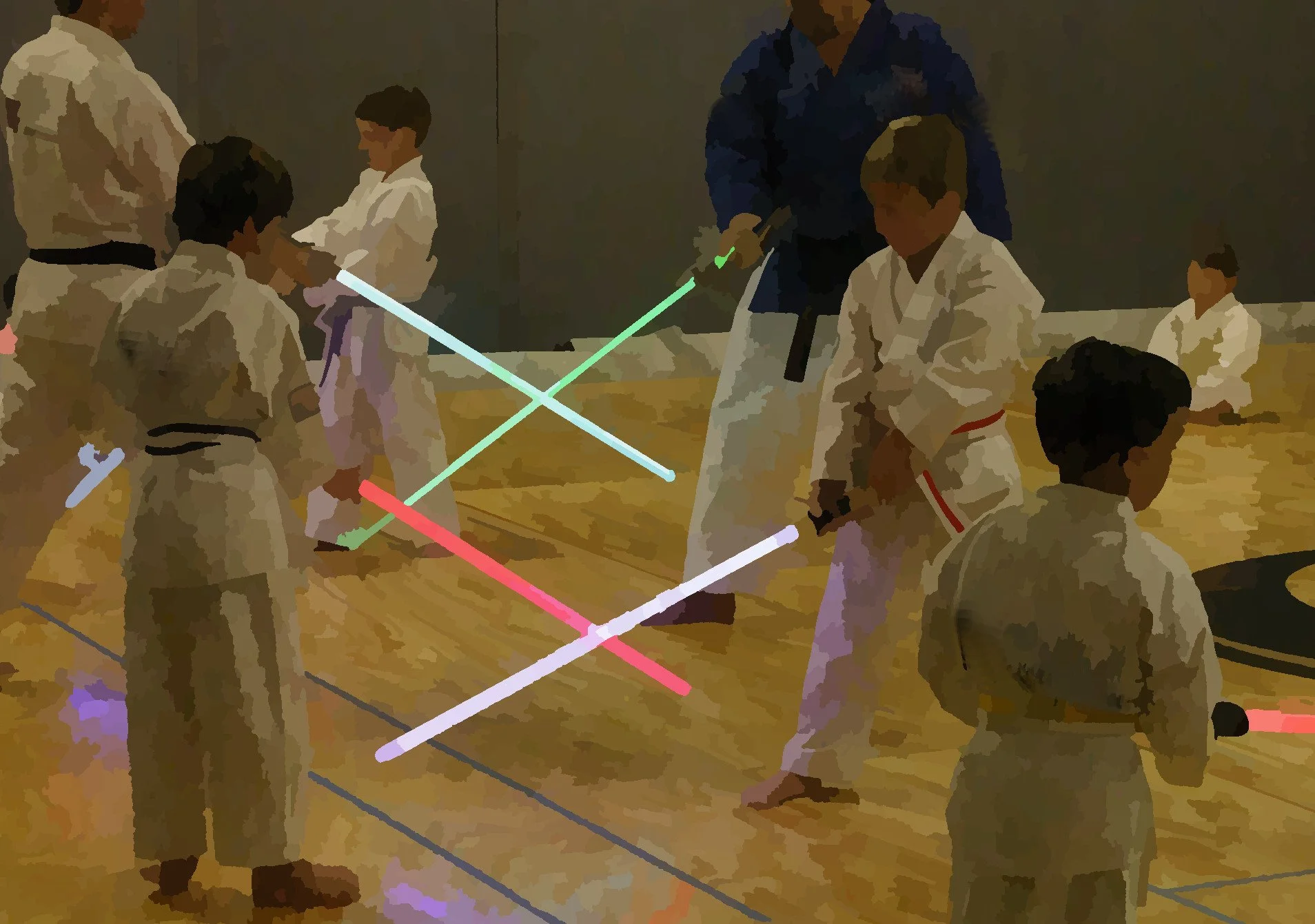
What Is Destroying Kids Martial Arts in America?
Are we as instructors providing a real service to the youth in our communities? Or just offering afterschool care with costumes?
An Open Letter to Parents with Kids interested in Martial Arts
When I was a child I wanted, deep within my core, to know martial arts. Martial arts as I saw it through -magazines, the back of comic books, or VHS tapes in the General Store. Martial arts embodied everything I sought and needed as a small person in this great big world - Confidence. Self-defense skills. Strength. The ability to equalize the playing field.
I was being bullied routinely in the neighborhood, school, and at home. I was often outmatched by someone else’s size and strength. Spirit just wasn’t enough to win battles most of the time. The methods and art of self-defense, at least from where I stood, offered hope for my small, and weary heart.
Unfortunately, there were no martial arts schools for 10’s of miles within our vicinity. By the time I lived close enough to a martial arts gym, I was working, going to school, and trying all I could to not draw the attention of current or pending bullies.
Thus, I never had the chance to undertake this endeavor as a child; when it would have benefited me in my trials and tribulations. It was not until I was an adult before I experienced the life changing benefits of martial arts. The power it holds in enabling us as individuals.
If I sought these life altering skills as a child, I am quite sure there are other children out there today that want the same things, and for the same reasons.
As I later became a coach/instructor myself, I followed the trends and examples of other kids martial arts programs across the nation. I fashioned my own kids training in a like manner, thinking this is what I had to do to be successful. To keep kids coming back. Even though I did not believe in it. And deep down it sickened me. I did this for years.

Eventually I quit teaching kids because I could not wrestle myself to continue on this path. It all seemed so phony. Years passed by and I focused solely on adults and teens. It still gnawed at me though. Kids should benefit from real martial arts training that they want, and/or need.
Never satisfied with the results or sticking with the status quo, I asked myself the following questions as I looked around at kids martial arts classes all over the nation:
Why are kids playing dodgeball, tag, and being chased/beaten with pool noodles in martial arts classes?
Why aren't children learning real skills that can empower them? Help them grow stronger, build character, gain confidence, and develop positive self-worth?
Are we as instructors providing a real service to the youth in our communities? Or just offering afterschool care with costumes?
I realized that these concepts and approaches were highly flawed. What we were doing as instructors was certainly was not what attracted me to martial arts as a child. Then and there, I set out to change things.
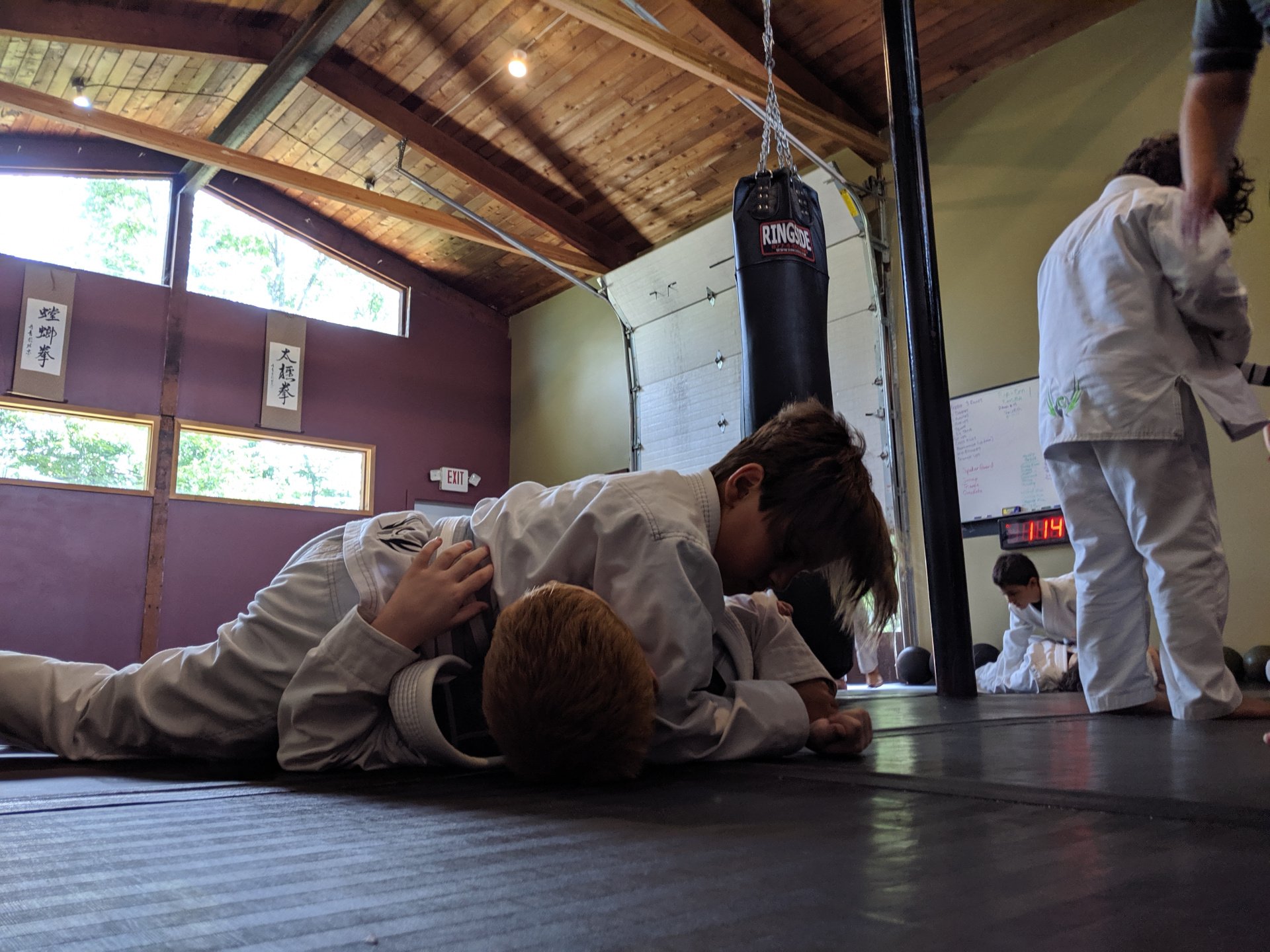
I went back to the drawing board and modeled my classes to be more in line with what was found in boxing, wrestling, judo, jiu-jitsu, and other martial arts that focus on empowering kids, rather than entertaining them.
The results speak for themselves. As can be seen by reviews of my program written by actual parents and kids alike. Yes, my classes have structure, respect, and discipline. Not because these are cool industry catchphrases for parents to sign their kids up for my classes, rather because these are necessary tenets to build the framework for a safe training environment. An environment where real skills are being taught.

Mutual respect and self-control are ingrained in the team to keep one another safe while helping one another learn to protect ourselves, and grow stronger. I treat kids with respect. I entrust them with powerful knowledge. I appreciate how intelligent they are even at a young age, and I encourage them to use these attributes in their team training.
My coaches follow in step. Our classes have a positive atmosphere with instructor guidance, not lecture, dogma, and lip service. I believe kids should have the freedom to express themselves, to create, and to help one another grow.
Children are provided time to work with one another solving problems and learning from their mistakes. The older more experienced kids help their newer and younger teammates. Thereby increasing their own understanding and gaining responsibility themselves.
If this sounds like a good environment, what you would like your child to be involved in, then I am happy to have them among the ranks of my team and look forward to meeting you soon.
Randy Brown
Head Instructor
RECENT UPDATE - SEPT 2022
Recently we ran an adult Mountain Training Camp in a resort destination in the mountains of New Hampshire, USA. Our first day of training outdoors in a field, we had a visitor.
The following is an excerpt of an actual conversation between an adult martial artist present at the camp who I will call Carl; Carl taught 1000’s of kids martial arts over the past decade, and a 10 year old girl who I will call Tammy. Tammy has 1+ years of Kids Karate experience.
Coach Carl: Tammy, what’s your favorite thing about Karate?
Tammy: Dodgeball!

Defending Against the Bear Hug - PASS vs. FAIL
Jumped from behind? Your opponent got position on you? No matter how it happened, it's a bad place to be. Join me and my special guest Sensei Ando as we show what to watch out for, and how to make one of the most commonly failed escapes, succeed.
Jumped from behind? Your opponent got position on you? No matter how it happened, it's a bad place to be. Join me and my special guest Sensei Ando as we show what to watch out for, and how to make one of the most commonly failed escapes, succeed.
►For more of Sensei Ando's tips and tactics, SUBSCRIBE to Sensei Ando: https://www.youtube.com/user/AndoMierzwa
►Also visit Sensei Ando's website here: http://senseiando.com
First thing to do is to drape the hands to defend the choke, and drop your stance to keep your center of gravity lower, making it difficult for your adversary to pick you up.
Next, it is important to realize that standard escapes with splitting the arms do not work unless your opponent makes a mistake. The objective of holding you from behind, unless a multi-attacker scenario, is to pick you up and slam you. This means, our adversary is going to grab us lower, around the elbows; making it impossible to split the arms and slink out.
After establishing control of the arms and a good wide base, start using your hammer fist attacks to the groin, combined with foot stomps to rattle your opponent and get them moving around. Remember to always use the 'outside' foot to stomp. Never the inside.
Since our opponent has widened their stance for stability and to avoid the attacks we are making, we can now make our first attempt to escape using the underhook to the single leg takedown.
Caution
Be careful not to walk out and stop. This is transitional only. We have to immediately move to the takedown, or re-establish our base and position if something went awry.
As you shoot for the single leg, if the opponent moves, or you do not have enough mobility to get a strong hook/position, then we can abandon that and use the elbow splitting escape that previously did not work. After all the moving around, chances are that the grip they had before, has slipped higher on our arms and we can make our secondary attempt a success.
Where to?
Once we're out of the bear hug, we want to look for a follow-up move to secure our position and turn the tides. Sensei Ando has a good go to he shows, followed by a variation I would use.
After the elbow split - immediately snag the neck hook position to keep control.
Ando
Attack the head with a knee to the face to soften them up. Maintain the neck hook and do not give up a strong position. Immediately follow up with a shoot underneath using the elbow in the groin to bring them over the back for a Fireman's Carry Takedown.
Tips: Sensei Ando makes note to watch the danger of the headlock as we're slipping out. Good tip. He also points out to tuck the foot so they don't land on you and break your toes.
Randy
I start off the same way and attack the head with a knee. I'm anticipating the block, but if they don't, even better. We're done here. If they do block as planned, then I shoot over the top and thread my arm under the neck all the way to the other underarm. Clasp the hands, and we have a nice guillotine setup. Use your shoulder to drop weight on them making it difficult for them to posture up and move. Follow this up with a nice reaping leg takedown variation for the finish.
The finish is up to you and your skillset. You can chuck them and go to a ground and pound, pound the ground package, or you can hold on to the guillotine, keep a solid position on the same side of the body as you started on, and finish the choke you already have.

Guest Post: Self Defense Mistake - Don't Just Stand There!
My friend Ando from SenseiAndo.com was in town this weekend teaching a workshop in Boston. We took some time to shoot a couple of videos for everyone (when we weren't...
My friend Ando from SenseiAndo.com was in town this weekend teaching a workshop in Boston. We took some time to shoot a couple of videos for everyone (when we weren't scoffing down ice cream). Here is his latest video on good self-defense training. Funny video and I know you'll enjoy.
Don't forget to hit Like, and Subscribe to his channel to get more training tips and advice. He's an open book.

Mantis Captures Prey - How to Stop the Underhooks
The underhook is a powerful tool in the hands of an opponent who knows how to use it. They have leverage, control, and setups for numerous takedowns. So how do we stop our opponent from getting the underhooks? With this awesome move from Taijiquan called Fist Under Elbow, and what I like to call Mantis Captures Prey.
The underhook is a powerful tool in the hands of an opponent who knows how to use it. They have leverage, control, and setups for numerous takedowns. So how do we stop our opponent from getting the underhooks? With this awesome move from Taijiquan called Fist Under Elbow, and what I like to call Mantis Captures Prey.
In this video, we'll walk you through 1. The dangers of the underhook. 2. How to shut it down. 3. Counters from our opponent to watch out for, such as the 2nd hand. 4. Spear Hands, Eagle Claws, and Reaping Legs. 5. Hook, don't Reap - how to vary the technique based on our opponents position.
Like the video? Don't forget to hit subscribe.

Martial Superiority: The Silent Assassin
When we look at one school versus another, and determine that one of them is promoting people to Black Belt with far easier requirements than we ourselves went through, or they are expecting less of their students than what we expect of our students, we can climb on our rickety soap box and take a stand against them, railing at the injustice of it all, or we can look at it like this...

View of Mt. Washington from 7000 feet - 2012
I had this amazing conversation the weekend before last, with two accomplished martial artists/teachers over lunch - Sensei Ando, and Sensei Dave Abraham.
During the discussion, we arrived on the topic of judging other schools, or the policing of other martial arts schools/styles because of what they are doing; whether said instruction, or the belt requirements not being up to standards.
I shared something that took me years to arrive at within myself, and what I believe is an important perspective to maintain for all of us as martial artists; especially, as teachers/mentors.
When we look at one school versus another, and determine that one of them is promoting people to Black Belt with far easier requirements than we ourselves went through, or they are expecting less of their students than what we expect of our students, we can climb on our rickety soap box and take a stand against them, railing at the injustice of it all, or we can look at it like this...
Harvard University does not concern itself with trashing lesser universities, community colleges, night schools. They do not publicly humiliate students of those institutions for taking classes there, nor for their effort they applied to achieve their goals under said curricula.
If you attend either school, an Ivy League, or a Community College, you will receive a bachelor's degree upon completion of the required courses/credits just the same. Both are Bachelor's degrees, both are opportunities to learn and grow. One of these holds more credibility, or esteem than the other, by outward appearances only. Yet the price tag attached along with it is far greater as well.
The individual who studies is the one who truly defines the value of the degree. Going to an ivy league school is not a qualifier that we received a good education. The inverse is true as well; going to a community college, or night school, is not definitive proof someone received a sub par education.
This judgement happens in the martial arts world as well. People use lineage, and even race, as a testimonial to the value of their belt. I have witnessed this first hand. If we study a Japanese Art, is our teacher from Japan? Did we go to Japan to study? The implication in the question being, that an answer of 'No', somehow makes your achievement less significant.
If we practice Brazilian Jiu-Jitsu, is our teacher Brazilian? Did we sweat in the dojo's of Rio? If we follow Chinese Martial Arts, is our teacher Chinese? These are seemingly innocent questions from the uninitiated, but I have seen more times than I can count, this being used as a bully tactic from those in the martial arts world. A world where we are largely responsible for empowering others to stop bullies.
A Mantis Boxing coach I trained with for years, is Mexican-Filipino. He jokes with people that he is 'Paco the Gardener'. Why? Where he lives, people will see him as that, long before recognizing him as a highly effective, and battle tested warrior.
"Not all Black Belts are created equal." - unknown
The quality of a Black Belt is another mountain we stand upon to look down upon others from on high. I have seen this in Mantis Boxing, Eagle Claw, Tai Chi; and it will become more prevalent in Brazilian Jiu-Jitsu as the art becomes more proliferated and widely spread.
The Tibetan Monks did not populate temples in the mountains to look down upon others, but rather to peer closer to the heavens.
Someone who received their belt from a no name individual, but trained diligently for years, persevering numerous trials; could, and at times does, outmatch a person who has had access to, and trained in the best facilities, with a famous fighter/teacher that awarded them their Black Belt.
The person makes the belt. The teacher is only a guide. We should be careful judging others, as it is simply Narcissism disguised as justification, goodwill, or constructive criticism.
Focus on what we have, be the best we can be, and we will rise above the fray. Stay focused on what everyone else is doing, and we will drag ourselves down into the mire.

Defending the Worst Position Ever!!
The High Mount combined with striking is a deadly combination. This is by far, one of the worst positions you can get stuck in on the ground. The traditional BJJ escape for mount - bridge, trap, and roll doesn't work quite yet, and meanwhile our opponent is raining punches on us, and bringing the thunder like Poseidon.
All too often, we panic in this situation and end up flailing, or trying to grab arms. Here we show a technique we call - 'Shield Up / Shimmy Up' to help you deal with this problematic position. We have to work from where we are, not where we want to be.
The High Mount combined with striking is a deadly combination. This is by far, one of the worst positions you can get stuck in on the ground. The traditional BJJ escape for mount - bridge, trap, and roll doesn't work quite yet, and meanwhile our opponent is raining punches on us, and bringing the thunder like Poseidon.
All too often, we panic in this situation and end up flailing, or trying to grab arms. Here we show a technique we call - 'Shield Up / Shimmy Up' to help you deal with this problematic position. We have to work from where we are, not where we want to be.
Like the video? Don't forget to hit subscribe.

Martial Arts vs Self-Defense Training
Basic self-defense knowledge can mean the difference between life and death, or assault and avoidance, but is it necessary in suburban America? If so, what is the best type of training for you? How do you find a good course, or even know what to look for? How involved does the training need to be for it to be effective? Click this article to find out.
Basic self-defense knowledge can mean the difference between life and death, or assault and avoidance, but is self-defense training necessary in suburban America? If so, what is the best type of training for you — a martial arts class (kung fu, karate, judo, jiu-jitsu, wrestling, boxing, etc), or a quick one-off self-defense class?
How do you find a good martial arts class, or self-defense course, or even know what to look for? How involved does the training need to be for it to be effective? Let’s start with what type of training best suits your needs.

What type of training - Martial Arts or Self-Defense?
Martial arts IS self-defense training, right? Not quite, and the difference between ‘Martial Arts vs Self-Defense Training’ can mean achieving your goals in the short-term, or delaying them for years to come. While a majority of martial arts styles do teach self-defense, there are just as many that do not. In addition, the pace to reach competency, to apply your training in real world scenarios, can be long and arduous and not always conducive to your body type, or strength capacity in that particular style of fighting.
Another trap is, some styles of martial arts focus predominantly on competition fighting which, due to rules, prevents you from training to hit targets you would normally want to hit in a real attack in order to quickly, and expediently disable an attacker that is trying to take your life, your virtue, or harm a loved one. Here’s an article you can read later on why simply knowing where to hit someone, is not enough. We have to train it - The Truth of the Effective Strike Principle
Martial Arts
Martial arts is phenomenal, but this approach is better if your self-defense goals are less ‘urgent’, and if they also include lifestyle improvement such as - confidence, self-esteem, fitness level, perfecting combat skills; while also enjoying the process of learning, camaraderie, training regimen and overall self-improvement. An amazing evolution takes place while studying martial arts, one unmatched in other sports and activities, and this is a powerful tool that has improved my own life, as well as hundreds of students who have joined me on this journey.
While I do highly recommend martial arts training to you if you are looking for self-defense training, if you ‘require’ this skillset with any sort of expediency, you are better off focusing on a concentrated course, rather than martial arts. For example, in Brazilian jiu-jitsu it can take 4 to 6 years of training to be competent at defending yourself against a wide range of attackers with varying size, shapes, and skills. This still does not address the lack of training in strike or kick defense, and will focus so much on the ground fight, that the stand-up grapple (shoves, trips, takedowns, throws) are minuscule.
In my experience, most BJJ gyms and coaches, focus so much on sport, they fail to address basic defense of someone striking you while on the ground. This can completely incapacitate a highly experienced BJJ grappler in seconds, as seen by countless MMA fights where high level jiu-jitsu grapplers entered the cage with little to no striking experience. This is no unique to BJJ gyms, and happens in any sport focused martial art. The time and energy is not spent on self-defense specific skills, as competition is the focus.
Self-Defense
The training methodology and techniques in a self-defense course are typically, and should definitely, be streamlined and focused. While it lacks the benefits of self-improvement, personal growth, teamwork, goal achievement, and fun, that one gets from training martial arts, it is replaced by short term, combat oriented training that produces effective results - i.e., quick, simple methods to get you out of a bad situation.
Self-Defense training is something I highly recommend if you are interested solely in protecting yourself and/or your loved ones. It is for men, women, adults and teens of any size, shape, and fitness level. It should not require you to be at a certain level of fitness in order to perform the techniques.
A self-defense course is especially relevant to you, if you are in a line of work that requires skills to protect you in the line of duty, e.g. soldiers, law enforcement, corrections officers, security guards, bodyguards. Or, those frequently by themselves in remote locations - gas station attendants, convenience store clerks, real estate agents, couriers, etc., or those who work after hours or close down a business alone or in small numbers.
Do you really need a course like this?
There are many reasons we can find to spend our free time doing activities we enjoy, working around the house, or shuffling from one activity to the next, or just enjoying a breather from school/work. Here are a few things to consider when deciding whether or not to invest your time and money into a self-defense course.
Do you plan to travel?
Are you going to, or returning to college?
Do you work a high risk job?
Do you live alone?
Do you reside, or work in a high risk environment?
Do you experience anxiety, or fear over past*, or perceived threat situations?
There are many reasons to take a course like this. No one plans to be attacked and need something like this. Then again, no one plans on drowning either, but most of us still learn to swim. You never really need a self-defense course, until you REALLY need one.
Taking one at least once in your life can make a difference. Know a few basic ways to defend yourself without a firearm, spray, or other weapon in the event of a dire circumstance is sound logic.
*Warning - if you have experienced a traumatic attack in the past, a course like this can revisit these traumatic experiences. While it is possible it can help overcome fears and anxieties, and teach you how to solve a problem that still plagues you, it is advised to speak with a medical professional prior to taking a course.
How do you find a good self-defense course?
S.E.E. - Look for a course that promotes principles such as - simple, easy, highly effective. Courses that rely on multi-step responses to a bad guy's attack, or the over-reliance on ‘fine motor skills’ vs gross motor skills, will fail you when you need them most.
Simple, clean techniques that use gross motor function, and are reinforced through repetition will be reliable under dire stress and an adrenaline dump.
Martial Arts training uses repetition to reinforce fine motor skills in combat over a much longer period of time. A weekend warrior style self-defense course should rely heavily on gross movements, the type that your body uses under duress.ZERO PUNCHING - This is so important. Your course of choice should address physical differences such as size, gender, strength, and not rely predominantly on punching. Punching, apart from being a refined skill that takes months, or years of practice in and of itself, will be harder for smaller and/or weaker opponents to produce enough stopping power to disable or slow down an aggressive attacker. Think 115 lbs woman versus 280 lbs male.
Keep in mind: the human skull has evolved over millions of years to protect the brain inside of it. It's hard, and not meant to crumble at the first hint of danger. Quoting a bike-helmet study published in the Journal of Neurosurgery: Pediatrics,
"235 kg (520 pounds) or 2,300 newtons of force would be needed to crush a human skull, almost twice as much force as human hands could possibly muster."
Punching the head can lead to breaking your hand. There are better ways to defend yourself.Strength Not Required - (don’t read this if you are sensitive) there are great self-defense oriented training programs out there. Krav Maga, an Israeli armed forces program, is an example. For what it was designed for, it is amazing! Who was it designed for? Highly trained, physically fit, special force commandos caught in hand-to-hand combat situations against an untrained, unfit, and often surprised, indigenous combatant.
Much to their chagrin, and this will likely get me in hot water - it is NOT, a suitable form of self-defense for college women, high school girls, suburban housewives, etc. I do not deem it fit for women in general, because that is NOT who it was designed for, and it’s success criteria will not work if you are smaller, weaker in stature than the opponent. Before you send me hateful comments - it is not fit for ME either. I’m a smaller male, and I found it problematic using the techniques against larger opponents.
I don’t sugar coat things when it comes to defending people’s lives. There are obvious anatomical differences ‘in general’ between women, and men. Knowing this, and choosing a course that takes this into account, no matter what your gender, is important. Know your strength/condition before undertaking a specific style of training. While I respect the Krav Maga training methods, this style ‘requires’ strength, speed, and highly aggressive bursts in order for it to work. Smaller, out of shape - find something that uses solid techniques/principles to work, rather than 2 years of combat training.Scenarios - Scenario training puts you in a stressful situation against a suited attacker so you can test the material you learned. Stress has an amazing ability to reinforce learned material in the brain. Having the opportunity to use what you learned, gives you the confidence to know that it works, and you can succeed. Make sure the course offers some type of stress testing.
Length - the length of the course should be relatively short. 40 hours of self-defense training is not a bad thing, but if 40 hours is required in order to get you through all the material, then see my previous statement on simplicity and efficacy under stress.
Usually a two hour focused course is 'ok', but should not be all encompassing. 8 to 12 hours of training is substantial, and if reinforced every few years, can be extremely beneficial.Types of Attacks - look for courses that cover defenses from common attacks such as: body/neck holds, grabs; while promoting the use of weapons you will have on you at all times (your limbs).
Reaching in your purse, or pocket for a weapon when being caught off guard, takes away the use of your natural weapons that could be better used to defend yourself.Weapons - some courses offer Kubotan training, or pepper spray/mace solutions in their arsenal. Weapons can be great tools, but do you have it on you at all times? Is it accessible? What happens if the attacker takes it away from you? Are you prepared for defending against your own weapon if it is taken away from you? Weapons can be excellent tools, but in civilized nations/environments, how likely are you to be able to access it when needed?
THE GROUND - I can’t stress this one enough. The course you take should absolutely address ground self-defense. Anyone can end up on the ground in an altercation, and many attacks end up here especially in sexual assault situations. Make sure the course offers extensive knowledge and training on how to deal with a larger, stronger, heavier attacker that has you pinned on the ground. Again, with simple, and effective techniques!
Verbal Boundaries - For some of us (specifically those that have trouble telling other people “no”), this can be the toughest type of training, but the most rewarding.
Ideally a you take course offers scenario training with suited attackers, but depending on your goals, and situation, you may want to address 'verbal boundaries', and how to deal with obnoxious, what I like to call 'space invaders'. Think creepy family friend or relative that likes to touch you while no one is looking. Or the person on your commuter train that puts their hands where they don’t belong. These are subtler situations that much akin to ‘date rape’, do not always warrant a full on death dealing blow. Rather, a lower-key response that sends a strong message you are not a willing participant in their sick fantasy.
Weapon Disarmament Courses
Weapon disarm courses should be considered with extreme care. Gun disarms are a viable training course and highly useful knowledge to have. While knife defense training is a slippery slope.
Knives are very dangerous!!! Buyer beware. It is extremely difficult to teach knife defense to an untrained person, especially in a short course. Also, there are many knife defense techniques that will not work, and are based off of unrealistic attack styles (Jim Carey’s ‘In Living Color’ skit comes to mind - see below). Be careful, and skeptical when seeking out knife defense training. Ask around before signing up for one.
If taking a gun disarm course, a quick tell on whether or not the material you are learning will work is this: does the move account for someone pulling the gun away while you are trying to perform the technique?
How much should it cost?
What should a self-defense course cost? The field varies from free courses, to expensive courses, and anything in between. We’ve all heard the saying “You get what you pay for.”, but let’s add a little perspective.
Free Courses
Sometimes a person offering a free course is doing so because they believe strongly in helping others to avoid becoming a victim. It is not a direct indicator of low quality. Perhaps they were a victim themselves at one time, and decided to channel their horrible experience into something positive in an altruistic manner.
We live in a monetary based society, and like it or not, we rate the value of something based on the price. This is good, and bad. Charging money for something does not automatically mean it is of higher quality. It is ultimately up to the consumer to research the courses, or try the free one first, and see if it is adequate by using some of the suggestions/criteria above. If you are satisfied and received a good service, then count yourself ahead.
Paid Courses
When dealing with paid courses, how much is too much? This becomes tricky. We’re not simply talking about life or death; the true ‘cost of living’ can mean surviving a sexual assault, mugging, or domestic violence, and avoiding the emotional trauma for years or decades to follow.
If these situations can be avoided altogether, the savings in monetary, emotional, psychological, and physical currency will be priceless.
Choosing a good course and instructor is priority one above all else. In the end, you will walk away feeling that you can rely on the material you learned, and hopefully never need it!
photos courtesy of Max Kotchouro

How to Escape the Bow and Arrow Choke
I absolutely love the Bow and Arrow choke, but it sucks to be on the receiving end. Here we demonstrate the choke, an escape from the choke, and then how to prepare yourself for your next move after you release the choke.
I absolutely love the Bow and Arrow choke, but it sucks to be on the receiving end. Here we demonstrate the choke, an escape from the choke, and then how to prepare yourself for your next move after you release the choke.
Having an exit strategy can really help shut down the counters our opponent may throw at us.
Like the video? Don't forget to hit subscribe.