
The Straight Punch - Throwing the Forward and Reverse Punch
The Straight Punch - devastating and destructive! Forward and Reverse punch are a good place to start when learning to punch in Mantis Boxing, or other striking arts. They are destructive, and can easily be modified to open hand strikes if necessary.
The following video shows the in's and out's of...
The Straight Punch - devastating and destructive! Forward and Reverse punch are a good place to start when learning to punch in Mantis Boxing, or other striking arts. They are destructive, and can easily be modified to open hand strikes if necessary.
The following video shows the in's and out's of starting to punch with these two strikes and some of the pitfalls to watch out for.
Using footwork with punches, increases the power, improves range, and helps keep us mobile instead of fixed. Check out pad drills, and blocking drills, or use these on a heavy bag to train on your own.
How to Throw a Punch...Safely
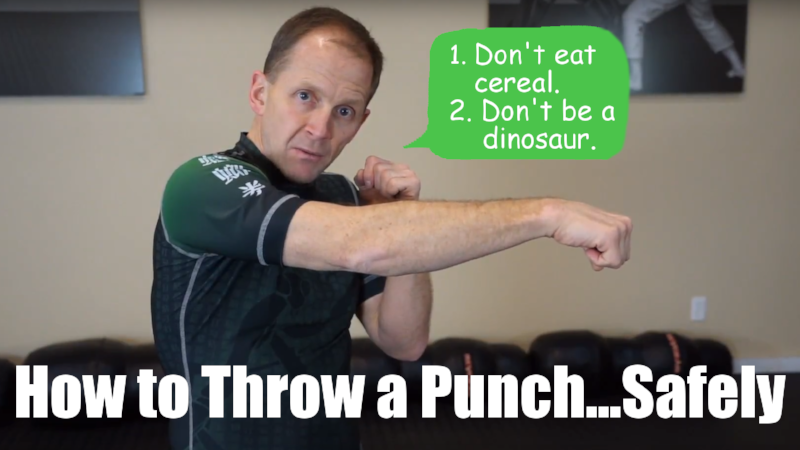
Having an improper structure, leaving a finger misplaced, or snapping our elbow, can all cause lasting damage, injuring ourselves more than the object we are trying to hit.
Whether we are hitting bags, pads, mitts, makiwara boards, or sparring partners, it's important to keep these tips in mind to keep us punching without injury for years to come.
Having an improper structure, leaving a finger misplaced, or snapping our elbow, can all cause lasting damage, injuring ourselves more than the object we are trying to hit.
Whether we are hitting bags, pads, mitts, makiwara boards, or sparring partners, it's important to keep these tips in mind to keep us punching without injury for years to come.

Hooking Legs
The Leg Hook is a great easy to use takedown, but sometimes our opponent steps out on us on our first attempt. Here, Thomas helps demonstrate how we use a combination of Mantis principles (strike, hook, pluck, hang, lean) to execute our initial outside leg hook attempt, and then a follow-up inside leg hook if they step out.
Afterwards we tackle the ground component and what happens if they immediately try to pull guard.
The Leg Hook is a great easy to use takedown, but sometimes our opponent steps out on us on our first attempt. Here, Thomas helps demonstrate how we use a combination of Mantis principles (strike, hook, pluck, hang, lean) to execute our initial outside leg hook attempt, and then a follow-up inside leg hook if they step out.
Afterwards we tackle the ground component and what happens if they immediately try to pull guard.
Thanks for watching.
--
Like the video? Hit subscribe and Get Hooked!

Bag Beatdowns for Brains 2017- Annual Alzheimer's Charity Boxing Drive
Bag Beatdowns for Brains is our annual Alzheimer's Research Charity Boxing event; a way for us to help raise funds for research to combat this devastating disease. Anyone can donate even if you can't attend the event (please spread the word).
Unleash your inner fury on a heavy bag for a good cause. Punch. Kick. Slam. Or show up to support someone else. Follow it up with some good eats prepared by a local cafe, and boxes of donated coffee.
Bag Beatdowns for Brains 2017
Our Annual Alzheimer's Charity Boxing Event
Coming Soon!!!

What is it?
Bag Beatdowns for Brains is our annual Alzheimer's Research Charity Boxing event; a way for us to help raise funds for research to combat this devastating disease. Anyone can donate even if you can't attend the event (please spread the word).
Unleash your inner fury on a heavy bag for a good cause. Punch. Kick. Slam. Or show up to support someone else. Follow it up with some good eats prepared by a local cafe, and boxes of donated coffee.
Let's come together and do our best to help put a dent in the cost of researching a solution, prevention, or cure. Help 'Punch Out' Alzheimer's! All are welcome.
Please sign-up for the event by email, in person, or on Facebook page. Thank you!
Date: Saturday, Nov 18
Deadline to Sign-Up: 11-14-17
Deadline to Donate: 11-20-17
Time: Heats start at 10am Sharp!
Location:
Randy Brown Mantis Boxing
930 Main Street
Acton, MA 01720
Last year, with your help, we raised over $3600 for Alzheimer's Research; beating our goal by well over a $1000!!!. This year we'll set the bar higher and see if we can beat it again. Let's make this an event that makes a difference!!!
No experience required. Adults and Kids welcome. All proceeds go to charity.
Sponsors

Our event shirts are brought to us by Cool As a Moose again this year. If you are in Maine on vacation, please stop in and say hello at one of their awesome stores.

We have some excellent food being donated for the event by Metropolitan Catering Co. in Westford, MA run by Ken Messinger and his crew. Once we wrap up the heats, we'll dig into some eats!!

Starbucks Westford is supporting the event again this year. The Manager Linda and her team will be providing boxes of coffee for everyone to enjoy. Awesome!

Bruce is an amazing designer and illustrator. His office is next door if you need Graphic Design work. Bruce has run magazines, and later helped start this dojo with me.

Our very own Dominic Breen located right in Chelmsford. Check him out for your IT solutions.

My top notch Brazilian Jiu-Jitsu teacher Andre 'Dedeco' Almeida is contributing again this year.
You will see him again in December for belt ceremony and workshop.

Eric Reardon changed my life with his nutrition expertise. You'll see him working out alongside you at the event. Pick his brain if you have questions.

Dr. Kate Kelly is one of my goto people when I'm dealing with an injury. I highly recommend her.

Another sponsor this year is Boston Kung Fu Tai Chi. Joshua Grant is an exceptional martial artist, athlete, and teacher. He is incredibly supportive of this event and our cause. Please visit if you are in Boston.

The Round Kick - Like a Dragon Lashing It's Tail
Here we help you set up the round kick without getting hit, run over, or shut down. Check out our video on Advanced Footwork if you need help with some of these angles.
This is an extremely powerful kick. It's like getting lashed by the tail of a dragon. When fighting, getting hit here can be a huge game changer. Whether we take our opponents leg out from under them, or we weaken/injure the leg to get them to change sides.
Here we help you set up the round kick without getting hit, run over, or shut down. Check out our video on Advanced Footwork if you need help with some of these angles.
This is an extremely powerful kick. It's like getting lashed by the tail of a dragon. When fighting, getting hit here can be a huge game changer. Whether we take our opponents leg out from under them, or we weaken/injure the leg to get them to change sides.
Check out these angles that can help you set up a good position to throw it from. Thanks for watching.
--
Like the video? Hit subscribe and Get Hooked!
►SUBSCRIBE on YouTube: https://www.youtube.com/mantisboxers
►Get FREE Email Updates on everything I do: http://randybrownmantisboxing.com/#contact-section
▼ FOLLOW ME ▼
FACEBOOK: https://www.facebook.com/RandyBrownMantisBoxer/
INSTAGRAM: https://www.instagram.com/randybrownmantisboxer/
Get Hooked!!!
★ LIKE ★ SHARE ★ SUBSCRIBE ★

I'm Not Ready For That.
Another article on the inner demons that get in the way of our training. This one - "I'm not ready for that."
"I'm not ready for that." is a healthy approach to training things that overwhelm us.
Here are a couple of counters to the standing guard pass to help your game. Years ago I learned the second of these moves at a workshop with Renan Borges. I was still a white belt at the time, and even though I really liked the move, it wasn't something I was ready for.
I filed it away in the "I like this, but I'm not ready for it right now. I'll do my best today, and someday I'll come back to this." A few months ago, it started reappearing in my rolls and here's how I integrated it and hopefully you can too. When you are ready.
Sickle Sweep - place the feet in the hips as they stand up. As they push the leg down, rotate your foot inside to help with leverage. Not necessary, but it can give a good bite on the hip.
Use your other arm to attack the ankle with an underhook. Push up with the foot in the hip, and slice the back of the ankle with your leg as you hold the other ankle.
Deep Pass Defense - when they step through more aggressively, it is difficult to get the leverage to apply the sickle sweep. Here we shoot the arm through the leg following with our head and shoulder. Think of the hand as the tip of the arrow, and the head is the feather.
Place the back of the tricep on the back of the leg to help finish rotating through. No need to pull the leg all the way through, and it is faster to use the shin with the other leg. Grab the ankles and leverage up.
You can then take the back, or attack the ankles.
What Is Destroying Kids Martial Arts in America?
Are we as instructors providing a real service to the youth in our communities? Or just offering afterschool care with costumes?
An Open Letter to Parents with Kids interested in Martial Arts
When I was a child I wanted, deep within my core, to know martial arts. Martial arts as I saw it through -magazines, the back of comic books, or VHS tapes in the General Store. Martial arts embodied everything I sought and needed as a small person in this great big world - Confidence. Self-defense skills. Strength. The ability to equalize the playing field.
I was being bullied routinely in the neighborhood, school, and at home. I was often outmatched by someone else’s size and strength. Spirit just wasn’t enough to win battles most of the time. The methods and art of self-defense, at least from where I stood, offered hope for my small, and weary heart.
Unfortunately, there were no martial arts schools for 10’s of miles within our vicinity. By the time I lived close enough to a martial arts gym, I was working, going to school, and trying all I could to not draw the attention of current or pending bullies.
Thus, I never had the chance to undertake this endeavor as a child; when it would have benefited me in my trials and tribulations. It was not until I was an adult before I experienced the life changing benefits of martial arts. The power it holds in enabling us as individuals.
If I sought these life altering skills as a child, I am quite sure there are other children out there today that want the same things, and for the same reasons.
As I later became a coach/instructor myself, I followed the trends and examples of other kids martial arts programs across the nation. I fashioned my own kids training in a like manner, thinking this is what I had to do to be successful. To keep kids coming back. Even though I did not believe in it. And deep down it sickened me. I did this for years.

Eventually I quit teaching kids because I could not wrestle myself to continue on this path. It all seemed so phony. Years passed by and I focused solely on adults and teens. It still gnawed at me though. Kids should benefit from real martial arts training that they want, and/or need.
Never satisfied with the results or sticking with the status quo, I asked myself the following questions as I looked around at kids martial arts classes all over the nation:
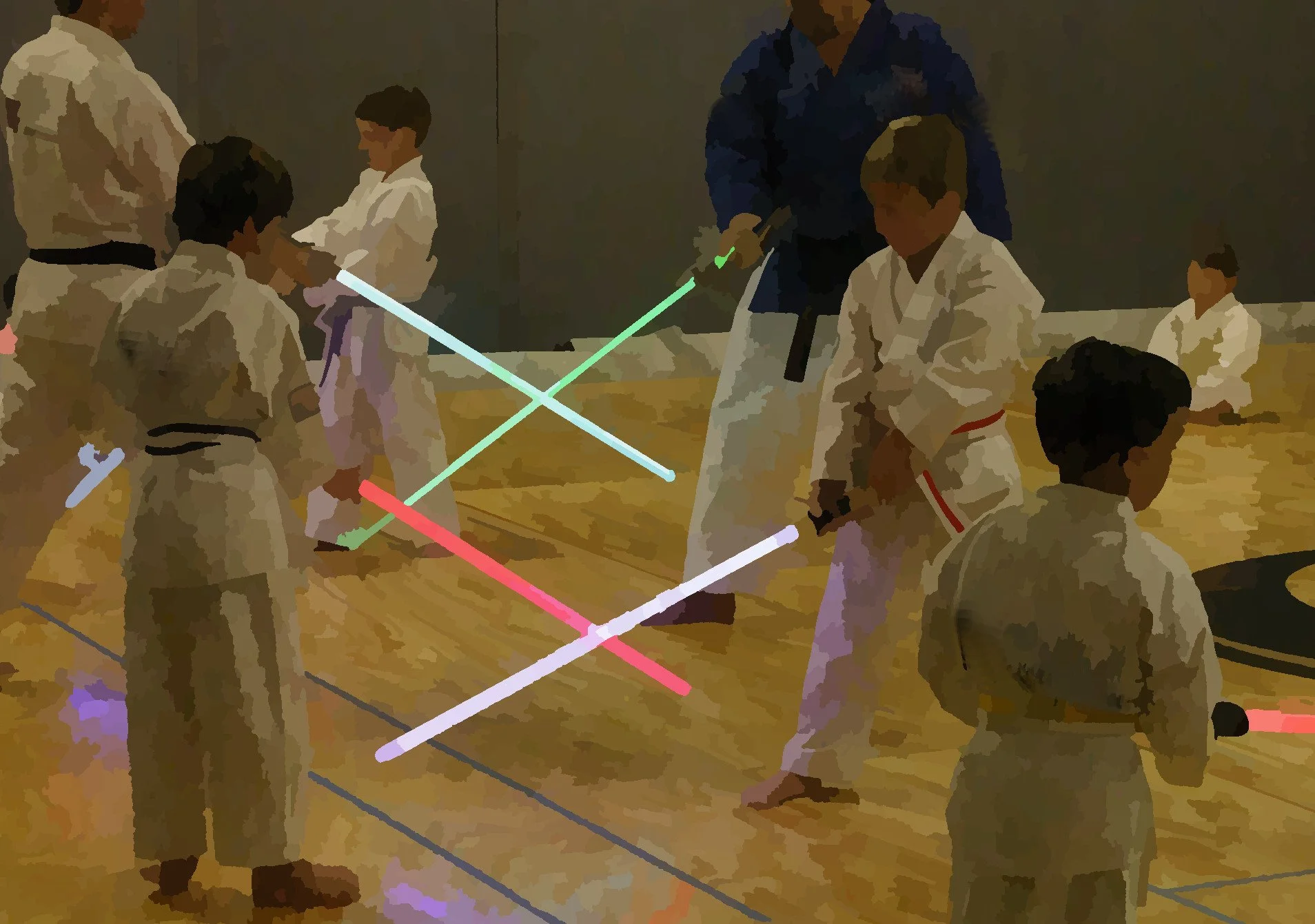
Why are kids playing dodgeball, tag, and being chased/beaten with pool noodles in martial arts classes?
Why aren't children learning real skills that can empower them? Help them grow stronger, build character, gain confidence, and develop positive self-worth?
Are we as instructors providing a real service to the youth in our communities? Or just offering afterschool care with costumes?
I realized that these concepts and approaches were highly flawed. What we were doing as instructors was certainly was not what attracted me to martial arts as a child. Then and there, I set out to change things.
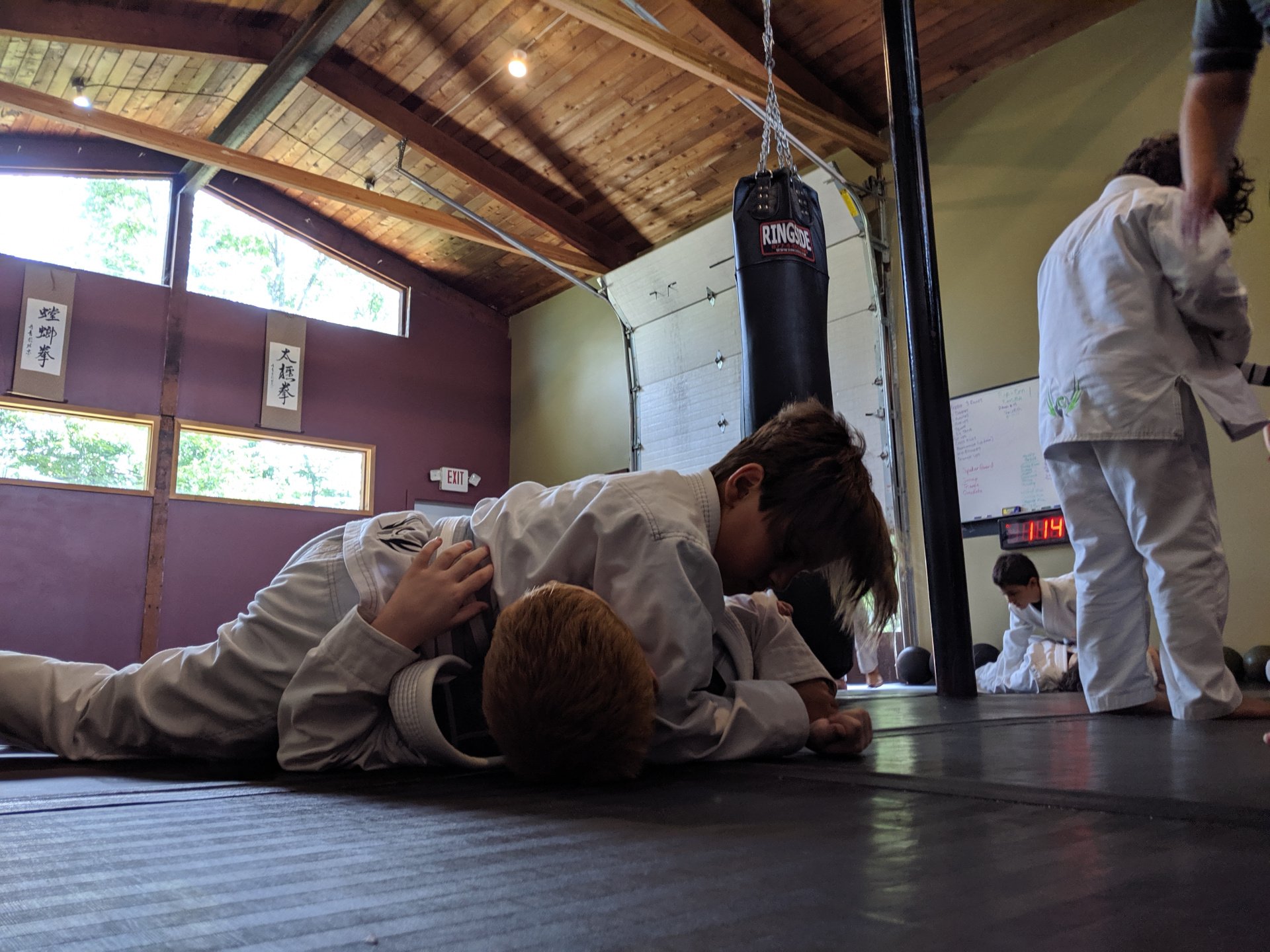
I went back to the drawing board and modeled my classes to be more in line with what was found in boxing, wrestling, judo, jiu-jitsu, and other martial arts that focus on empowering kids, rather than entertaining them.
The results speak for themselves. As can be seen by reviews of my program written by actual parents and kids alike. Yes, my classes have structure, respect, and discipline. Not because these are cool industry catchphrases for parents to sign their kids up for my classes, rather because these are necessary tenets to build the framework for a safe training environment. An environment where real skills are being taught.

Mutual respect and self-control are ingrained in the team to keep one another safe while helping one another learn to protect ourselves, and grow stronger. I treat kids with respect. I entrust them with powerful knowledge. I appreciate how intelligent they are even at a young age, and I encourage them to use these attributes in their team training.
My coaches follow in step. Our classes have a positive atmosphere with instructor guidance, not lecture, dogma, and lip service. I believe kids should have the freedom to express themselves, to create, and to help one another grow.
Children are provided time to work with one another solving problems and learning from their mistakes. The older more experienced kids help their newer and younger teammates. Thereby increasing their own understanding and gaining responsibility themselves.
If this sounds like a good environment, what you would like your child to be involved in, then I am happy to have them among the ranks of my team and look forward to meeting you soon.
Randy Brown
Head Instructor
RECENT UPDATE - SEPT 2022
Recently we ran an adult Mountain Training Camp in a resort destination in the mountains of New Hampshire, USA. Our first day of training outdoors in a field, we had a visitor.
The following is an excerpt of an actual conversation between an adult martial artist present at the camp who I will call Carl; Carl taught 1000’s of kids martial arts over the past decade, and a 10 year old girl who I will call Tammy. Tammy has 1+ years of Kids Karate experience.
Coach Carl: Tammy, what’s your favorite thing about Karate?
Tammy: Dodgeball!

Defending Against the Bear Hug - PASS vs. FAIL
Jumped from behind? Your opponent got position on you? No matter how it happened, it's a bad place to be. Join me and my special guest Sensei Ando as we show what to watch out for, and how to make one of the most commonly failed escapes, succeed.
Jumped from behind? Your opponent got position on you? No matter how it happened, it's a bad place to be. Join me and my special guest Sensei Ando as we show what to watch out for, and how to make one of the most commonly failed escapes, succeed.
►For more of Sensei Ando's tips and tactics, SUBSCRIBE to Sensei Ando: https://www.youtube.com/user/AndoMierzwa
►Also visit Sensei Ando's website here: http://senseiando.com
First thing to do is to drape the hands to defend the choke, and drop your stance to keep your center of gravity lower, making it difficult for your adversary to pick you up.
Next, it is important to realize that standard escapes with splitting the arms do not work unless your opponent makes a mistake. The objective of holding you from behind, unless a multi-attacker scenario, is to pick you up and slam you. This means, our adversary is going to grab us lower, around the elbows; making it impossible to split the arms and slink out.
After establishing control of the arms and a good wide base, start using your hammer fist attacks to the groin, combined with foot stomps to rattle your opponent and get them moving around. Remember to always use the 'outside' foot to stomp. Never the inside.
Since our opponent has widened their stance for stability and to avoid the attacks we are making, we can now make our first attempt to escape using the underhook to the single leg takedown.
Caution
Be careful not to walk out and stop. This is transitional only. We have to immediately move to the takedown, or re-establish our base and position if something went awry.
As you shoot for the single leg, if the opponent moves, or you do not have enough mobility to get a strong hook/position, then we can abandon that and use the elbow splitting escape that previously did not work. After all the moving around, chances are that the grip they had before, has slipped higher on our arms and we can make our secondary attempt a success.
Where to?
Once we're out of the bear hug, we want to look for a follow-up move to secure our position and turn the tides. Sensei Ando has a good go to he shows, followed by a variation I would use.
After the elbow split - immediately snag the neck hook position to keep control.
Ando
Attack the head with a knee to the face to soften them up. Maintain the neck hook and do not give up a strong position. Immediately follow up with a shoot underneath using the elbow in the groin to bring them over the back for a Fireman's Carry Takedown.
Tips: Sensei Ando makes note to watch the danger of the headlock as we're slipping out. Good tip. He also points out to tuck the foot so they don't land on you and break your toes.
Randy
I start off the same way and attack the head with a knee. I'm anticipating the block, but if they don't, even better. We're done here. If they do block as planned, then I shoot over the top and thread my arm under the neck all the way to the other underarm. Clasp the hands, and we have a nice guillotine setup. Use your shoulder to drop weight on them making it difficult for them to posture up and move. Follow this up with a nice reaping leg takedown variation for the finish.
The finish is up to you and your skillset. You can chuck them and go to a ground and pound, pound the ground package, or you can hold on to the guillotine, keep a solid position on the same side of the body as you started on, and finish the choke you already have.

Guest Post: Self Defense Mistake - Don't Just Stand There!
My friend Ando from SenseiAndo.com was in town this weekend teaching a workshop in Boston. We took some time to shoot a couple of videos for everyone (when we weren't...
My friend Ando from SenseiAndo.com was in town this weekend teaching a workshop in Boston. We took some time to shoot a couple of videos for everyone (when we weren't scoffing down ice cream). Here is his latest video on good self-defense training. Funny video and I know you'll enjoy.
Don't forget to hit Like, and Subscribe to his channel to get more training tips and advice. He's an open book.

Mantis Captures Prey - How to Stop the Underhooks
The underhook is a powerful tool in the hands of an opponent who knows how to use it. They have leverage, control, and setups for numerous takedowns. So how do we stop our opponent from getting the underhooks? With this awesome move from Taijiquan called Fist Under Elbow, and what I like to call Mantis Captures Prey.
The underhook is a powerful tool in the hands of an opponent who knows how to use it. They have leverage, control, and setups for numerous takedowns. So how do we stop our opponent from getting the underhooks? With this awesome move from Taijiquan called Fist Under Elbow, and what I like to call Mantis Captures Prey.
In this video, we'll walk you through 1. The dangers of the underhook. 2. How to shut it down. 3. Counters from our opponent to watch out for, such as the 2nd hand. 4. Spear Hands, Eagle Claws, and Reaping Legs. 5. Hook, don't Reap - how to vary the technique based on our opponents position.
Like the video? Don't forget to hit subscribe.

Martial Superiority: The Silent Assassin
When we look at one school versus another, and determine that one of them is promoting people to Black Belt with far easier requirements than we ourselves went through, or they are expecting less of their students than what we expect of our students, we can climb on our rickety soap box and take a stand against them, railing at the injustice of it all, or we can look at it like this...

View of Mt. Washington from 7000 feet - 2012
I had this amazing conversation the weekend before last, with two accomplished martial artists/teachers over lunch - Sensei Ando, and Sensei Dave Abraham.
During the discussion, we arrived on the topic of judging other schools, or the policing of other martial arts schools/styles because of what they are doing; whether said instruction, or the belt requirements not being up to standards.
I shared something that took me years to arrive at within myself, and what I believe is an important perspective to maintain for all of us as martial artists; especially, as teachers/mentors.
When we look at one school versus another, and determine that one of them is promoting people to Black Belt with far easier requirements than we ourselves went through, or they are expecting less of their students than what we expect of our students, we can climb on our rickety soap box and take a stand against them, railing at the injustice of it all, or we can look at it like this...
Harvard University does not concern itself with trashing lesser universities, community colleges, night schools. They do not publicly humiliate students of those institutions for taking classes there, nor for their effort they applied to achieve their goals under said curricula.
If you attend either school, an Ivy League, or a Community College, you will receive a bachelor's degree upon completion of the required courses/credits just the same. Both are Bachelor's degrees, both are opportunities to learn and grow. One of these holds more credibility, or esteem than the other, by outward appearances only. Yet the price tag attached along with it is far greater as well.
The individual who studies is the one who truly defines the value of the degree. Going to an ivy league school is not a qualifier that we received a good education. The inverse is true as well; going to a community college, or night school, is not definitive proof someone received a sub par education.
This judgement happens in the martial arts world as well. People use lineage, and even race, as a testimonial to the value of their belt. I have witnessed this first hand. If we study a Japanese Art, is our teacher from Japan? Did we go to Japan to study? The implication in the question being, that an answer of 'No', somehow makes your achievement less significant.
If we practice Brazilian Jiu-Jitsu, is our teacher Brazilian? Did we sweat in the dojo's of Rio? If we follow Chinese Martial Arts, is our teacher Chinese? These are seemingly innocent questions from the uninitiated, but I have seen more times than I can count, this being used as a bully tactic from those in the martial arts world. A world where we are largely responsible for empowering others to stop bullies.
A Mantis Boxing coach I trained with for years, is Mexican-Filipino. He jokes with people that he is 'Paco the Gardener'. Why? Where he lives, people will see him as that, long before recognizing him as a highly effective, and battle tested warrior.
"Not all Black Belts are created equal." - unknown
The quality of a Black Belt is another mountain we stand upon to look down upon others from on high. I have seen this in Mantis Boxing, Eagle Claw, Tai Chi; and it will become more prevalent in Brazilian Jiu-Jitsu as the art becomes more proliferated and widely spread.
The Tibetan Monks did not populate temples in the mountains to look down upon others, but rather to peer closer to the heavens.
Someone who received their belt from a no name individual, but trained diligently for years, persevering numerous trials; could, and at times does, outmatch a person who has had access to, and trained in the best facilities, with a famous fighter/teacher that awarded them their Black Belt.
The person makes the belt. The teacher is only a guide. We should be careful judging others, as it is simply Narcissism disguised as justification, goodwill, or constructive criticism.
Focus on what we have, be the best we can be, and we will rise above the fray. Stay focused on what everyone else is doing, and we will drag ourselves down into the mire.

Defending the Worst Position Ever!!
The High Mount combined with striking is a deadly combination. This is by far, one of the worst positions you can get stuck in on the ground. The traditional BJJ escape for mount - bridge, trap, and roll doesn't work quite yet, and meanwhile our opponent is raining punches on us, and bringing the thunder like Poseidon.
All too often, we panic in this situation and end up flailing, or trying to grab arms. Here we show a technique we call - 'Shield Up / Shimmy Up' to help you deal with this problematic position. We have to work from where we are, not where we want to be.
The High Mount combined with striking is a deadly combination. This is by far, one of the worst positions you can get stuck in on the ground. The traditional BJJ escape for mount - bridge, trap, and roll doesn't work quite yet, and meanwhile our opponent is raining punches on us, and bringing the thunder like Poseidon.
All too often, we panic in this situation and end up flailing, or trying to grab arms. Here we show a technique we call - 'Shield Up / Shimmy Up' to help you deal with this problematic position. We have to work from where we are, not where we want to be.
Like the video? Don't forget to hit subscribe.

Is a Self-Defense Course for You? And How to Pick the Right One.
Basic self-defense knowledge can mean the difference between life and death, or assault and avoidance, but is it necessary in suburban America? If so, what is the best type of training for you? How do you find a good course, or even know what to look for? How involved does the training need to be for it to be effective? Click this article to find out.
Basic self-defense knowledge can mean the difference between life and death, or assault and avoidance, but is it necessary in suburban America? If so, what is the best type of training for you? How do you find a good course, or even know what to look for? How involved does the training need to be for it to be effective?

Do I really need a course like this?
There are many reasons we can find to spend our free time doing activities we enjoy, working around the house, or shuffling from one activity to the next, or just enjoying a breather from school/work. Here are a few things to consider when deciding whether or not to invest your time and money into a self-defense course.
Do you plan to travel?
Are you going to, or returning to college?
Do you work a high risk job?
Do you live alone?
Do you reside, or work in a high risk environment?
Do you experience anxiety, or fear over past*, or perceived threat situations?
There are many reasons to take a course like this. No one plans to be attacked and need something like this. Then again, no one plans on drowning either, but most of us still learn to swim. You never really need a self-defense course, until you REALLY need one.
Taking one at least once in your life can make a difference. Know a few basic ways to defend yourself without a firearm, spray, or other weapon in the event of a dire circumstance is sound logic.
*Warning - if you have experienced a traumatic attack in the past, a course like this can revisit these traumatic experiences. While it is possible it can help overcome fears and anxieties, and teach you how to solve a problem that still plagues you, it is advised to speak with a medical professional prior to taking a course.
What type of training is best for me? Should I take Martial Arts, or a Self-Defense Course?
Most of us don't know the difference between ‘Martial Arts vs Self-Defense Training’, but there definitely is one! Significant ones at that.
While a majority of martial arts styles do teach self-defense, there are just as many that do not. In addition, the pace to reach competency to apply your [insert style of martial art] for real world scenarios can be long and arduous; and not always conducive to your body type, or strength capacity in that particular style.
Some styles of martial arts focus predominantly on competition fighting, which does not allow you to hit targets you would normally want to hit in order to quickly, and expediently disable an attacker that is trying to take your life, your virtue, or harm a loved one.
Martial Arts
Martial arts is phenomenal (insert biased opinion), But this approach is better if your self-defense goals are less ‘urgent’, and if they also include lifestyle improvement, fitness level, perfecting combat skills; while also enjoying the process of learning, camaraderie, training regimen and overall self-improvement.
There is an amazing evolution that takes place while studying martial arts, and it is a powerful tool that has improved my life, and many others.
While I do highly recommend martial arts training to you if you are looking for self-defense training, if you require this skillset with any sort of expediency, you are better off focusing on a concentrated course, rather than martial arts.
Self-Defense
Self-Defense training is something I recommend for you if you are interested solely in protecting yourself and/or your loved ones. It is for men, women, adults and teens of any size, shape, and fitness level. It should not require you to be at a certain level of fitness.
On the job - a self-defense course is especially relevant to you, if you are in a line of work that requires skills to protect you in the line of duty, e.g. soldiers, law enforcement, corrections officers, security guards. Or, those frequently by themselves in remote locations - gas station attendants, convenience store clerks, real estate agents, those working after hours in small numbers, or solo.
The training methodology and techniques in a self-defense course, are typically, and should definitely, be streamlined and focused. While it lacks the benefits of self-improvement, personal growth, teamwork, goal achievement, and fun, that one gets from training martial arts, it is replaced by short term, combat oriented training that produces effective results - i.e., quick, simple methods to get you out of a bad situation.
How do you find a good self-defense course?
S.E.E. - Look for a course that promotes principles such as - simple, easy, highly effective. Courses that rely on multi-step responses to a bad guy's attack, or the over-reliance on ‘fine motor skills’ vs gross motor skills, will fail you when you need them most.
Simple, clean techniques that use gross motor function, and are reinforced through repetition will be reliable under dire stress and an adrenaline dump.
Martial Arts training uses repetition to reinforce fine motor skills in combat over a much longer period of time. A weekend warrior style self-defense course should rely heavily on gross movements, the type that your body uses under duress.ZERO PUNCHING - This is so important. Your course of choice should address physical differences such as size, gender, strength, and not rely predominantly on punching. Punching, apart from being a refined skill that takes months, or years of practice in and of itself, will be harder for smaller and/or weaker opponents to produce enough stopping power to disable or slow down an aggressive attacker. Think 115 lbs woman versus 280 lbs male.
Keep in mind: the human skull has evolved over millions of years to protect the brain inside of it. It's hard, and not meant to crumble at the first hint of danger. Quoting a bike-helmet study published in the Journal of Neurosurgery: Pediatrics,
"235 kg (520 pounds) or 2,300 newtons of force would be needed to crush a human skull, almost twice as much force as human hands could possibly muster."
Punching the head can lead to breaking your hand. There are better ways to defend yourself.Strength Not Required - (don’t read this if you are sensitive) there are great self-defense oriented training programs out there. Krav Maga, an Israeli armed forces program, is an example. For what it was designed for, it is amazing! Who was it designed for? Highly trained, physically fit, special force commandos caught in hand-to-hand combat situations against an untrained, unfit, and often surprised, indigenous combatant.
Much to their chagrin, and this will likely get me in hot water - it is NOT, a suitable form of self-defense for college women, high school girls, suburban housewives, etc. I do not deem it fit for women in general, because that is NOT who it was designed for, and it’s success criteria will not work if you are smaller, weaker in stature than the opponent. Before you send me hateful comments - it is not fit for ME either. I’m a smaller male, and I found it problematic using the techniques against larger opponents.
I don’t sugar coat things when it comes to defending people’s lives. There are obvious anatomical differences ‘in general’ between women, and men. Knowing this, and choosing a course that takes this into account, no matter what your gender, is important. Know your strength/condition before undertaking a specific style of training. While I respect the Krav Maga training methods, this style ‘requires’ strength, speed, and highly aggressive bursts in order for it to work. Smaller, out of shape - find something that uses solid techniques/principles to work, rather than 2 years of combat training.Scenarios - Scenario training puts you in a stressful situation against a suited attacker so you can test the material you learned. Stress has an amazing ability to reinforce learned material in the brain. Having the opportunity to use what you learned, gives you the confidence to know that it works, and you can succeed. Make sure the course offers some type of stress testing.
Length - the length of the course should be relatively short. 40 hours of self-defense training is not a bad thing, but if 40 hours is required in order to get you through all the material, then see my previous statement on simplicity and efficacy under stress.
Usually a two hour focused course is 'ok', but should not be all encompassing. 8 to 12 hours of training is substantial, and if reinforced every few years, can be extremely beneficial.Types of Attacks - look for courses that cover defenses from common attacks such as: body/neck holds, grabs; while promoting the use of weapons you will have on you at all times (your limbs).
Reaching in your purse, or pocket for a weapon when being caught off guard, takes away the use of your natural weapons that could be better used to defend yourself.Weapons - some courses offer Kubotan training, or pepper spray/mace solutions in their arsenal. Weapons can be great tools, but do you have it on you at all times? Is it accessible? What happens if the attacker takes it away from you? Are you prepared for defending against your own weapon if it is taken away from you? Weapons can be excellent tools, but in civilized nations/environments, how likely are you to be able to access it when needed?
THE GROUND - I can’t stress this one enough. The course you take should absolutely address ground self-defense. Anyone can end up on the ground in an altercation, and many attacks end up here especially in sexual assault situations. Make sure the course offers extensive knowledge and training on how to deal with a larger, stronger, heavier attacker that has you pinned on the ground. Again, with simple, and effective techniques!
Verbal Boundaries - For some of us (specifically those that have trouble telling other people “no”), this can be the toughest type of training, but the most rewarding.
Ideally a you take course offers scenario training with suited attackers, but depending on your goals, and situation, you may want to address 'verbal boundaries', and how to deal with obnoxious, what I like to call 'space invaders'. Think creepy family friend or relative that likes to touch you while no one is looking. Or the person on your commuter train that puts their hands where they don’t belong. These are subtler situations that much akin to ‘date rape’, do not always warrant a full on death dealing blow. Rather, a lower-key response that sends a strong message you are not a willing participant in their sick fantasy.
Weapon Disarmament Courses
Weapon disarm courses should be considered with extreme care. Gun disarms are a viable training course and highly useful knowledge to have. While knife defense training is a slippery slope.
Knives are very dangerous!!! Buyer beware. It is extremely difficult to teach knife defense to an untrained person, especially in a short course. Also, there are many knife defense techniques that will not work, and are based off of unrealistic attack styles (Jim Carey’s ‘In Living Color’ skit comes to mind - see below). Be careful, and skeptical when seeking out knife defense training. Ask around before signing up for one.
If taking a gun disarm course, a quick tell on whether or not the material you are learning will work is this: does the move account for someone pulling the gun away while you are trying to perform the technique?
How much should it cost?
What should a self-defense course cost? The field varies from free courses, to expensive courses, and anything in between. We’ve all heard the saying “You get what you pay for.”, but let’s add a little perspective.
Free Courses
Sometimes a person offering a free course is doing so because they believe strongly in helping others to avoid becoming a victim. It is not a direct indicator of low quality. Perhaps they were a victim themselves at one time, and decided to channel their horrible experience into something positive in an altruistic manner.
We live in a monetary based society, and like it or not, we rate the value of something based on the price. This is good, and bad. Charging money for something does not automatically mean it is of higher quality. It is ultimately up to the consumer to research the courses, or try the free one first, and see if it is adequate by using some of the suggestions/criteria above. If you are satisfied and received a good service, then count yourself ahead.
Paid Courses
When dealing with paid courses, how much is too much? This becomes tricky. We’re not simply talking about life or death; the true ‘cost of living’ can mean surviving a sexual assault, mugging, or domestic violence, and avoiding the emotional trauma for years or decades to follow.
If these situations can be avoided altogether, the savings in monetary, emotional, psychological, and physical currency will be priceless.
Choosing a good course and instructor is priority one above all else. In the end, you will walk away feeling that you can rely on the material you learned, and hopefully never need it!
photos courtesy of Max Kotchouro

How to Escape the Bow and Arrow Choke
I absolutely love the Bow and Arrow choke, but it sucks to be on the receiving end. Here we demonstrate the choke, an escape from the choke, and then how to prepare yourself for your next move after you release the choke.
I absolutely love the Bow and Arrow choke, but it sucks to be on the receiving end. Here we demonstrate the choke, an escape from the choke, and then how to prepare yourself for your next move after you release the choke.
Having an exit strategy can really help shut down the counters our opponent may throw at us.
Like the video? Don't forget to hit subscribe.

Training Your Elbows and Joint Locks (Chin Na)
Joint locks (Chin Na) are fun!!! If you are into pain that is. ;-) Seriously, standing submissions are very cool; unfortunately, they can be extremely difficult to pull off for real.
Here is a more advanced drill to help you train ways to...
Joint locks (Chin Na) are fun!!! If you are into pain that is. ;-) Seriously, standing submissions are very cool; unfortunately, they can be extremely difficult to pull off for real.
Here is a more advanced drill to help you train ways to flow your fighting into those nifty locks. In order to make this drill easier, you'll want to have some knowledge of elbow strikes, and joint locks before doing this.
As Vincent and I throw elbow strikes, it forces the other person to counter the strike and place themselves in a position where we can setup a joint lock, rather than trying to attack a completely resistant opponent. This is a softening the target, or creating a distraction so we can affect the lock.
Enjoy!
Like the video? Don't forget to hit subscribe.
►SUBSCRIBE on YouTube: https://www.youtube.com/mantisboxers

Collapse and Fall Into Ruin - (Beng 崩)
A huge thanks to Gene Ching and the team at Kung Fu Tai Chi Magazine for publishing my article this month. Such an awesome presentation! Thank you to my team - Holly Cyr, Vincent Tseng, Max Kotchouro, Bruce Sanders, and Sean Fraser for your assistance in making this happen. I am honored.
A huge thanks to Gene Ching and the team at Kung Fu Tai Chi Magazine for publishing my article this month. Such an awesome presentation! Thank you to my team - Holly Cyr, Vincent Tseng, Max Kotchouro, Bruce Sanders, and Sean Fraser for your assistance in making this happen. I am honored.
The article is an expose on the Mantis Boxing principle of Beng (Crush, or to Collapse and Fall Into Ruin). You can read the rest of the article 'Collapse and Fall Into Ruin' in the July/Aug issue on store shelves now, or available online.


BJJ Mount Attacks For Smaller Fighters
Fighting bigger opponents can be frustrating when we try and control the mount position. I know I avoided the mount most of the time as a BJJ White Belt after getting tossed around repeatedly. After a while, I started using the high mount to setup some attacks. Here's are two videos highlighting some attacks from the mount.
Fighting bigger opponents can be frustrating when we try and control the mount position. I know I avoided the mount most of the time as a BJJ White Belt after getting tossed around repeatedly. After a while, I started using the high mount to setup some attacks. Here's are two videos highlighting some attacks from the mount.
Moving closer to the head helps maintain the control needed, but many opponents will seal their arms up to try and stop arm bars, and americanas. Here's a tool to crack open that pesky shell and get the arms exposed for attack.
Like the videos? Don't forget to hit subscribe.
5 Reasons Brazilian Jiu Jitsu is THE Best Martial Art for Kids
Striking arts, whether they be Karate, Tae Kwon Do, Boxing, Kickboxing, etc. - all require high degrees of focus on multiple facets of fighting, & self-defense (you can read more on this in my 2015 blog post).
I have spent the past 18 years practicing Mantis Boxing, and the past 5 of those also practicing Brazilian Jiu Jitsu. I also spent years teaching kids both Kung Fu, and Brazilian Jiu Jitsu. My first love will always be Mantis Boxing, but frankly speaking, it is not for kids.
Striking arts, whether they be Karate, Tae Kwon Do, Boxing, Kickboxing, etc. - all require high degrees of focus on multiple facets of fighting, & self-defense (you can read more on this in my 2015 blog post).
I have spent the past 18 years practicing Mantis Boxing, and the past 5 of those also practicing Brazilian Jiu Jitsu. I also spent years teaching kids both Kung Fu, and Brazilian Jiu Jitsu. My first love will always be Mantis Boxing, but frankly speaking, it is not the best for kids.
This is not only because of the recent knowledge we have into the dangers of concussions, CTE, and other brain injuries; which is extremely important. It also has to do with deeper reasons that go far beyond injuries. One such factor is - results.
However, where striking arts lead to more common injuries in the pursuit of 'real' skills, or are watered down to the point of boredom, BJJ can be a fun way to bring kids to a high level of competence; preparing them for dangers life may throw their way while giving them an opportunity to grow into more confident, physically fit individuals and enjoy their time doing so.
Here are the 5 main reasons Brazilian Jiu Jitsu is the best martial art for your child -
1. Natural Art
BJJ is much akin to our natural movements and innate self-defense skills. Like tiger cubs that practice sparring before leaving the safety of their mother, so to do we as humans practice fighting when we are young, pliable, and less likely to hurt one another, and ourselves.
Any parent with multiple children, or adults who grew up with siblings knows this to be true. Growing up in the 70's and 80's, we were always getting in tussles some playful, some not so much.
Watch untrained kids go at it with one another. What do you see? They have a natural predilection towards a rolling around, wrestling modality. If they had fur, a tail, and pink butts you'd think they were monkeys.
BJJ works within the natural instincts we are all born with. It operates predominantly on the ground where it shines above all other martial arts.
2. The Great Equalizer
The bare truth of self-defense is - size matters. In order to beat size and strength, you must have superior skill. The stronger they are, or the more skilled they become with strength, the better your technique must be.
Brazilian Jiu Jitsu uses leverage and physics to equalize this disparity. Kids learn to flip and roll larger opponents, like a chef flipping pizza dough. Except after they flip the dough, they rip it up and choke it out. :-D
Nothing gives a child more confidence than watching their skills progress and being able to do things they never would imagine.
Watch this video with BJJ Black Belt Robson Moura battling a guy that walked into his school and challenged them to fight. Here you will see how size was neutralized with BJJ.
3. Physical Fitness
With regular training in BJJ, you get unmatched core strengthening, and overall functional full body strength. With each movement you are engaging your entire body to perform an action.
Here are a few examples of how BJJ makes you stronger, faster, and in better shape.
Upper body - using your arms to support your weight and maintain 3 points of contact at all times, activates the arms, shoulder, chest, back, and core. Over time, the upper body will gain muscle and tendon strength.
Making grips on your partner's gi, will also increase hand and forearm muscle and tendon strength.
Legs - when on your back, you are using hip flexors, glutes, quads, hamstrings, calves, feet, and back/core muscles to maintain guard, and perform sweeps and submissions. This may all be jargon to many parents, but know this - it's an incredible muscle engagement platform that rolls over into other sports and activities that kids perform in their lives.
Cardio - in BJJ we have something called rolling. Rolling is sparring, but we're mostly on the ground. When learning to roll, and move, the cardiovascular system is working hard to put our bodies through a range of movements, as well as activate muscles that don't normally get taxed in this manner. A typical match is 3 to 5 minutes for beginners.
Early on in the training process, when a match ends, you will typically see people are breathing hard, and sweating like they were working out for an hour.
4. Bully Prevention
This is one area that Brazilian Jiu Jitsu shines above almost every other martial art for kids. There is much confusion with how to deal with the bullying problem in schools, and out. Even adults can have bully problems in the workplace.
The focus seems to always be on the bully, and how to stop them from doing what they do. This is like trying to stop the earth from spinning, or an avalanche from falling. You're pretty much wasting your time unless you can completely change the environment, background, parenting, siblings, or whatever other reason or reasons is causing the bully to be a jerk.
What we CAN change, is us. A bully targets a victim subconsciously based on visual cues they pick up. This can be an obvious physical trait that is difficult or impossible to change - height, skin complexion, deformities, etc. The other criteria a bully uses, is body language.
Human communication is 93% non-verbal (why email and text messaging are such horrible mediums for trying to talk to one another). Most of our communication is through body language. How we stand, sit, walk, can send hidden messages to those around us about how we feel about ourselves.
Take someone who is shy and walks with their head down and their chest concave. This shows a bully we are insecure, lack self-esteem, confidence, and are easy prey to their wicked whims.
Take a stance that exudes confidence, even when we don't feel it, and the secret cues are telling the bully - "Hey, maybe we shouldn't mess with that person." Bullies want easy victims, not those who are going to fight back verbally, mentally, or physically; making everyone around them aware of THEIR insecurities and weakness.
Where does Brazilian Jiu Jitsu come into play? Simple. By empowering people to be able to defend themselves, they walk around with more confidence and self-esteem. Just by believing in themselves, and their skills, they exude an aura of defense that shuns most predators from wanting to partake in a duel of any sort.
This leads to the final reason in this article...
5. Results = Confidence (Belts)
Results are first and foremost in Brazilian Jiu Jitsu. There are no forms (kata), or synchronized choreographed (A + B) from my partner = (C + D) response from me. There is no standing in weird postures for minutes at a time to prove some arbitrary goal of perseverance, or discipline.
Jiu Jitsu for kids is extremely tactile, fun, and engaging. Everything is done with partners, and stress tested to ensure you can make it work. When a child evolves in Jiu Jitsu, they are doing so through real feedback.
Belts in Jiu Jitsu are much harder to come by. Even though it is far easier for kids to move up ranks than adults, it is still far more difficult than many other styles of martial arts. If a child is ranking up in Jiu Jitsu, it is due their constant participation, and skill advancement. They don’t just wear the accolades, they feel the improvement.
There are no 'child Black Belts' in Jiu Jitsu. Period. You cannot even attain a Blue Belt (first rank after White for adults) until you are 16 years old. You cannot be a Black Belt under the age of 19. This makes a huge difference for kids. Kids are smart, and incredibly aware of status and real achievements. They know when they are getting participation trophies vs real rewards for hard work.
When it is time for a promotion, the kids in Jiu-Jitsu are awarded their new belt. Then they go right back to training, and rolling, and learning with their friends. They submit others, get submitted themselves; staying humble.
Do they play games and have fun? Yes, they play games in class, but you won't stay to watch and find your son or daughter playing dodgeball, running around cones, playing tag, or some other unrelated martial art exercise to burn up a majority of the class time. The games are all built around fundamental Jiu Jitsu movements that reinforce their skills and build their physical form, and inner self.

How to Start Martial Arts
As we get more people contacting us, and joining classes of late, I thought it was a good time to send around this video again. Max put this episode together a few years ago as part of his Swamp Talks series. Enjoy the sound effects. [Gunshots were not an intentional part of the production]
How to get started in martial arts. Here are some tips and advice on what to look out for as you search for your first, or subsequent martial arts school.
Enjoy the sound effects. [Gunshots were not an intentional part of the production]
Types of martial arts vary, but this can apply to any of them. Here is a list of some of the more common styles you may find in your quest in the USA:
Boxing (western and Chinese) - often depicted in modern times as the sport with two contestants wearing trunks and padded gloves facing off in a ring. Original roots encompass a far broader definition that included grappling, and weapons. Something more similar with Chinese boxing styles like mantis, eagle claw which include kicking, grappling, and joint locks/chokes/submissions in addition to striking with fists, palms, fingers, and elbows.
Kickboxing - a combination of striking and kicking. Also more sport oriented with rules to protect combatants from serious injury.
Wrestling - as with boxing, in modern times this calls forth distinct imagery in our minds of two combatants on a mat grappling one another to the ground and looking for a pin. Wrestling’s roots are far more pervasive and have origins to every continent on the globe. Greco-Roman which is more common in our minds today, to catch wrestling, to folk-style wrestling that changes slightly from culture to culture whether in Asia, Europe, Africa, or the Americas.
Jiu-Jitsu (Brazilian and Japanese) - jiu-jitsu origins hearkens back to the combat arts of the samurai which included but were not limited to hand-to-hand combat methods such as throws, joint locks, and ground finishing moves (submissions). Eventually this migrated to Brazil in the 1900’s where it was blended with catch-wrestling methods and focused more heavily on the ground fighting component of hand-to-hand combat.
Judo - a descendant of Japanese jiu-jitsu that focused on the grappling and ground fighting elements of jiu-jitsu.
Karate - an Okinawan fighting art that originated by blending methods from Southern China with the indigenous grappling methods of the Okinawan people. Also included weapons in addition to hand-to-hand combat applications.
Shuai Jiao - a Chinese throwing art similar to Judo but lacking the ground fighting elements. Descendant from Bokh, and other folk wrestling styles found in Mongolia and northeast Asia.
Tae Kwon Do - a Korean martial art developed in the mid 1900’s that focuses heavily on kicking.
Hapkido - also a Korean martial art that focuses more on locking and throwing methods.
Aikido - a Japanese martial art centered around falling, throwing, and locking an opponent.
Tai Chi - an old style of Chinese boxing that has been converted to a form of health practice and physical education since the early 1900’s. Prior to that it was a hand-to-hand combat art that included striking, kicking, throwing, and joint locking/chokes.
Kempo - an American martial art that early on focused on practical self-defense. Combined methods from all forms of Asian fighting arts as well as boxing and kickboxing.
Krav Maga - an Israeli hand-to-hand combat system designed specifically for commandos/special forces. Techniques are straightforward and practical, relying heavily on strength and speed to overwhelm the opponent.

Emotional Control - A Core Fighting Principle
‘Emotional Control’ - this often sought after, and rarely attained, side effect from martial arts training. We envision the wise old master sitting quietly in meditation, only to turn into a verifiable badass the moment the movie needs an action star to save the day.
What we don’t see, is that emotional control doesn’t really come for free, or as an automatic trait of just taking martial arts classes a few times per week. It doesn't come with...

Serenity Now!!!
Update (1-7-19) - I recorded a new podcast on this topic. Click below to access it.
‘Emotional Control’, this often sought after and rarely attained side effect from martial arts training. We envision a wise old master sitting quietly in meditation, serene, placid, only to turn into a verifiable badass the moment the movie needs an action star to save the day. Undertaking martial arts, consuming supplemental materials in our journey such as movies, television, or in Asian style martial arts, wu xia, or even religious or philosophical teachings that were, tacked on to the art at times. We can experience teachings and practices that espouse control over the body, mind, and spirit, and yet, fail to show us the way.
What we don’t see is, emotional control does not come for free, nor as an proxy trait of simply being enrolled in martial arts classes a few times per week year over year. Emotional control does not come with sparring, nor does it come without sparring. This skill only comes from proper training, and constant diligence in applying said training.
Being punched, slapped, kicked, or choked induces a highly emotional reaction for most of us. Especially if we have experienced some sort of trauma or abuse in life. For others, the act of hitting someone else is a highly emotional act, and may even cause unforeseen responses in us such as: anxiety, fear, hesitation, and more.
These reactions caused by different catalysts are each, common for some, and completely foreign to others. What they share in common is, learning to control ourselves when we are experiencing these combative acts, and overcoming the body and/or minds’ natural response so that we can still function and apply our skills under duress. Sparring, the glue that binds martial arts training, allows us to confront things within ourselves that we may never see otherwise. In my experience, the mats teach us more about ourselves than we can learn in any other activity we undertake. If attended to, and cultivated we can take that knowledge, and experience growth not just physically but mentally, and spiritually.
REQUIRED TRAINING
If someone studies martial arts but never spars, they simply cannot know what it is like to function under stress until it is too late; they have not been inoculated to violence. On the opposing side, if someone spars all the time and isn’t taught to control their emotions (rage, fear, jealousy, inferiority, retaliation, pity, etc.), they will fail to develop this skill of emotional control.
Rage and anger can cost us a fight, I have won, and lost fights entirely due to this lack of control. Here one of many examples:
One sunny summer day in the early 1980’s, there was a concrete bandstand in the center of a small town in New Hampshire, USA. I was 10 years old. A friend and I were playing on the elevated deck of the bandstand when another friend arrived. I was sitting on the railing about 10 feet of the ground when he suddenly and violently pushed me off the edge.
I fell, slamming into the ground below. He raced down to revel in his glory and laughed uncontrollably as my other friend stood by. I felt the pain, but what overtook my body was an intense broiling rage. My heart raced, my vision closed to tiny tubes as if I were peering at my target through the scope of a snipers rifle; adrenaline coursed through my veins giving me a primal strength my youthful body had never felt. I attacked with all the savage ferocity my tiny preadolescent body could muster.
My opponent, a student of karate, laughed and remained calm in face of my oncoming barrage. He deftly applied his superior range and agility, side stepping my furious charge and throwing me to ground like a doll of rags. I sprung to my feet again and again, each time he would deflect, sending me into the dirt face first. This only angered me more, causing me to go back with increased fury.
Eventually my newfound ally adrenaline fled the front lines, leaving me spent and broken in the coarse hot dirt, starkly aware that with my greatest of efforts, I was utterly useless and defeated. At the time, I could not see that my excessive, wild, and animalistic attacks were causing my own demise.
Emotional control does not mean we are immune to feeling fear, anger, or the other emotions that accompany the chaos of engaging in conflict with another human. It means that we experience these feelings, and we continue function without letting them control us, without allowing them to inhibit us, or prevent us from defending ourselves.
In order to build this skill in training we need to spar, to test our skills to ensure that they work. However, doing this improperly, or too soon, can have permanent adverse effects much akin to trauma.
How do we train Emotional Control?
If sparring is necessary to build emotional control, how do we do so without putting ourselves in the fire of all out conflict and no holds barred fighting? How do we lower the cost of failure in sparring in order to build fighting skills along with emotional control?
There are a few mandatory components to ensure effective results. First though, is understanding what all of us will do if/when we are introduced to sparring too early in the training process.
Slow to learn, fast to test.
Each an every one of us walking into martial arts training has two attributes we come through the door with regardless of whether or not we are absent of skill. These attributes become a crutch that we fall back on whenever we are faced with stress, anxiety, fear, aggression, or the unknown. These attributes are speed and power.
You can easily say, “I’m not strong.”, or “I’m not fast.”, but when push comes to shove, you will move fast and go hard, it is instinctive. In order to properly train skills we need to remove these elements from the training process. Slow things down so we have time to figure things out, to diagnose, to recognize mistakes.
When I was first introduced to this idea, I latched right on to it. Some research on the human brain, learning methods, teaching techniques over the years, all reinforced this in various ways. But the place I learned it didn’t enforce it, only said it over and over like lip service. I spent years saying it in my own gym, telling students to slow down, to stop using strength. Things improved but it was never reliable.
There was one way to mitigate this, and it truly works.
Talk
Yes, talking. It is that simple. Before sparring with someone, especially if we are nervous, try talking with them for a moment. Ask how they are doing. Talk about a recent movie, or current event. Find a way to break the ice, to create a connection between the two of you. This can change the future.
What follows next, is a vastly different approach to the sparring match than what would have happened had we gone into the match amped up, nervous, scared, etc. Silence is deafening. Especially in the training hall. Help one another. Point out what we like about the other's technique or skills.
When I learned this principle from a Mantis Boxing coach I was already a coach myself. I was traveling across the country to train two to three times per year with this group. I only sparred with members of this group on those trips. The rest of the time I was sparring with my own students, and friends, which changes the dynamic of using this principle, especially when you’re the only one who knows it. I was always the one using it to help my students acclimate to sparring.
Aside from when I was first shown it, I never really benefited from this being used to help me, but I gained a invaluable insight from this process. As I traversed my Brazilian Jiu-Jitsu path, more times than I can count I would attend class, team training, or visit another school to train at, invariably I would get paired up with the meanest looking player in the room.
The coach would pair us off, and having already scouted the room beforehand, I knew who was trouble. They would usually have a disgusted or angry face on, and no one would go near them to even talk to them before class. Looking at them, I could ascertain that if I were paired up with them it was going to be all out war in the ensuing match. Instead, I fell back on this skill I had built from coaching.
As it so happened, I would usually end up being paired off with these folks. When the coach called out our names I would go up, shake hands, and sit in front of them or aside them on the mats. As we waited for the coach to finish pairing people off, then for the bell to go off, or after the bell if there was no time, I would ask their name, where they are from, or what they do for work. Something to break the tension.
It turns out, with the exception of one person out of all the times this happened, and it was many, the individual was super nice, and we found something in common after talking for a few minutes. The result? The match would be relaxed, smooth, and injury free. Excellent experiences and the beginning of new friendships.
What I came to realize is, these individuals were just as nervous, anxious, afraid, not of my hulking 5’6” demon frame, but of sparring with people they didn’t know, or wondering if they were going to get smashed again today, or even worse…injured. By the look on their face it was easy to assume they were angry, or mean, but this was simply a mask, their mask, to hide the real underlying emotion - fear. Once someone took the time to say hello, they became completely different people and showed their true colors.
TALK BOX
You can even talk while sparring. I know this seems silly, and it can be quite difficult at first, but later this becomes a crucial training tool. By talking we learn to stabilize our emotions while getting hit or hitting someone else. Removing the stress from the situation allows the brain freedom to learn, and the ability to maintain a good 'speed' for gaining, and advancing skill.
We want to focus on relaxing, and gaining this coveted emotional control. Later on when we have achieved this and sparring is less of a stress to us, we can focus on trying to fix things while we’re sparring. At this stage, we'll be in a different place skill-wise. As our training progresses, so too does our ability to control our emotions. We train, not only to be able to handle ourselves physically in bad situations, but also to inoculate ourselves to physical contact so if and when things go bad outside the gym, we react without thought, we perform as our training has prepared us, without our emotions getting in the way.
UPDATES
All of the above is true and I still stand by it. However, I will add that in the past two years we have taken another step to ensure success. We no longer allow sparring until students have gone through the entire curriculum one time. By giving people skills to fall back on, rather than relying on speed and power when faced with the unknown, we’ve been able to reduce injury, increase camaraderie, and begin building emotional control from the ground up, rather than what we were doing prior.
At the time of this article, and since first learning and instituting this in my gym back in 2006, the success rate was pretty poor from student to student. This was due to sparring early on. We had not replaced the attributes with skills, or instituted a few other necessary practices that have shown extremely high success rates. When it is complete, I’ll post a link to my recent talk on this at the Martial Arts Studies conference in Cardiff, UK. Stay hooked.
YOU ARE NOT ALONE
In the meantime, check out my friend Ando’s vlog on this same topic. Ando is an extremely high level martial artist, and incredibly adept coach who has spent decades perfecting his teaching methods. Take a few moments to watch this great video he put together on how he deals with emotions in the training process. You will laugh, and perhaps cry along with him as you watch. I highly recommend following his channel to see some of the great work he puts out.