
Seize Leg - Mantis Heel Kick Defense
I absolutely love this heel kick defense. My favorite one to practice, as you'll see in the video; thank you Thomas! There are two variations of this depending on…
I absolutely love this heel kick defense. My favorite one to practice, as you'll see in the video; thank you Thomas! There are two variations of this depending on the leg the opponent kicks with, and whether we end up on the inside or outside position.
Some clear distinctions:
Variation I (above) - uses the chopping hand to clear as we are cutting across the chest to get the sweep.
Variation II (below) - uses Inverted Mantis Neck Hook. The chopping hand won't work here because of the neck angle, so the Mantis Hook is used to catch the neck and unbalance them for the sweep.
For some of my personal notes on Seize Leg and where it shows up in Mantis Boxing forms, check out my backer page. You get early access to videos, and exclusive content for joining.

Necktie Counter to Omoplata
"If, if's and but's were candy and nuts, my what a fine Xmas we'd have."
This move could be a hit or miss. It's something I have been working on recently as I was shut down on my Peruvian Necktie with an odd counter. It caused me to think as it wasn't the 'expected' counter for this submission.
Now, I was able to pull this off on Thomas, as he has long arms and is fairly relaxed in his rolling. But...another guy did the same counter to me with a stiff arm. This made it impossible to move this way. It's definitely a situational with some 'IF's' involved, but play with it if you want and see if it works for you.
You know what they say about 'if's'... "If, if's and but's were candy and nuts, my what a fine Xmas we'd have."

Tame Tiger - Heel Kick Defense
Here's a great counter to the heel kick. This move is actually inside Tai Ji Quan forms, but I adopted into my Mantis Boxing system after seeing it in Muay Thai and realizing what it was. It's an awesome counter/defense against the heel kick, and definitely one I want in my arsenal.
There are some nuances to it, and inside this video I'll highlight 3 fail points that are common and how to avoid them. Check it out.
Here's a great counter to the heel kick. This move is actually inside Tai Ji Quan forms, but I adopted into my Mantis Boxing system after seeing it in Muay Thai. It's an awesome counter/defense against the heel kick, and definitely one I want in my arsenal.
There are some nuances to it, and inside this video I'll highlight 3 fail points that are common and how to avoid them. Check it out.
Oh, and Thomas really took one for the team on this video, so be sure to give him a shout out in the comment section.
--
Leave your comments and questions below.
Want more content like this? SUBSCRIBE and GET HOOKED!
►SUBSCRIBE on YouTube: https://www.youtube.com/mantisboxers
►Join My Mantis Boxing Online Community

Spider Killer - The 3 S...Words to Kill Your Opponents Spider Guard
Here are some tips on how to deal with that opponent with a nasty spider guard. I use three S…words to remember these - Stuff, Stand, Step. Once we train them, we can bounce back and forth between them if the first one gets countered.
Here are some tips on how to deal with that opponent with a nasty spider guard. I use three words to remember - Stuff, Stand, Step. Once we train them, we can bounce back and forth between them if the first one gets countered.
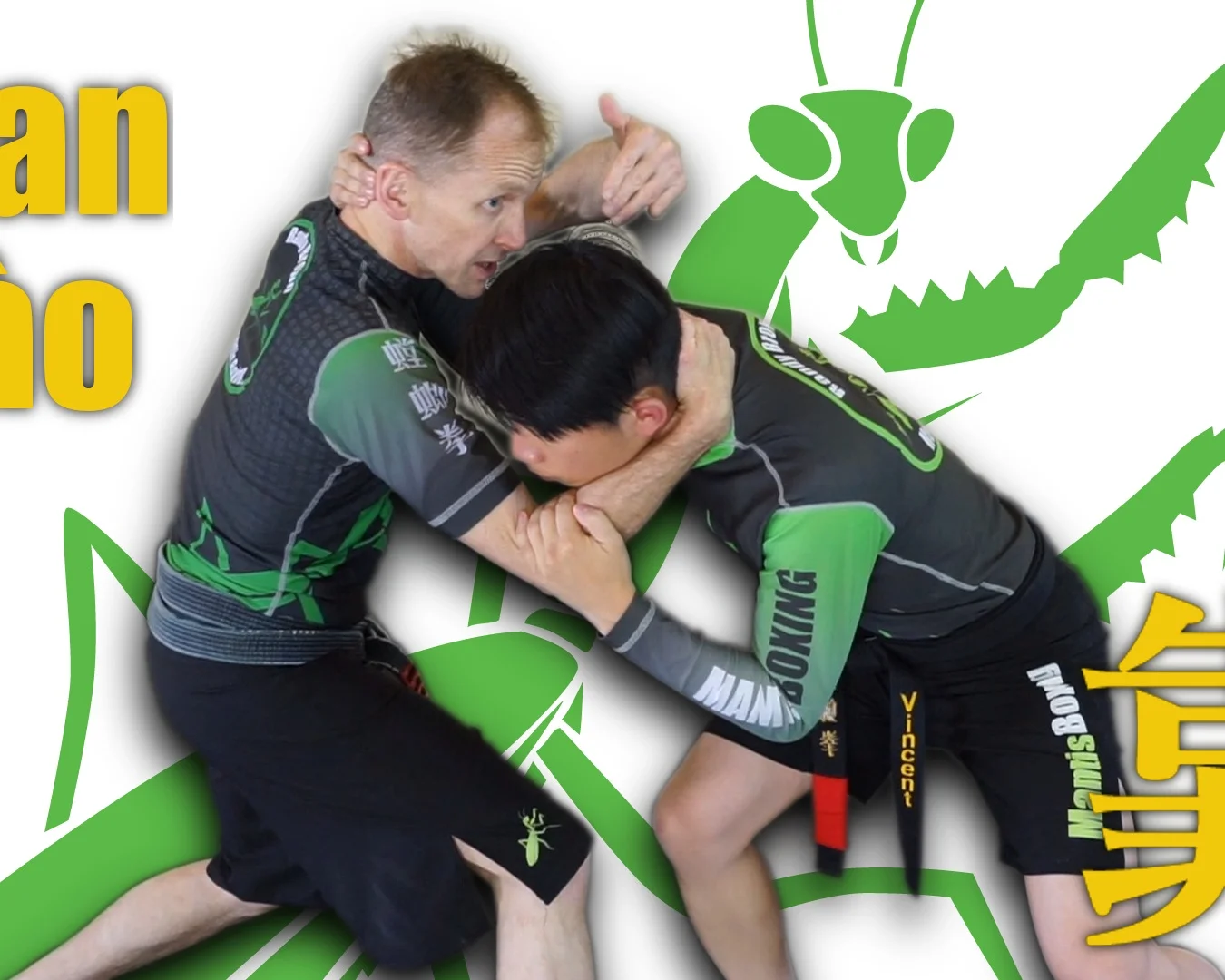
LEAN (Kào 靠) - 12 of 12 - The Keywords of Mantis Boxing
Lean (Kào 靠) - to lean against one’s opponent. Due to the heavy reliance upon grappling and clinchwork in Mantis Boxing, Kào is an important keyword when engaged close range with the enemy.
Postural Defense
Once we are entangled…
Lean (Kào 靠) - to lean against one’s opponent. Due to the heavy reliance upon grappling and clinchwork in Mantis Boxing, Kào is an important keyword when engaged close range with the enemy.
Postural Defense
Once we are entangled in the Clinch (Lǒu 摟), we lean in to protect our position, or risk being taken down, or pushed over. We use our foe as a support structure, leaning against them whilst engaged in grappling and clinchwork. This is synchronous with Adhere (Tiē 貼).
While we Adhere, we shore up our position by using Kào. If this becomes impossible, we should break range and secure a better position. Kào can shut down my opponent’s attempt at hip toss throws; dropping my CG making it difficult for him/her to get their hips (fulcrum) under my CG.
It also reduces chances for them using Crashing Tide; their posture would become compromised simply upon attempt. Another advantage provided by Kào, is buffering the double leg takedown. If we’re upright, our legs are within easy grasp, and shortens the time until their shoot. By leaning, I can sprawl easier and faster by dropping my CG and putting my weight down upon their shoulders.
Overall, if we can stay inside the clinch with a solid posture, and forward lean, we can use this pressure to time takedowns with applied force.
Applied Force
In addition to securing our position with solid posture, we can also use the shoulder to assist in our own throws. The shoulder is used heavily in a lean forward type motion to affect applied force. This assists in the execution of many takedowns such as Crashing Tide, Single and Double Leg Takedowns, Point at Star, Reaping Leg, Crane Spreads Wings, and more.

What Type of Gloves Should You Train With?
MMA Gloves or Boxing Gloves? Which should you train with? This is a great question we are going to tackle today in this new Swamp Talks. The type of glove we use in training…
MMA Gloves or Boxing Gloves? Which glove should you train with?
This is a great question we are going to tackle today. The type of glove we use in training, can have adverse affects on our skills. It's important to know the difference and choose the right glove, for the right goals we are trying to achieve.
What's the difference between and MMA vs Boxing Glove? Why should we be concerned with it? Check out this video to find out.

CRUSH (Bēng 崩) - 9 of 12 - The Keywords of Mantis Boxing
Crush (Bēng 崩) - to ‘collapse and fall into ruin’. Also known as 'crushing' in many Chinese Martial Arts usages. Bēng is used to attack the vital targets in the midsection of an opponent. Effective strike targets such as: the liver, stomach; ribs, and the real treasure - the solar plexus, or central palace in Taijiquan. All of these targets can…
Crush (Bēng 崩)
Crush (Bēng 崩) - to ‘collapse and fall into ruin’. Also known as 'crushing' in many Chinese Martial Arts usages. Bēng is used to attack the vital targets in the midsection of an opponent. Effective strike targets such as: the liver, stomach; ribs, and the real treasure - the solar plexus, or central palace in Taijiquan. All of these targets can disable an opponent with one hit. This is seen in countless boxing matches, UFC battles, Muay Thai fights, and Kickboxing bouts. What happens when you land a good strike on an opponent in one of these locations? They "collapse and fall into ruin".
Bēng, as a principle, can use a fist, a knee, a kick, all to accomplish the goal of - causing the opponent to - 'collapse, and fall into ruin'.
Aligning the Strike
If you examine the height of many of the stances found in Chinese Martial Arts forms, and in this case Bēng Bù, you'll see that the strike does not align with the opponent's face but rather with the solar plexus/lower rib region of a ‘standing’ opponent.
Dropping the stance aligns the punch to the effective strike targets (liver, stomach, solar plexus). Mantis Boxing uses the Horse-Riding Step (Mǎ Bù 吗步), Bow Step (Gōng Bù 弓步) to accomplish this alignment of the attack.
Punching to the face is certainly an effective attack, but it also hurts the striker if they aren't wrapping their hands, or wearing gloves. Styles of Karate have Makiwara boards, and Chinese Martial Arts has Iron Palm/Iron Fist to train the hands so as not to break/injure the bones while connecting with someone's hard skull.
Iron Fist training takes months/years to train. Conditioning the bones and skin is only accomplished through extreme dedication and commitment. It is faster to teach someone a technique to strike the vitals, meanwhile working on conditioning the hands for longer term strategies.
Keeping in mind: the human skull has evolved over millions of years to protect the brain inside of it. It's hard, and not meant to crumble at the first hint of danger. Quoting a bike-helmet study published in the Journal of Neurosurgery: Pediatrics, "235 kg (520 pounds) or 2,300 newtons of force would be needed to crush a human skull, almost twice as much force as human hands could possibly muster."
Plainly speaking, anyone who has punched another human in the skull with a bare hand can tell you - it hurts when you hit. Knowing this, it is easy to see why a striking principle like Bēng, is so prevalent in the martial arts.
One might be better served destroying an enemy in a soft target, rather than risk the injury of straight on face punching. This can be seen in other Mantis Boxing techniques aimed at the head region using alternate hand shapes: White Snake Spits Tongue, Spear Hand, Thrust Palm, Ear Claw, Slant Chop.
--
Leave your comments and questions below. Don't forget to SUBSCRIBE and GET HOOKED!

The Way of the Mantis Boxer
Check out this preview of an awesome video put together by…
Check out this preview of an awesome video put together by two of my students - Vincent Tseng, and Thomas McNair. They worked hard on this live format depiction of the 12 Keywords of Mantis Boxing.
Go to Vincent's channel to see the full video here - https://youtu.be/qPR83CZz8Bo.
More on the 12 Keywords of Mantis Boxing:
- Hook (Gōu 勾)
- Clinch (Lǒu 摟)
- Pluck (Cǎi 採)
- Connect (Zhān 粘)
- Cling (Nián 黏)
- Hang (Guà 掛)
- Wicked (Diāo 刁)
- Enter (Jìn 進)
- Crush (Bēng 崩)
- Strike (Dǎ 打)
- Adhere (Tiē 貼)
- Lean (Kào 靠)
Going Nerd Level on Blocking
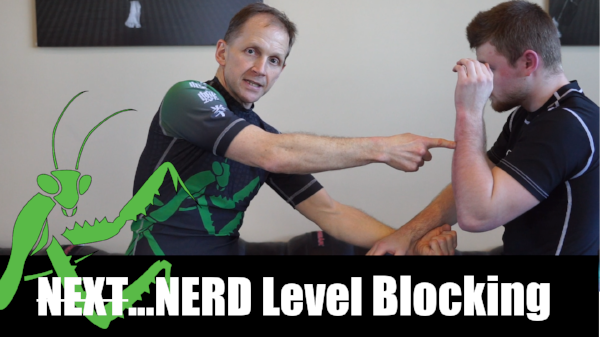
Today I'm going NERD LEVEL on blocking. This is an interesting detail I found that can make or break your blocking. I can't explain the why, so I'm calling on all…
Today I'm going NERD LEVEL on blocking. This is an interesting detail I found that can make or break your blocking. I can't explain the why, so I'm calling on all anatomy/physiology experts out there to come up with an answer, and leave it in the comments section.
When using Guard Principle (one-in-one-out), we know that we have to bring one hand back when the other goes out. This is relevant to both striking, and blocking. What I find fascinating, is that the lead arm actually goes dead when the rear arm fires. After years of doing this, and countless number of punches coming at my head, I noticed this 'lag', and dull response time, and paid close attention to it.
If you have expertise in this field, and can provide a thoughtful, educated reason for it, I'd love to hear it. Please leave it in the comments section below so we can all benefit from it.
Now, on to the important part - not getting hit! Follow the principle shown when you're firing punches, or blocks, and this problem goes away. We do not need a partner to fix this. Practice the Guard Principle while performing shadow boxing, bag work, and 3-level blocking and you can train your hand to respond as needed.

HEAVY ASSAULT! - Circle and Chop, or Haymaker and Hammer
HEAVY ASSAULT - Go heavy, or go home! This striking combination, plucked right from the catalog of Mantis Boxing techniques passed down for centuries, is to overwhelm the opponent with big, destructive, blows. Connecting with the first one is ideal and effective, but if they duck, or move back, the second…
HEAVY ASSAULT - Go heavy, or go home! This striking combination, plucked right from the catalog of Mantis Boxing techniques passed down for centuries, is to overwhelm the opponent with big, destructive, blows.
Connecting with the first one is ideal and effective, but if they duck, or move back, the second strike, by design, takes advantage of the built up energy from the first strike to fell them with the second.
Advance with the Circle Punch, aka Haymaker (see video on Circle & Hook) to attack from the side door. Try to connect with your partners Effective Strike targets to increase your targeting accuracy. Use your footwork and body torque to maximize power (on pads).
Have your partner duck, or shuffle back to counter the first strike. This is where the Chopping Fist comes in. Now unwind that transverse core rotation, and hip torque, and unleash it back where it came from.
The Chopping Fist will come over the top and downward, again looking for Effective Strike targets to practice with on our partner. With pad drills, ramp up the power to work your speed, and might in your technique.
As you get the striking combination down, start paying close attention to your guard hand. I have seen this combination used twice in the UFC over the past couple of years, to amazing effect. Unfortunately, one fighter Roy 'Big Country' Nelson, didn't use his guard hand and his opponent connected with an uppercut in between.
Timestamps:
00:40 - Technique Explained
1:33 - Watch the Counter-Strike!
2:46 - Footwork
3:14 - Pad Drills
Gear
You can find some of the items we use in the video by following our affiliate links:
Assassin Pads
Punching Bag
Gloves
--
Leave your comments and questions below. Don't forget to SUBSCRIBE and GET HOOKED!

Hook vs Circle Punch - What's the Difference?
What's the difference between a Hook Punch and a Circle Punch? Are they really that different? Yes, and yes.
The Hook Punch is used at a closer range, similar to an uppercut. It works well when you are striking in tight, or engaged in a Clinch (Lǒu 摟). In here, a long range strike will extend beyond my opponent. We position the arm in a tighter hook shape to help…
What's the difference between a Hook Punch and a Circle Punch? Are they really that different? Yes, and yes.
The Hook Punch is used at a closer range, similar to an uppercut. It works well when you are striking in tight, or engaged in a Clinch (Lǒu 摟). In here, a long range strike will extend beyond my opponent. We position the arm in a tighter hook shape to help land on our targets such as the temple, kidney, liver, ribs, stomach, and jaw.
The technical position when throwing a hook punch is critical. When bare knuckle striking, there are no wraps to support the wrist, so technique has to be spot on in order to prevent breaks, sprains, and fractures in our own hands/wrist.
The wrist is held in a straight line, and we use the transverse core rotation of the upper torso to connect the punch, versus extending the arm and bending the wrist which is dangerous to our own hand. Thumb position is up.
When the range to our opponent is further out, and we are still throwing straight punches, this is where the Circle Punch really shines. It allows us to attack the side doors as well as down the middle; utilizing the principle of - Randomized Striking.
Connecting with a Circle Punch has the added benefit of increased power generation through a looser whipping action. The punch is thrown relaxed; the arm builds up speed before connecting. If this impacts the temple, jaw, occipital lobe, bracchial nerve, or ear, it can have devastating consequences.
Because of this, when our opponent sees a Circle Punch steaming for the side of their head, they are more likely to open the center doors trying to defend; thereby allowing our other punches to land.
The hand position for the Circle Punch is wrist straight, thumb pointing down.
Timestamps:
0:42 - Technique
4:12 - Pad Drills - Hook Punch
5:29 - Pad Drills - Circle Punch
6:12 - Bag Drills
6:44 - Bag Drills - Circle Punch
7:10 - Bag Drills - Hook Punch
Gear
You can find some of the items we use in the video by following our affiliate links:
Assassin Pads
Punching Bag
Gloves
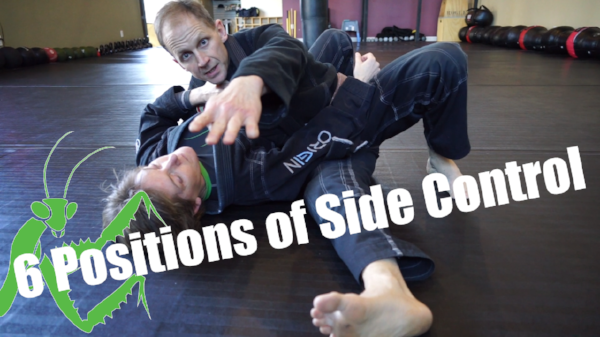
6 Positions of Side Control - How to Drill and Improve BJJ Side Mount
My Brazilian Jiu-Jitsu teacher (Andre 'Dedeco' Almeida) showed me this awesome Side Control drill when I was a new White Belt. It is one of the best drills I've seen for…
My Brazilian Jiu-Jitsu teacher (Andre 'Dedeco' Almeida) showed me this awesome Side Control drill when I was a new White Belt. It is one of the best drills I've seen for training Side Control/Side Mount and really emphasizes the necessity for each position. I use this drill to this day as warm-ups in my classes, and pass it on to benefit my students.
The drill connects various positions by number which is a big help. We need each of these in order to control our opponent on the ground when we have side control/side mount.
The drill works not only a solid position, but also the transitions from one to the next. You can increase the complexity of the drill by having your training partner call out the number and you go to that position. Once you have the drill down, randomize those numbers to make it harder.
Note: Position 6 is technically not Side Control, it is known as North/South, but it makes an excellent addition to the drill, and something we often need when trying to maintain side control and someone is getting out.
You can train this with a partner for best results, or with a throwing dummy, punching bag, or body pillow. Enjoy the drill!

The Scraping Fist
The Scraping Fist - like a low uppercut, or body shot. One of the advantages of this punch, is the fact that unlike throwing a straight punch…
The Scraping Fist - like a low uppercut, or body shot. One of the advantages of this punch, is the fact that unlike throwing a straight punch toward the body which comes in from a high angle, this punch comes from underneath by dropping the elbow, making it harder to block.
It's a great punch to sneak in shots to the body, especially when using the principle of Changing Levels/Varying Targets. . But it can be dangerous trying to pull it off at the wrong place/time.
Here are some tips along with pads drills, and bag drills later in the video for practicing the scraping fist on your own, or with a partner.
1:20 - Technique
4:56 - Pad Drills for Focus Mitt, Thai Pad training
7:24 - Bag Drills for Punching Bags
Gear
You can find some of the items we use in the video by following our affiliate links:
Assassin Pads
--
Leave your comments and questions below. Don't forget to SUBSCRIBE and GET HOOKED!

Guest Appearance: Fight for a Happy Life with Sensei Ando
I had the honor of being invited onto Fight for a Happy Life martial arts podcast with host Sensei Ando. The episode just released today.
Check out our conversation on topics like - freedom, defining success, barriers to students progress, living life, and weird questions about what I want on my deathbed/tombstone (is this guy planning to kill me???), and lots of laughter.
Fight for a Happy Life Podcast
hosted by none other than Sensei Ando of Happy Life Martial Arts

I had the honor of being invited onto Fight for a Happy Life martial arts podcast with host Sensei Ando. The episode just released today.
Check out our conversation on topics like - freedom, defining success, barriers to students progress, living life, and weird questions about what I want on my deathbed/tombstone (is this guy planning to kill me???), and lots of laughter.
Click the photo above to visit his website for the podcast, or follow the links below for your favorite podcast location. Enjoy the show!

Many of you know Sensei Ando from our previous collaborations, as well as his visit to our school last summer. He's a positive influencer that's always reaching out to help other people. Admirable.
Here are a couple of videos we did in case you missed them. I highly recommend following him on his YouTube channel, as well as his podcast.
Tips to Manage Distance in a Fight
Tips for Defending the Bear Hug
You can contact Sensei Ando -
Sensei Ando
Sensei Ando YouTube Channel

Monkey Grips! How I Strengthen My Grips and Keep Them Healthy
Fingers hurt after training? Grips not strong enough to hold on when grappling? Check this out.
Grip strength and health can be a really important thing for martial artists. Grip intensive arts such as Judo, Brazilian Jiu-Jitsu, Shuai Jiao, and other Grappling Arts, all require/build grip strength, and put a great deal of wear and tear on the fingers. Today I'm going to show you the methods I use to keep my grips not only strong, but healthy. For strengthening: exercises like rope...
Fingers hurt after training? Grips not strong enough to hold on when grappling? Check this out.
Grip strength and health can be a really important thing for martial artists. Grip intensive arts such as Judo, Brazilian Jiu-Jitsu, Shuai Jiao, and other Grappling Arts, all require/build grip strength, and put a great deal of wear and tear on the fingers. Today I'm going to show you the methods I use to keep my grips not only strong, but healthy.
For strengthening: exercises like rope climbs, battleropes, sledge hammer, pull-ups, all assist in strengthening the hands. If we're already doing a martial arts with lots of gripping, chances are we are getting plenty of strengthening from that, and we can move on to the section of the video highlighting grip/finger health, and taking proper care of our hands in martial arts.
Links for Items:
To buy Mung Beans: https://goo.gl/KPy9mE
To buy Bean Bag: https://goo.gl/ybjyme
To buy a Battlerope: https://goo.gl/gtHqNt
To buy a Rope: https://goo.gl/h1ftFc
To buy a Sledgehammer: https://goo.gl/qQ2Knp
To buy a Pull-Up Bar: https://goo.gl/GiqfGd
Bean bag - this bag is filled with Mung Beans. I have been using these bags since early in my Mantis Boxing training back in 1999. The beans release a powder that helps the skin, and the pliability of the beans allows for the fingers to sink in and work on the catch/relfex while massaging the hands. It's an excellent tool and I highly recommend getting one, or having one made.
Green Dragon Stretches Claws - this is an amazing drill that's easy to remember, and even easier to do almost anywhere, and anytime. This exercise is even good for strikers since our hands are balled up most of the time. As you stretch the fingers and hold, you are helping open up the fingers, joints, and tendons.
Magic Bean Pot - this is my all time favorite. Get a pot from somewhere. I was fussy so I found a bronze pot on eBay with a cool design. Buy a bunch of Mung Beans and fill the pot up. Now use the bean pot to wash the hands. I use this after a heavy training session, or earlier in my BJJ training when I had a tendency to over-grip and not let go when I should have.
Tools of the Trade - (1:21)
Bean Bag - (2:10)
Green Dragon Stretches Claws - (3:10)
Magic Bean Pot - (4:45)
--
Leave your comments and questions below. Don't forget to SUBSCRIBE and GET HOOKED!

Guest Appearance: The Strenuous Life Podcast w/ Stephen Kesting
On the latest episode of his podcast - 'The Strenuous Life' - BJJ Black Belt and founder of Grapplearts, Stephen Kesting and I debate the value of Kung Fu, and if it can coexist with BJJ and MMA. I think you are going to like this! I highly recommend his channels if you haven't already found him!
"Can Kung Fu, BJJ and MMA coexist? Maybe they can, and maybe they can even learn from each other.
This is a conversation I had with with Kung Fu stylist (and BJJ brown belt) Randy Brown in which we touched on the history of Chinese martial arts and what made them less effective over time, what traditional martial arts look like when you start training them with resistance, and much more. I think you’ll like this one!"
The Strenuous Life Podcast
hosted by renowned BJJ Black Belt, and founder of GrappleArts.com - Stephen Kesting

Stephen was kind enough to invite me on to his podcast 'The Strenuous Life' last month. We finally got our schedules to mesh up last Monday and recorded this podcast for everyone. It was an awesome conversation and I had an amazing time. I think you are going to really enjoy this.
I know some of you are quite familiar with Stephen, and already watch his videos/listen to his podcast. If you haven't heard of Stephen, please check out his website GrappleArts.com and YouTube channel. I highly recommend you subscribe to his stuff. He is extremely humble, puts out top notch detailed content, is super nice, and is always trying to help others.
Click the photo above to visit his website, or follow the links below for your favorite podcast location. Enjoy!
"Can Kung Fu, BJJ and MMA coexist? Maybe they can, and maybe they can even learn from each other.
This is a conversation I had with with Kung Fu stylist (and BJJ brown belt) Randy Brown in which we touched on the history of Chinese martial arts and what made them less effective over time, what traditional martial arts look like when you start training them with resistance, and much more. I think you’ll like this one!
The best way to listen to this podcast is to go to your favourite podcasting platform, subscribe to ‘The Strenuous Life’ Podcast, and then look for episode 128. You can find it on most podcast platforms, including…"
iTunes
Google Play
Soundcloud
Stitcher
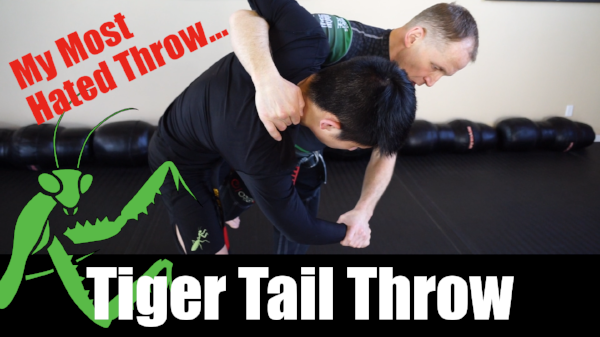
The Tiger Tail - My Most Hated Throw!!!
This was truly one of my most hated throws. In 2009, on one of my semi-annual sojourns to San Diego to train with my Mantis Boxing coach at the time, I was introduced to this personal menace.
The primary purpose of this trip, was for my teacher to share with me the 20 throws of Mantis Boxing that his 8-Step Mantis Boxing teacher had...
This was truly one of my most hated throws. In 2009, on one of my semi-annual sojourns to San Diego to train with my Mantis Boxing coach at the time, I was introduced to this personal menace known as a ‘thigh lift throw’, or in Judo - ‘uchi mata’.
The primary purpose of this trip, was for my teacher to share with me the 20 throws of Mantis Boxing that his 8-Step Mantis Boxing teacher had shared with him. We were to meet up with another of his Black Belt's - Mike Dasargo, and work on these techniques at Mike's school.
As the coach would show each throw, Mike and I would work on them together, and I would scribble notes down as we went. Doing my best to catalog each throw and its variations. As the day went on, we finally arrived on the ‘thigh lift throw’, what I have affectionately named the Tiger Tail Throw (as it looks like the tail of a tiger sticking up). A ferocious takedown.
I don't know what it was, but this throw was the single most difficult one for me to get. Maybe I was getting hungry, or having a 'short day' (sarcastic reference to my height), but this one was just not clicking. It seemed like a throw for taller people; at least that was my whiny excuse at the time. I took it down my notes, maybe even left a nasty comment in there, practiced a bit more, and moved on.
When I returned from San Diego, my ritual was to work on everything I did on the trip as soon as possible, so I would not lose it. I practiced this throw along with all the all 19 other throws even though I didn't care for it.
I'm not sure what happened next, but eventually, this throw became one of my favorite takedowns in Mantis Boxing, and probably the one I use with the highest frequency. Most likely...since I worked on it more than all of the others because of the difficulty I had with it, it began to morph and I adapted to it, and it to me.
In this video, I'm not only sharing the Tiger Tail Throw with you, but additionally the alternative throws (Descending Dragon, Demon Wheel, Retreat Astride Tiger, Mantis Hangs from Branch), Knee Strikes, Guillotine Chokes, that I use when someone counters this throw, or I miss on the execution.
Timestamps:
Tiger Tail Throw - (2:05)
Descending Dragon Takedown - (5:39)
Demon Wheel & Guillotine Choke - (7:00)
Knee Strike & Shoulder Lock - (8:02)
Retreat Astride Tiger - (8:50)
Mantis Hangs from Branch - (10:40)
--
Leave your comments and questions below. Don't forget to SUBSCRIBE and GET HOOKED!

'Sneaky' Americana for No-Gi
Here is a No-Gi variation for the Sneaky Americana (Keylock) I've been using from under the head. Using the shoulder to crack open their frame, can help me pry my opponents arm up closer to their head, where I can snag ahold of it to go for the Sneaky Americana.
Be sure to...
Here is a No-Gi variation for the Sneaky Americana (Keylock) I've been using from under the head. Using the shoulder to crack open their frame, can help me pry my opponents arm up closer to their head, where I can snag ahold of it to go for the Sneaky Americana.
Be sure to insert the hand palm up so you can use the fingers to ply along the muscles of their arm and help you get underneath when they are trying to block it.
Again, this variation I've been using in Brazilian Jiu-Jitsu (BJJ) in order to keep my position during the attack. If I launch my attack across the body, the more savvy practitioners will counter and push my arm away, or launch me over their body.
A nice alternative to the keylock for more flexible opponents, is pushing the elbow vertical and then applying downward pressure to lock the wrist.
The turn away: when they go on their side to defend the arm, we go for the arm closest to us to setup and armbar. If they begin to block that, it will create the opening we need for the Americana. If they block both, step the leg over the waist and roll them back into our guard to finish them from the back.
Have fun with this technique. I've been enjoying it a lot!!!

Ezekiel Choke to Americana Lock (Keylock)
Here is another attack using the same sneaky Americana I've been using from under the head. In this example, we go from the Ezekiel Choke and our opponent defends it. Because my weight is side shifted, my savvy friend will feel my opposite leg go light, and try to push my knee into half guard to gain a better position.
Rather than stay there and let them get half guard, we skip over to position 2 of Side Control. Now they defend the position by trying to build a frame. This presents the arm in a vulnerable position to grab it from...
Here is another attack using the same sneaky Americana I've been using from under the head. In this example, we go from the Ezekiel Choke and our opponent defends it. Because my weight is side shifted, my savvy friend will feel my opposite leg go light, and try to push my knee into half guard to gain a better position.
Rather than stay there and let them get half guard, we skip over to position 2 of Side Control. Now they defend the position by trying to build a frame. This presents the arm in a vulnerable position to grab it from under the neck.
In order to finish them, we need to change our position however. Here is where the hip break comes into play. We hip break over to the opposite side and go to position 3 of Side Control. This gives us the position we need to finish the Keylock/Americana.
Max asked, "what happens if they block our hip break?" Great question. By attempting the hip break, it lifts their arm off the ground, so we can simply return to position 2, and throw our arm under so we can finish the Keylock/Americana from there.
--
Like the video? Hit subscribe and Get Hooked!